Episode Transcript
[00:00:00] Speaker A: Foreign.
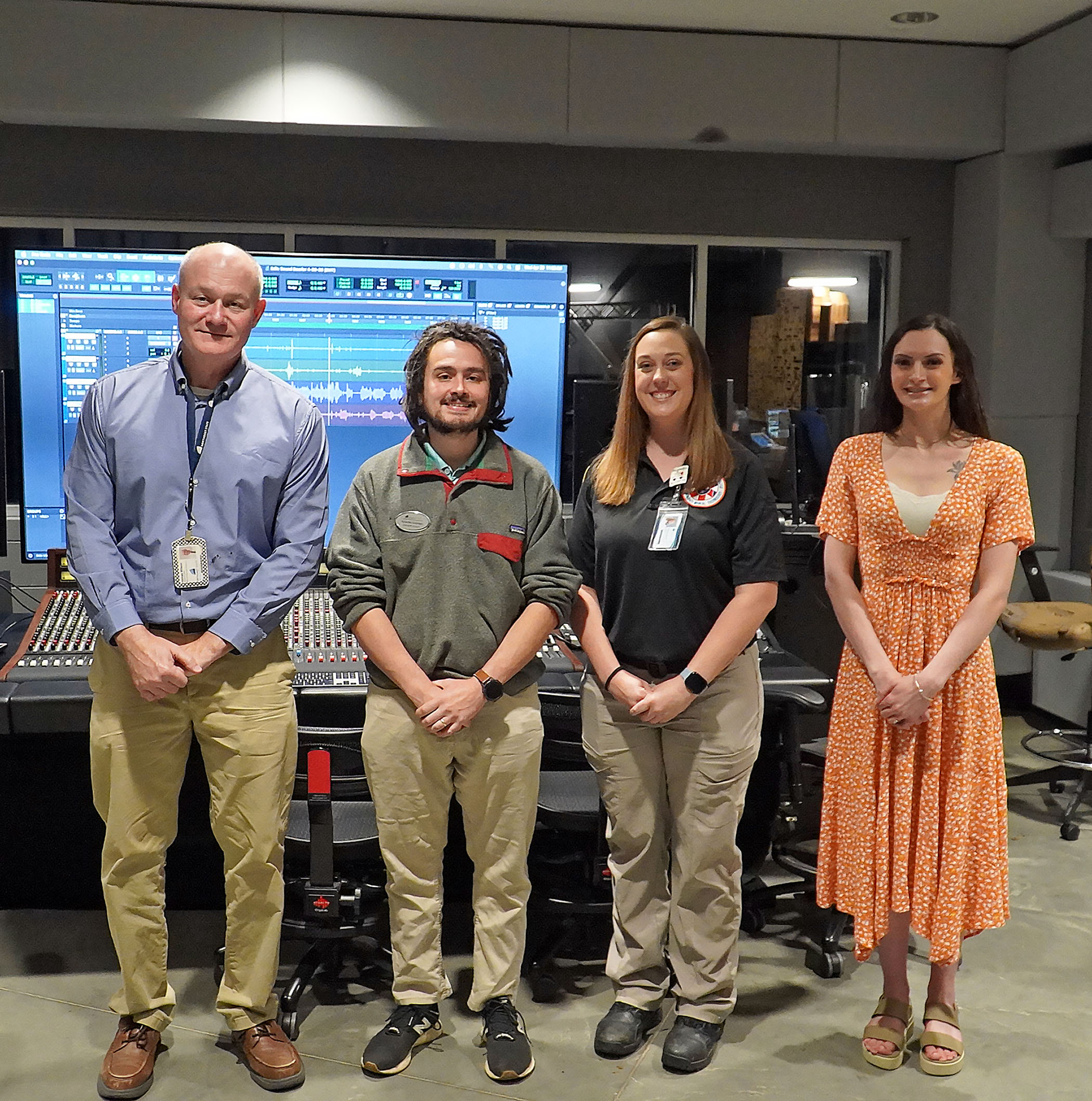
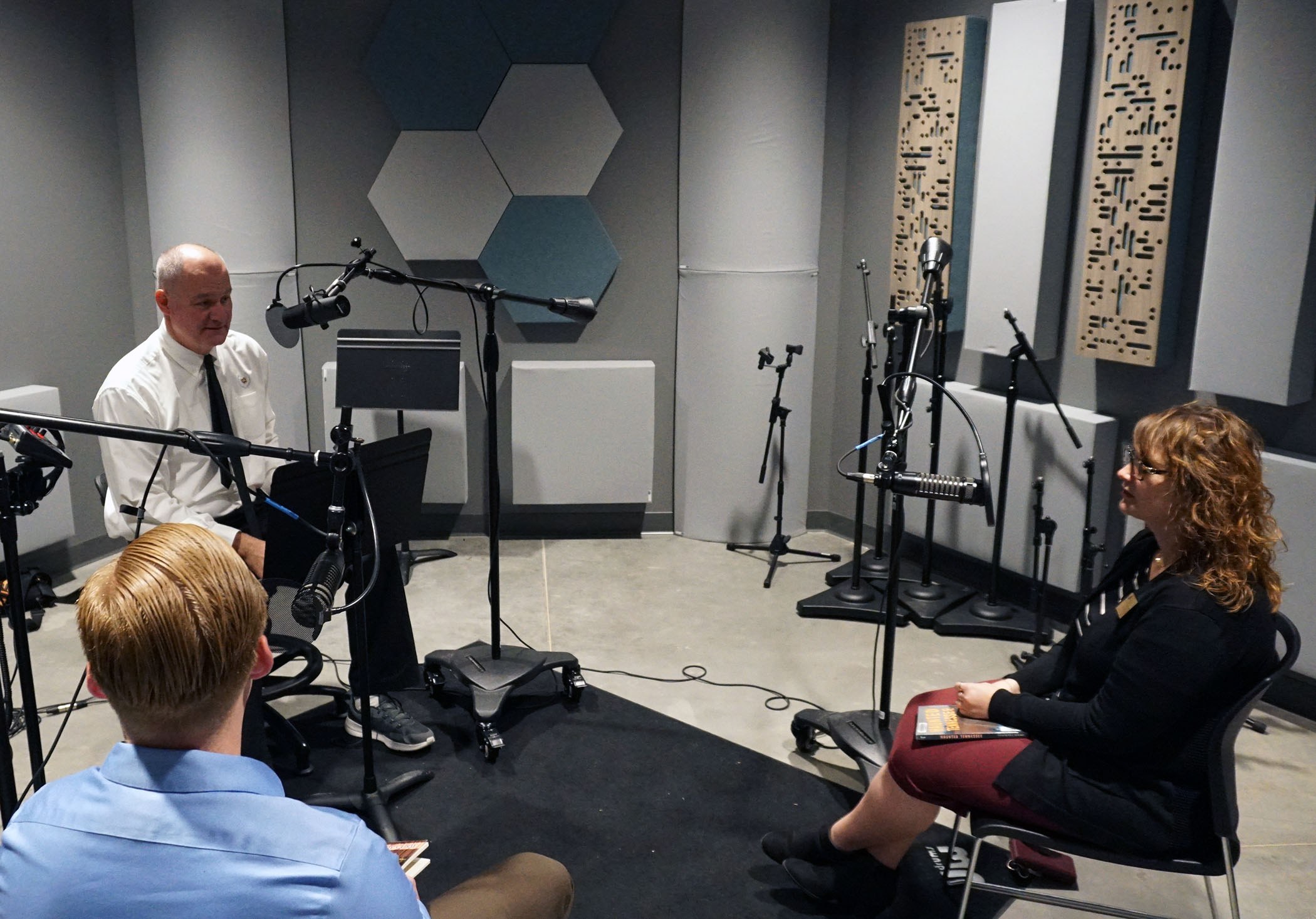
[00:00:09] Speaker B: Loyal listeners and bears everywhere. This is The Sound Bearier Northeast State Community College's official podcast. My name is Mackenzie Moore-Gent co-hosting today alongside my colleague Thomas Wilson, recording from the entertainment technology studio at our Bluntville campus. Thank you so much to Jordi out there, who's recording. Today, we are joined by our EMT program. We have our EMT paramedic department here to talk about emergency responses, communications with patients and what our program looks like.
And so we'd like to welcome instructor Nicholas Santiago, as well as student paramedic student Chelsea Harris.
Nicholas, Chelsea, thank you so much for joining us today.
[00:00:53] Speaker A: Thanks so much for having me.
[00:00:54] Speaker C: Thank you for having us.
[00:00:55] Speaker B: We'll start with Chelsea. What led you to our program? And what's that looking like for you right now?
[00:01:01] Speaker C: We're good. We're finishing up the second semester.
I came to this program. I originally went through the EMT program here, like 14 years ago, so don't remind me.
[00:01:12] Speaker A: How long ago?
[00:01:15] Speaker C: Yeah, so now I'm just finishing up the paramedic side and advancing that.
[00:01:20] Speaker A: Wow.
[00:01:20] Speaker B: Congratulations. What's the difference between paramedic and emt?
[00:01:26] Speaker C: There is a lot of skills differences between the two. There's a lot more advanced skills that we can do as paramedics, give more medications and things like that.
[00:01:36] Speaker B: Oh, okay. I hadn't realized. And we'll talk more about that, too.
And, Nicholas, can you tell us a little bit about your background?
What is your role here with this program?
[00:01:46] Speaker A: Yeah, absolutely. I think I started.
We actually were in the same EMT class together, so that's been a lot of fun to kind of flip over to this side.
So I went to EMT class with her. Like she said, I GUESS it's been 14 years ago. I didn't realize.
And then we actually worked at the same service for. I worked over there four years full time, and then I moved to another service full time.
Decided I wanted to go back and get a bachelor's degree to further that education. So I did that. And then I finally kind of got just a little doing repetition, burnout, just a little bit. So I was like, well, I'll try something else. So I did clinical trials, project management. I did that for about three years. And I realized that corporate and corporate, like, discussions and jargon. I'm just not good at that. It's just not the realm for me.
I'm very much so a.
I like to be around people and stuff like that. So I saw that this was, I guess the EMT position had opened up, so I applied for that. And Jumped over here and was teaching EMT and then swapped over to the paramedic. So just kind of, I guess moved up instead of, instead of swapping over.
[00:02:59] Speaker D: Now how do faculty and students kind of move through? When you first enter the Northeast State program as a student and faculty member, how do you start kind of moving through it to get to become a paramedic? Let's go paramedic route.
[00:03:13] Speaker C: You originally have to start with your EMT and obtain your licensure as that you'll go through the national registry, obtain your license, and then you can move on up to paramedic and go through that school.
You'll have to take the state testing again as well. That's different.
[00:03:31] Speaker A: So we offer two guys kind of build off that we offer, I guess not we offer, but the state requires two different types of certifications. So we've got EMT Basic and EMT Advanced.
And so that EMT Basic is our kind of base layer. And then the state dentistry requires that they pass that national test and then get their licensure and then they can do the advanced. Both of those take about a semester.
Shameless plug. We're doing a EMT Basic class this summer that we're trying to fill up and hopefully going to do an EMT Advanced in the fall, whereas historically we've just done a Basic in the fall and an Advanced in the spring.
And then from there those take a semester and then we move into the paramedic process, which takes about a year total.
[00:04:14] Speaker B: Okay, so EMT AEMT paramedic really is how it goes.
[00:04:19] Speaker A: Yep.
[00:04:20] Speaker B: And you have to have your emt, but so you can't start like, oh, I want to be an aemt. You have to get that baseline EMT credential and then.
Is it a credential?
[00:04:31] Speaker A: It is, yeah. It's a healthcare licensure. It's weird because it is a licensure, but it's not like a normal healthcare licensure. It doesn't start. Stand on its own. But yeah.
[00:04:40] Speaker B: Okay, and what do you. What does the average day in your life look like right now as you're pursuing the. The paramedic program?
[00:04:50] Speaker C: So for like class and clinicals.
[00:04:53] Speaker B: Yes, yes, yes.
[00:04:54] Speaker C: So the majority of us in class, I think most all of us work full time as well as going to school full time as well. So we have class two days a week right now on top of clinicals, and then next semester we'll drop down to one day of class along with clinicals as well.
On top of your job, on top of work?
[00:05:11] Speaker A: Yes, they work 12 or 24 hour shifts.
[00:05:13] Speaker C: Yeah.
[00:05:14] Speaker A: So like the 12 hour shifts, the common is 12 hours. They'll do four days straight. So they'll do like 12 hour days and then they'll have four days off.
You guys do a five.
[00:05:25] Speaker C: We do a rotation one week we'll work five days and one week we'll work two days. And then it swaps back and forth like that. But we work 12 hours for mine.
[00:05:33] Speaker A: And then they have to pull a total of 504 clinical hours for the, for the whole year with 300 of it being in the summertime.
And then we do class twice a week in the fall and the spring and then class once a week in the summer. So they are, they are at.
[00:05:48] Speaker C: It's really busy.
[00:05:48] Speaker A: Yeah, they are busy.
[00:05:49] Speaker D: Serious rotation of movement, job and class.
[00:05:53] Speaker A: I was talking to her, I guess before we got in here. I sat down last year and calculated out if they pull their clinical rotation times whenever they're supposed to and their normal work time. They get roughly about four days off a year for that whole entire year that they actually can take to their sales and have off.
So it's really. They are busy.
[00:06:13] Speaker B: Oh my gosh, Sorry.
[00:06:14] Speaker C: That's a lot.
[00:06:15] Speaker B: What do clinicals look like for you? What does that entail?
[00:06:18] Speaker C: We have different clinicals.
We have ambulance clinicals, ER clinicals. And then this semester we had rotations and throughout the hospital. So we went to labor and delivery, the ICU and PTR and all of that as well. Just because you never know what you're going to get on the truck. So we have to kind of rotate through all to get experience and knowledge from that as well.
[00:06:42] Speaker B: Oh, wow, that's amazing. I hadn't even considered that because I was. My next question was going to be, oh, are you in these settings? And I realized these are all patient dependent on where you show up on the scene. You're going to want that experience.
[00:06:55] Speaker A: We say from the cradle to the grave, you know, we'll take care of you, don't matter either way, you know. Yeah, that's like the name of the game. And even I cradle is, well, we'll do childbirth too. You know, it doesn't matter.
[00:07:04] Speaker C: Yeah.
[00:07:05] Speaker A: So.
[00:07:05] Speaker C: So it's best to get all those clinicals just to kind of make sure you do have that baseline knowledge of what you're going to see on the truck as well.
[00:07:14] Speaker B: And it's literally in the name that emergency medical. You're dealing with emergencies non stop. What type of person does that take? What Type of skills does that take to be able to handle?
[00:07:26] Speaker C: Just takes a lot of skills, a lot of patience.
[00:07:31] Speaker A: Yeah, I think, I think what we found this the one. The students that seem to make it through the class the best and are the strongest out are uniquely not the ones that score the highest in the class.
What we found is the ones that maintain a great attitude about things and then also can step back and say, I gotta, this is not normal. Like, I gotta, I gotta figure out a way out of this and I gotta figure out how this person's not responding as I expected them to, and I gotta kind of manipulate that. Those are the students that do super well, super extraordinarily well. So just kind of that ability to step back and say, okay, this is not my emergency, but I've gotta figure out how to manipulate this in a manner of which I can get them to where I can just stabilize them and then we can take them from there. And then they can have. Because we work in crews of two, so me and her would ride on a truck together.
Whereas opposed to you hit the ER doors, there's seven or eight people that start, plus the physician, but there's usually just us two. So we really work on that. Okay, I got to manipulate this. I got to figure out how to get this stable and then let's, let's start moving from there.
[00:08:37] Speaker B: And Chelsea, have you been working as an EMT all along? Like since you graduated from the program? You said 14 years ago.
How do you stay sane in that field? Like working in that field long term,
[00:08:50] Speaker C: you really have to figure out how to balance like work life and to leave work at home and make sure you have you time and family time that's completely separate from outside of work is what I found best.
[00:09:05] Speaker A: A big thing too we've been doing is a mental health initiative because that's something that's been lacking for us.
You can run something like a cardiac arrest or a pediatric cardiac arrest, and you load, you drop that patient off after you've taken care of them and you're expected to clean the truck and then get back.
That's the expectation that has been around for a very long time. So the state of Tennessee has released a mental health initiative which will be required to be taught in all classes starting in June.
Because of our mental health disparities, an individual that works this job has an increased risk of any type of depression or suicidal events.
So that's, I think a big thing too that we've been trying to do recently is this show that There are show individuals that there is tons of stuff out there, but it's important that you take advantage of that.
I think my student that she works with that we had last semester, he loves fishing. He sends me photos of him and his kid fishing, you know, regularly. And then she's got two little kiddos and we're always talking about them and they're fun. So it's stuff like that.
[00:10:10] Speaker C: You just have to realize everybody's human. So you have to treat people with compassion and just kind of go from there.
[00:10:16] Speaker B: A lot of times has there ever been a time where you responded to a scene and maybe you generally like felt scared or like maybe more adrenaline than you usually would? What has that been like, how did you cope with that?
[00:10:30] Speaker C: Yeah, there's been several times.
People have definitely, they can definitely scare you on scene, especially bystanders and stuff like that. You always have to make sure of your surroundings.
Scene safety is breached. It's always the number one thing. No matter what call you have scene safety going from there. Make sure you know where your partner is, make sure you all are safe. And just if you ever need anything, always call your supervisor. You know, anybody higher up from you at work that's there to help you as well.
There's always resources at work.
I think most places do have a chaplain as well if you need to talk to somebody.
[00:11:10] Speaker A: Yeah, I, I always tell, whenever I. I was riding, I guess full time, I would always tell them that like if you're screaming, I'm probably screaming internally too. So like we're screaming together, you know, like we just have to kind of pump the brakes and we'll, we'll figure our way out. And that's, that's what we kind of share the same view on us. We can figure our way out of any.
It just takes us a minute, but we can get there.
[00:11:33] Speaker D: Can that be taught?
Can that be taught in a classroom or like you referred to earlier, it's not necessarily the, the highest score. It's an adaptability factor in a personality because you may be going on a convalescence trip and then there may be a five car accident on the interstate.
How can that if not taught at least developed in the student or that have you found?
[00:11:59] Speaker A: I think, I don't know this. I think it would be cool to study. I do think that there's some form of predisposition, but I think that it's based off of childhood anomalies or like those childhood events that individuals have.
We do know, I guess in our field is that Individuals that had a harder childhood or rougher childhood seem to be more ready to handle the stress and they also seem to be more adaptive. But that, that's not everybody, you know.
[00:12:30] Speaker D: Sure.
[00:12:30] Speaker A: But that adaptation does kind of start at an early age.
And so we are seeing that.
But I think it can be learned if the individual is willing to take the time. I think that's something that I didn't have. And riding with her, I was a brand new medic and that's something that I didn't have. But I ended up having to develop being around people like her who had that, that ability.
[00:12:53] Speaker C: I think if you're with somebody who does have a lot of compassion, it can be easily, especially the more experience that you have and more rod time as you go along.
[00:13:02] Speaker A: Yeah, And I think that's what a lot of the students struggle with because that's what the career and the testing heavily relies on, is that adaptability.
[00:13:12] Speaker B: And along with that as a skill, you're also handling a lot of different equipment, a lot of different tools and what have you. When you're like on a scene, what does some of that equipment look like? What does, and what did the training look like to get, I guess, acclimated to everything that's on an ambulance?
[00:13:30] Speaker A: We want to start at the levels like EMT basic, advanced. Yes, we can, I can start with, I guess the EMT basic. So EMT basics come in and they do that one semester. And so it's really a foundation you're learning the foundation of recognition and then analysis and saying, okay, like this is. If I come in and I see a patient that's in full blown hives, this is an emergency, I have to intervene immediately. And this is the intervention.
So that equipment looks like they can assist patients with their medication. If they need that assistance. They can administer things like EpiPens, things that are pre measured, stuff like that.
But they also have a lot of our base skills, such as our BVM ventilations. It's called a bag valve mask. So if you've ever watched like the tv, medical TV shows, they've got that big huge kind of bag and they put it over like a rubber round.
I don't know how to explain it, but they put it over their face and they'll squeeze it.
That's a bag valve mask. Then you see the oxygen mask in TV shows. That's something that they routinely do. More the nasal cannulas. That's also something that they routinely do.
And so we do have that equipment. Let's see what Else we have spine boards for spinal protection. We do a lot of movement because we're moving people in and out of houses. So learning the logistics of, hey, we barely fit in the front door, you know, we should probably start looking at another, like a back door to get out of or an alternative way because the cot's not going to fit in here.
So we learn a lot of those patient logistics and then lifting the patients and everything like that.
They also learn how to use an AED cpr. We usually do that as a base and then something that's kind of newer for the state of Tennessee. But they can place a patient, they can place them on the cardiac monitor and they can transmit that 12 lead, but they can't interpret it. And so there's a really fine line of. They put everything on. So that way it reads and then they send it on. And the physician at the ER can get it. But that's the extent the physician then can guide them. Say you need to do X, Y and Z. And so they heavily rely on that.
And then at the advanced level, which is what she is currently.
[00:15:43] Speaker C: Yes, we. We still have the monitor. We're able to hook people up to 12 leads just as well. I think that's newer with the basics that they can do.
But we are. We're as advanced. You're not able to read the monitor as well? We can still send that in.
We do have different areas, have either Lucas or the auto pulse that we can use as well for cpr. And it's a device that you can place the person on and it does the CPR for you.
We still use the BVMs as well, and the backboards and C collars.
[00:16:16] Speaker A: IVs.
[00:16:17] Speaker C: Yeah, we can do IVs, IVs, and
[00:16:19] Speaker A: a lot more medication, too.
[00:16:20] Speaker C: And you learn all of that in school as well.
And then as paramedics, you're able to, with a monitor, interpret everything, be able to treat and give medications based on what you see, instead of having just to wait till you get to the error for them to do things as well, still get to do IVs, more medications and things like that.
[00:16:40] Speaker A: We. We really heavily rely on, I guess at the basic level, it's early recognition and intervention. And then the EMT advanced level, you're kind of understanding that. And then whenever we reach their level, and I guess this is kind of that it's equipment, but it's not. But that deep analysis, that deep understanding and then that starting. Because you're starting to manipulate what we call hemodynamics so like how the body system responds to things and how we get like how the veins constrict, how they dilate, how can I supply more blood flow to certain areas, how can I reduce pressure in the skull? So that way we don't have any issues with the brain. They really begin to manipulate that at that level. So that's kind of a tool that they have that, that's what makes medics medics is that tool of that manipulation to understand how that works.
I think that's.
Yeah, I mean that's, that's the gist of it. You can do needle decompressions, you can do intubation. That's a big one that they absolutely love. We do that the first of the semester. They can do what's called a cricothyrotomy. So if we can't access the airway, we can access it through what we call the cricoid membrane.
So we do that. We're gonna do that on pig trachs this summer. So there's a lot of interventions that they can do really to, at the medical level to kind of just intercede and intervene at that point.
[00:18:02] Speaker D: Has technology kind of allowed you to do more over the like the past years you've all been in it and, and also the second part of that question is, are paramedics being asked to do more like on scene in transport? Is there a greater demand for you? You really need to do this to help the patient. Have you seen that kind of grow over the years?
[00:18:21] Speaker A: Technology's been fun. I've enjoyed it, you know, and I get somebody who's like minded, like her. It's like this is fun because it adds. There's so much.
I guess whenever we first started out it was routine that we would. There was only two of us, so CPR would be a 30 minute transport.
I was the EMT, so that's what I was doing. Or if me and her were working together then we, you know, we would trade off or something like that.
But yeah, technology has added a lot. Our cardiac monitors have come a long way and so that's been really cool
[00:18:52] Speaker C: to see, especially the CPR devices. That was something that we didn't have a long time ago as well.
Having check. We were talking about change before this as well. You have to have change in order to grow and do better.
And I think the more change that you do have and the more knowledge, it's going to help your patients out a lot better in the long run.
[00:19:10] Speaker A: And then like, yeah, and the technology has added the cots used to be manual lift cots. They now got a button on them and they. They go right up. So it saves my back.
[00:19:19] Speaker C: Yes.
[00:19:19] Speaker A: The big one lately. Ish. They've been out for a while. They just have not been kind of a thing that's been required. But is it autoloader system? You can put the cot, hook it into the ambulance, you push a button and it lifts the whole cot into the back of the ambulance. So that's. That's a million dollars, right?
[00:19:35] Speaker C: Yes. That's awesome.
[00:19:36] Speaker A: So, yeah, technology is ever evolving.
We've got digital laryngoscopes now that were way out of range and possibilities that have increased our patient care and our success rates. So the technology is there. A lot of individuals are afraid of it. So that's kind of been a hurdle that we've had to cross.
But it has definitely our patient outcomes and patient cares have. Our patient cares increased and our outcomes have become better.
As far as asking more.
Yeah. And I think this is a conversation that I have. What they learned in AAMT school, I didn't learn until paramedic school. And so now when these guys are having to learn it, it's a whole different realm of. I'm now stepping. Last semester absolutely kicked my butt because I was literally having to read constantly, find an outside source of trying to find all this information and really get up to date with the kind of the new standard. When EMS first started out, it started out as a hearse.
And so they would literally, it was the local.
Whoever would take care of embalming and stuff locally would pull up, would throw them in the back of the hearse and then take them to the hospital. And so that was the way it started out. And then we saw the.
It was the publishment of what we call the white papers, which is it's accidental death and disability is what the original paper was called. And it was published in 1966, 1960s.
Dave will kill me if I don't give date.
And so from there we've seen that kind of expand till now. We are, for the most part, we're a pretty mobile er.
And so the majority of things that can be done in the ER we can do with exception to what we call like point of care testing, blood work. There's a lot of blood work that we can't do. The helicopter can. It's just the cost of the piece of equipment that we need to do that.
[00:21:28] Speaker D: Sure.
[00:21:29] Speaker A: But we are. We're pretty well in mobile ER and we're expanding pretty rapidly.
As far as what skills and stuff, there's a. There's a community.
There's a community paramedic that we're seeing that's bigger in, like, Colorado that they're using a lot, whereas they'll go out to houses and they'll be like, trying to see patients after they've left the hospital to kind of just take care of them because they're cutting down those readmission rates and stuff like that. So like a nurse practitioner, I would say, I. But if you ask nurses that I would be crucified. So not like a nurse practitioner, but also it's a different way of thinking for our goal. Our goal is to reduce those readmission rates and to allow that patient to kind of be integrated back into life, whereas that nurse practitioner is kind of that family care and stuff like that.
[00:22:16] Speaker D: Just one way to continue the continuum of care.
[00:22:20] Speaker A: That's it.
[00:22:20] Speaker D: One way to do that.
[00:22:21] Speaker A: Yeah. And we know that that continuum of care cuts down on those readmission rates. And then overall, you know, you're looking at Medicare because that's your number one person that's coming in to the hospital, especially in areas like ours where we're. We're more impoverished. So it cuts down on those reimbursement or cuts down on those readmissions, so those individuals aren't having to utilize the system as much.
[00:22:43] Speaker D: Right.
[00:22:45] Speaker B: And you had brought up helicopters, too. And so does the team look the same on a helicopter as an ambulance, or what does that look like?
[00:22:53] Speaker A: I. I just completed critical care school, and if you would have asked me this question before I did that clinical rotation, I'd have been like, they're these. They walk on water. They're incredible, you know, and everything like that. And I'm not diminishing what they do, but it looks a little bit differently. Let's start there. So most helicopters are staffed in the state of Tennessee with a nurse paramedic.
We do. They prefer, like, nurses from the ICU that have got that critical thinking ability, and they put medics on for scene calls, because those medics, we're used to that kind of adaptability on the scene.
But then you come that aspect of transporting these critical patients, and that's where your ICU nurses really, really shine.
So they do. They do a really incredible. It's a super great integrated team. And then let's not forget the pilot keeping everybody afloat the whole time. You know, that's what I told him. I was like, you're the real MVP here. You know, and so.
So it integrates Both cares and it does really great with that. And so the helicopter is a continuation, like he said, just a continuation of that care. And so if like if I was responding, if they were on a helicopter and me and Chelsea were on a call, their work basis is going to be based off of what me and her were able to accomplish, if we were able to accomplish stabilization. And now we just need a rapid transport of this patient. But I guess I used to work part time in Carter and then she still works there full time in Carter County.
If we're up in on 321, I mean you're looking 45 minutes to an hour for us. That's 15 minute flight for them. So if I get everything done, then they can do that point of care testing. They can make adjustments as necessary. But if they land in and me and her have been busy trying to get this patient out of the vehicle, then their workload may be increased because now they're having to also help us with stabilization. And then once that stabilization is achieved, then they start that transport.
[00:24:51] Speaker B: And you had mentioned a nurse paramedic, just out of curiosity, is there a pathway where students who they go through emt, AEMT and then paramedic where they could become like an ICU nurse and maybe more on the ground at the hospital emergency settings?
[00:25:06] Speaker A: Yeah, I think this is pretty interesting. So nurses can go back and do a paramedic bridge and it takes them one semester.
Whether they have an ASN or bsn, it doesn't matter. It only takes them roughly one semester. Some programs do two semesters to really get them ready.
Now if you flip that it takes the paramedic to RN bridges take about a year.
The one that's closest to us is Malin Community College. They have one in North Carolina.
And then also it's either Roane State or Vols State that has a paramedic to RN bridge. But they also take a year. There's an online program in Kansas called Hutchinson Community College, they also do that paramedic to RN and they again they take a full year. But you can bridge.
It just takes that time to be able to do that because that care and she actually, she could probably provide some insight on the care differences between nursing and us because she completed nursing school and so she actually went here for nursing school too. Oh my goodness.
And so there's a little bit differences in care and that's kind of the difficult aspect for us. I'm used to this patient for 30, 45 minutes if I work. I worked in Johnson county for A while. So I was with patients for an hour and a half, you know, like that, as opposed to.
[00:26:27] Speaker C: There's a really big difference of being with a patient for just a short amount of time than being with them your whole shift and kind of seeing how the care goes. Because once we drop them off, most of the time we don't know what ends up and, you know, how the patients do afterwards.
But with. Along with the continuation of care now the hospitals are also allowing paramedics to work in like the ers and stuff. So you can kind of see both sides and get that experience as well.
[00:26:53] Speaker A: Yeah.
[00:26:54] Speaker B: And just out of curiosity, what did your, I guess, path look like? So EMT school 14 years ago, and then you did.
[00:27:02] Speaker C: So I originally went through EMT school and then I went through LPN school and then I ended up doing the bridge program from LPN to RN here.
[00:27:11] Speaker B: Okay.
[00:27:12] Speaker C: And then I came back to medic school.
[00:27:14] Speaker B: Okay. And what are your plans after you.
After you achieve the program you're in now, the aemt.
[00:27:21] Speaker C: So I'm an EMT now. I'll be finished with the paramedic program eventually. I'll go back and I'll get my advanced certifications and go back and get my critical care as well.
So that'll be school. But you have to be a medic for what, two years before you're able to go back and get critical care.
[00:27:39] Speaker A: Yeah, and we're getting ready. I guess this is a state thing and it's not like public knowledge, but you guys get it first. So here you go.
The state where we. I guess the state. There's seven of us on a team that are working to kind of make changes with that stuff. So the ventilator medic, she'll have to be a medic for a year and then she can take ventilate, like use a ventilator on a truck.
So mobile as like you see in the ERs of the ICUs.
And then the two years after she's done that or just been a medic for two years, she can do the critical care stuff.
And that's kind of going back to that. That expectation of care. That's when we're starting to see that expansion of care even more. Because if the helicopter can't take you from the med center to Vanderbilt or to Knoxville, that may be me and her doing it. And now I'm with you for an hour and a half or two hours. And we've got six or seven medications that we're taking care of, plus managing the ventilator and we're taking you an hour, you know, an hour and a half or four hours to Vandy. We're kind of looking at that with that. So that's kind of where that expansion of care comes on the critical care side.
[00:28:46] Speaker D: The population of this area is growing. Of course there's a lot more people coming in kind of across the board. What is that?
What kind of new challenges? I don't say pressure, but yeah, maybe I will say pressure. What kind of challenges does that put on EMTs out there in the field? Because more populations mean more chances for things going wrong. Not only quick emergencies, but just people that need to go to hospitals. People are having, they fall off a ladder at your house, a dog bites you, just all these things that do need a paramedic. What is that doing to the demand? And do you think there will be an expansion of, an expansion in need of EMTs as the population of the area continues to grow?
[00:29:32] Speaker A: Yeah, I know the state of Tennessee published a paper two years ago that they said more individuals retired their paramedic license than actually became paramedics for about four years.
So we saw that number kind of, kind of thrash us just a little bit because I think that really, at least if you care and you were paying attention, it kind of threw you back like this is, this is not good. You know, as our, I know as our population increases, that's been a big substantial change. We used to work 24 hour shifts. Whenever I was at Carter full time we would work, we would run on average about 20 to 22 calls a shift for us. And now they'll run 15, 18 calls in a 12 hour shift.
So that's, I mean it's extensively, the
[00:30:17] Speaker C: call volume has increased substantially and it just keeps getting more over time too as more people come in as well.
[00:30:26] Speaker A: And then two, as that population increases. We obviously, I guess up until prior to Covid, the average income for our area was 36, $38,000.
And so we have this influx of people and so we know that those individuals are not making any more than what they used to. So it's really increasing that. And we do know that poverty drives a lot of that call rate too.
Because of that need for immediate intervention or unfortunately just their access to care, they don't have a vehicle to get from point A to point B.
And or, you know, we know that poverty increases your long standing health effects. And so we do see that, you know, kind of play in as it goes.
So it increased their call volumes, but it's brought A lot of opportunity, too. There's been a lot of outside people coming in who, I guess Kingsport Fire Department's new fire chief used to run Atlanta Fire Department and has brought a whole new vision to the fire department. And they are. If you ask any of them, they're the happiest they've been in a very long time.
And so they, you know, the vision is good. Like, it's really good to see it.
[00:31:32] Speaker C: I think it also helps bring change in as well.
[00:31:35] Speaker A: Yeah, yeah. And so. So that's. I mean, that's been really good.
So, yeah, I think that's been the population increase.
I'm trying to think, is there anything else?
I think the biggest thing to work on is, like, as the area grows, our ERs, we call it. We. It's. It's really bad, but we call it holding the wall. Because when we go to the ER, we are waiting 45 minutes, an hour. You know, it could be a long period of time.
And so we call it holding the wall because we're just sitting there with our patient just waiting at the wall, like, that's, you know, it.
And so we are seeing that. And I think that that's, like, that's a.
That's an issue with this. This influx of people. It takes a long time to be able to build a building that could handle however X amount of people, you know, and so then the ability to be able to hire on staff and do that is not just an instantaneous switch. It takes a long period of time to be able to get everything in place. So I think that's. It's got growing pains is what I call it. There's just growing pains, but it'll get there eventually. You know, what city doesn't face growing pains? Nashville has done the same, you know, and Chattanooga. And then now, you know, Knoxville started kind of expanding fairly quickly. Asheville did the same. Just growing pains. But I think that's where the community
[00:32:57] Speaker C: paramedicine also comes in to help as well. Because of You If we keep growing, we're going to have the need for that. That way those patients don't all have to be, you know, sitting in the ER waiting for a readmission.
And the community paramedicine can just go to your house and just kind of help you on that kind of standpoint instead of kind of flooding the ER as well.
[00:33:16] Speaker A: Yeah.
[00:33:18] Speaker B: And with clinicals and all the partnerships we have with local hospitals right now, could we list off some of those partnerships, some hospitals involved, and then also, what are we hearing? From the hospitals themselves. Like, are they.
Are there any concerns? Like, as far as the shortage goes with the hospitals have. Like, are they. Are we. And how are they addressing that? Really
[00:33:44] Speaker A: well, we can start with who we work with. So, I mean, as far as area is predominantly ballot health, but we utilize a lot of their facilities for that. So we use John City Medical Center, Sycamore Shoals, Bristol, Holston Valley, Indian Path. Indian Path. That's who we usually use. And we use different departments amongst those. Like at John City Medical center, we'll use the OR for our innovations.
They'll go in and they'll. They'll do the innovations in the or, and then NICU and PICU, they'll do at John City. So we utilize a lot of those.
And then as far as the ambulances, we honestly use everybody, I guess we have contracts with everybody in our region.
So Johnson County, I have to go through my list because I always mess this up whenever I'm trying to send an email. Johnson County, Carter County, Washington County, Unicoi County, Sullivan county, and then Hawkins County. We also have contracts with Bristol, Tennessee Fire Department, and Kingsport Fire Department.
That's everybody, right?
[00:34:42] Speaker C: Greene County, Green County.
[00:34:43] Speaker A: Yes, thank you. Myron will kill me.
But Greene county as well. So we utilize a lot of them to be able to kind of put these students out and really get them the best experience possible.
And then the shortage, I think this is pretty interesting. So historically, the state of Tennessee has been like, you need a paramedic on every truck. But since we've seen this shortage kind of begin to take place, we're now seeing more of that patient care being placed on our advanced EMTs.
So it's routine for her to be the only advanced EMT on the truck, and she'll be paired with an EMT basic because of that shortage. What we have found in the bigger cities, and I guess the science shows, is that if we staff trucks like that with the EMT basic, AMT advanced, she can recognize, hey, this needs paramedic intervention. And so then injecting that paramedic into that situation via a car, and then. And then one of them driving like the MT Basic, driving them in, and then us working together.
That's the way it's worked in bigger cities.
I don't. I don't personally know of anything that the hospitals have really done to kind of help with that. They. They are super welcoming and work with us with our students. Like, that's, you know, that's what they've done. But as far as helping Individually to recruit or anything like that. I think. And it's just my opinion, this is an opinion. So you can cut it out if you want to. You know, I think that, that because there's such a large nursing shortage, and honestly, there's a larger paramedic shortage than there is a nursing shortage. But we don't. We don't talk about that on our end of things. It's just not something. But because there's such a nursing shortage, they're busy trying to get that stabilized that they really just can't tiptoe too much into our realm of things.
So, yeah, I think that's it.
Some of the services offer contracts. So you can. You can sign a contract. So they usually do. You have to sign a contract for one year per semester.
So if I wanted to go to medic school, we know that medic school, it's fall, spring and summer, so generally three years.
So I'd have to sign a contract with them that they would pay for my school, they would pay for my books, but then I would have to turn around and work for them for three years.
So we do see that the state of Tennessee is actively addressing the shortage. They're trying.
They started with the mental health. They're now doing this ventilator.
The next thing that they've been kind of kicking around is online education, trying to figure out a way to be able to combine like lecture online, but skills in lab. So instead of our two days in class, we would spend our. You would do the lectures online. We would meet one day or two days a week, however many our program does via zoom.
And then the lab portion of it would be one day a week and you would come in and do those skills and then you would pull the clinical portion of it. So there's definitely things that are there trying to address it.
It's just taking some time, I think just the cogs move slow. It's government, you know.
[00:37:44] Speaker D: Oh, yes.
Now the paramedic program is housed over at the regional center for health professions there at the Northeast State at Kingsport campus. That's where I guess lecture and the labs happen.
[00:37:55] Speaker A: Yes.
[00:37:57] Speaker D: How did the ambulance training vehicle mock up there in one of the. In one of the labs come about? Because of You haven't seen it, it's basically an ambulance setting with like inside the classroom. How did that come about? And how does that kind of simulate what's. What it's like in an ambulance delivering patient care?
[00:38:15] Speaker A: Yeah.
So I guess from the instructor side of it, the previous, not this last paramedic instructor, but the previous one before him had found a grant.
It was right around Covid time whenever they were kind of, they were trying to support colleges as best as they possibly could and also kind of help with that transition of hey, we can't do class, we got to figure this out.
He found the grant about that time and so they were able to apply and actually awarded the grant. And so then that was the kind of the turnabout of this ambulance simulator.
From the instruction side, it's great, especially with our basics, because you got to learn how to load this cot and the cot has four wheels, but you put somebody who's any weight, 150 pounds, 200 pounds in some cases 400 pounds on that cot, it can throw the center of balance off or it can hurt the individual that's lifting it. So it allows us to do that. And then you get so used to being in a classroom that you forget that you're in a box kind of going down the road. So it allows them to work that you've got a confined space to work in, you know, so you've got to kind of figure that process out.
And then these guys, the way that we do training currently, it's like a immediate reward. So they, they do something, they fit, if they do the correct thing, it immediately fixes the patient and then from there they can kind of start doing that.
In the summertime, we kind of expand to that ambulance simulator where we say, okay, you're with this person for 20 minutes or 30 minutes and it's going to be a 30 minute transfer or transport. So whatever care you do between point A and point B, it doesn't count towards that. So they do their stabilization care, they put them in the ambulance and then we sit there for 30 minutes and they have to figure out what they're doing and they have to respond for the next 30 minutes of okay, well now my patient's blood pressure is low. Now I've got to fix that. Or now my patient, I'm having to put him on auction or I'm having to do that stuff. So it's really, it's been great to be able to do well rounded overall for all the students and kind of
[00:40:14] Speaker C: learn that process from the student side. It's awesome too, because when you get out there and work in, you're in that exact box and it teaches you how you can learn to maneuver and work with what you have right there because you're not always going to have anything outside of that as well. And, and it just, it helps you understand and teach you, I guess, a lot of them, mobility side as well, what you have right there in your space.
[00:40:43] Speaker B: And how much space is that? Just for the listener who might not be familiar?
[00:40:47] Speaker C: It's not a lot.
[00:40:50] Speaker A: I always say 4x4 box. I know that there's a specific standard, but I honestly don't know. You can fit.
[00:40:56] Speaker C: It depends on the truck as well.
[00:40:58] Speaker A: Eleven people have crawled in the back of one before, you know, but there's no room, you know, I mean, you're. You're all up on.
[00:41:03] Speaker C: I mean, even working with like two people in the back is sometimes hard because depending on what truck you have, some trucks don't have like that extra cprc. It's just the stretcher, the wall, and then what you have on this side. And there's only enough room between the stretcher and the bench seat most of the time for you just to be able to walk through. So it's really tight spaces.
[00:41:22] Speaker A: I always tell the story of, I guess one of my first calls out of school as an emt, the paramedic was having to do, like, had to be at one end of the patient and the other end and then the other end. There was only enough room in this truck for the paramedic to crawl over top of me. So I'm busy working. And literally the paramedic is stepping over me, stepping over me, stepping over me, back and forth and back and forth.
[00:41:41] Speaker C: You really have to get good with working with your partner as well.
[00:41:45] Speaker A: The personal space is gone.
There is no personal space. That's what I always say.
[00:41:50] Speaker D: Yeah.
[00:41:50] Speaker B: And this is all happening while, like on transport to the hospital. Like, yeah, the vehicle is moving.
[00:41:56] Speaker A: Yeah, we got a bad habit. You're supposed to be. You're supposed to be seat belted down and buckled in like that. You're supposed to be that. That's the rule. So if you get hit or something like that, you flip and everything like that.
[00:42:07] Speaker C: But if you are having to do CPR and do all of your skill,
[00:42:11] Speaker A: I mean, we, we are busy working usually from point A to point B.
[00:42:15] Speaker C: And especially if you're going emergency to the hospital, you have to really know how to get your sea legs on and not fall.
[00:42:26] Speaker A: You kind of adapt to the curves.
[00:42:27] Speaker C: You do.
[00:42:28] Speaker D: Yeah.
[00:42:29] Speaker A: Wow.
[00:42:31] Speaker B: So I guess if you're claustrophobic, motion sickness, and have anxiety, this is not the field for you.
Or maybe.
[00:42:38] Speaker C: Yeah, I mean, some people adapt to it.
[00:42:41] Speaker A: Yeah, that's the key.
[00:42:42] Speaker C: Yeah.
[00:42:42] Speaker A: If they're able to overcome it, then great. But if they're not able to, it's not. It's not the best. Yeah, absolutely. Because then you get on scene and they walk in and it's like they're just overwhelmed. It's like, hey, it's okay. Like, we're gonna work.
[00:42:55] Speaker C: And everybody's overwhelmed at first, anyway. Yeah, it takes a lot.
But you. If you learn how to cope and figure things out for yourself of how to deal with all the stress and things like that, it gets a lot easier.
[00:43:08] Speaker A: It makes you really good at multitasking, but in a very bad way.
Because, like, I'll be working at the house or I'll be doing my schoolwork and I'll have, like, music in the background because I'm used to the chaos. And my wife will start talking to me, and I will respond to her like I'm listening to her. I have no idea what she said, Not a clue, you know, and so, you know, I've just got focused on something else. And so, like, that. It kind of teaches you that ability to be able. Okay, I got. This is not it. I'm not gonna say that. This is not what I'm paying attention to immediately. So I'm just gonna put that kind of to the foreground or background.
[00:43:42] Speaker C: See, I'm different. Like, studying and wise. It has to be so quiet, but working. I can have like 50,000 things going on and study, still pay attention to what I'm doing.
[00:43:52] Speaker A: But it works either way.
[00:43:53] Speaker C: It does, yeah.
[00:43:54] Speaker A: If anybody. If I. If anybody ever came to my house, I would. I would want it to be her. Like, that's.
[00:43:58] Speaker C: That's.
[00:43:59] Speaker A: She's. She's tried and true, and she helped me. My first day, my first ever paramedic calls with her, and I didn't do so hot. And she was just the best partner ever, you know? And so, like, that was. That was it.
[00:44:09] Speaker C: That was still a good day.
[00:44:10] Speaker A: Yeah.
[00:44:11] Speaker D: Amen to that.
[00:44:11] Speaker A: It was
[00:44:14] Speaker D: what's, like, one of the most memorable calls that either one of you've had that really stands out as, oh, this is different.
[00:44:25] Speaker C: It depends, I guess, on what category.
[00:44:27] Speaker A: Yeah, mine was my. Mine was childbirth.
My first ever childbirth. Because I just. I was young. I started, I guess, whenever I was 18.
And so it wasn't a realm of things being from the Bible Belt. It's not something around the things that, you know, you go to school, you listen to. To it. We didn't do any clinical rotations for that. And the two that I saw on the ob. I mean, you. You sit in a corner and like, that's it. You don't walk through the process or anything like that.
[00:44:54] Speaker C: Yeah.
[00:44:55] Speaker A: And after it was all said and done, I got on the radio because it was a snow. It was like. It was one of those days that just hit the snow and nobody could get out or anything like that. And literally, I was with my supervisor at the time, and he. They recorded me because they made fun of me for days. I got on the radio and said, hey, we're coming inbound with a lady who was pregnant. She's not pregnant anymore. Both of them are fine. Well, you're gonna be there in, like, 10 minutes.
And that was it. That was the extended. My income, nothing else. And I just heard on the other side, okay. You know, like, then, you know, and so I just remember that emphatically. And after the call was over with my supervisor, like, are you okay? I was like, no, I don't think I ever will be again. You know, Like, I just wasn't ready. Like, I just wasn't trained.
I just wasn't ready for that.
[00:45:37] Speaker C: There's a lot that you can't learn in school until you are in that situation.
[00:45:43] Speaker A: Yeah, Yeah, I agree with you. 100. But that was. That was probably one of the most causes. I was just like, I'm so lost. But then after that, everything was fine. I. It's totally fine. It was just that first initial incidents of I don't know what I'm doing, and my mind instantly went to everything that could go wrong, even though 99 of these will not.
These individuals currently that. I guess the US numbers say that only 5% of births require any type of critical incident care or anything like that. So extremely low.
But instantly everything that could go wrong went straight to my brain, and that's all I could think about was everything that could go wrong. Everything that could go wrong, you know, but ever since then, it's been. It's fine. It's great. You know, it's like, all right, let's do this. You know, probably not for everybody else, but for me, you know, it's like, okay. Like, it is what it is, and it's. It's really a cool process.
But. Yeah. What about you?
[00:46:38] Speaker C: I've had a lot of memorable calls. I think the hardest thing that I had to learn with the calls is like, people gathering and hunching over and watching and recording and recording. Trying to do your patient care, but yet trying to deal with the bystanders and make sure that everybody's still staying safe. Because most of the time, if you Go on to like.
Some of the most memorable ones I've had has been motorcycle accidents unfortunately, and having to learn how to deal with the bystanders when the police haven't got there yet. And it's chaos mostly, but you just kind of have to.
You get a sense to learn how to deal with the chaos most of the time.
[00:47:19] Speaker A: That's it. I think too as whenever we hear from patients, we do have a program that allows us to sometimes go back in and see what's going on after we dropped them off. It doesn't work great and it also depends on everybody filling everything out correctly. So we may input everything correctly on our side. But if the ER staff didn't, you know, put everything in correctly on their side, which I'm not down because we also make mistakes on that too, you know, then we don't get any of that information. But the funnest ones are whenever we're.
I guess I was, I was out at the gym the other day and I saw an individual that I knew had been critical at one point in time and had a critical injury in which I had to intervene. And to see that individual at the gym walking around, I was like, bro, that's cool. Like I was super happy to see that, you know. And then he came over and said hi and talking and it was just great to see that, you know.
So I think that's a big one too is we love whenever we see those people. It's not.
[00:48:15] Speaker C: Sometimes some of the critical ones that you have will come to the station and be like, hey, I want to put like a face. Because I don't know what happened or what went on or things like that. And it's awesome to see them better and actually getting around because that's what we do for.
[00:48:29] Speaker A: Yeah, 100%. We're kind of self serving but also that's, that's what we do for. It's. Is that to see that individual kind of make it.
[00:48:40] Speaker B: Wow, thank you. Great answers.
And then I think one question kind of popped up in my brain with snow, inclement weather, like what does that look like in terms of like just transportation?
[00:48:54] Speaker C: And it's challenging for sure.
[00:48:57] Speaker A: You call, you call and we're there. Like it may take us a little while, but we'll make it, you know, eventually. There's very few times when we hit Rome Mountain is whenever we begin to have a lot of issues generally everywhere else. Johnson county has four wheel drive ambulances. So most of the time you can get to the majority of those.
But whenever we hit run mountain.
[00:49:15] Speaker C: Like on our end, we don't have four wheel drive ambulances, our supervisor vehicles, we have rescue vehicles that are four wheel drive and we do have a stretcher mount in the back of them. So we're actually able to get this patient how we're supposed to or need to get them on the stretcher. We can load them in that and then take them to the ambulance. So we can. Those ambulances will only go so far. They're not great in weather. But we will make it there eventually, even if we have to walk.
[00:49:40] Speaker A: Yeah, that's true. Yeah, we will. We've walked before.
[00:49:43] Speaker C: Oh, yeah.
[00:49:44] Speaker A: And then, you know, I guess we had an individual that had gotten injured in the woods in unicoi. And so the rescue team's responsibility is getting them, getting to them and getting them out. But it's our, it was our responsibility, Tom, to initiate care. So it's like, okay, I got to get to this person, you know, and do stuff like that. So we really, we try to be a jack of all trades.
I say I'm not a master of any. She's pretty good at it. She's pretty incredible.
But that's, you know, kind of what we, we are. We have to be adaptable and begin that kind of figuring that stuff out.
[00:50:17] Speaker C: Then we every.
Well, I wouldn't say every, but most agencies around here have the rescue team as well. And that way if the patient's in the woods or in the water, wherever situation they may be, they can get them to us. And then that way they have continuation of care throughout the whole process.
[00:50:34] Speaker A: Yeah,
[00:50:37] Speaker D: that, like swift water rescue and the high mountaineering or that kind of thing you could get.
[00:50:42] Speaker A: Okay, we do spec, you know, classes. I guess we always say that do not get anywhere near water, fast running water until you've had some form of training.
Because a lot of individuals will just dive in and then we're busy trying to. I've got my life jacket, you know, I'm not getting anywhere near that water without my life jacket, my helmet. And so then we're trying to help that individual as well as help the original individual. So we have little classes like that. We've got swift water, we've got extrication for vehicles. That's been a big one lately with the electric cars because the lithium batteries and then turning them off. A normal car, I can disconnect the battery super quick and I don't have to worry about airbags going off. But those electric cars, that was kind of a challenge for a little Bit.
What else do we have?
[00:51:24] Speaker C: There's the ropes as well.
[00:51:26] Speaker A: That's right. Yep. And then you got tactical paramedic for the SWAT teams and stuff like that.
So.
And then flight paramedic and critical care, their own kind of certifications as well.
Just you can build up on those.
[00:51:40] Speaker D: So all. But all those things require certifications and they do require.
[00:51:44] Speaker C: Yeah.
[00:51:44] Speaker D: A certain look, you got, you got his skill levels to do that.
[00:51:47] Speaker A: Yeah.
[00:51:48] Speaker D: Because they're very challenging.
[00:51:49] Speaker A: Yeah. Especially swift water, you know, like, we have to. You have to do a swift water awareness class before you even begin to get in the water. And then from there you begin to actually get in the water.
So, yeah, we unfortunately, like you have to. We always say you have to be safe in order for everyone to be safe. Because of You not safe, I can't. I can't help you. And then I just make the matter worse because we, we always have a saying is like at the end of the night we're going home. Like if we're a partner on a truck, we're going to go home, you know, and so I'm more liable or more apt to jump in the water and go after her than I would some other individual because at the end of the day we're going home. But then as soon as I get her to the side or she gets me to the side, we're headed in next after the other individual. So we. It requires a lot of training and then the extrication too, because that stuff gets pretty dangerous.
[00:52:38] Speaker C: Now they have.
So like we're having to do. Everybody has to have extrication awareness. That way you don't just walk up to a car and try to help the person inside. That way you don't get hurt. And then after the awareness, you can go through like the technician level. That way you're actually able to get in and help cut the car as well and stabilize it.
[00:52:58] Speaker A: Yeah.
[00:53:00] Speaker C: Just to make sure everybody's safe is
[00:53:02] Speaker D: the main goal that police have to secure certain scenes before you all can get in. Right. They have to give you the permission to go in to say, hey, it's not like, for example, an active shooter situation. It has to be shut down by them first.
[00:53:17] Speaker A: Yeah, okay. Yeah.
[00:53:19] Speaker C: Especially with like behavioral calls as well.
[00:53:20] Speaker A: Yeah, behavioral. And then the school shootings too. I guess this is another expansion where we've seen is EMS going in what we call warm zones.
So in active shooter situation, that shooter may still be going.
May still be locked in a hallway or locked in somewhere else going on. But if they can clear out a certain area, then it's our responsibility to begin to start triaging and taking care of those patients in that, you know, like covered bridge days or, you know, anything big like that. That's. That's kind of the way that we begin to operate because we know that, that, that saves the lives.
Us intervening pretty early, but we request law enforcement anytime that we. We don't. We don't carry mace. We don't. We don't carry anything. We show up. We show up with hope and a prayer, you know, like, that's it.
And so we request law enforcement anytime that something sounds off, you know, if it sounds like, okay, someone just walked into their house and has a gunshot, that's weird. Okay. Like, we probably need law enforcement for that. Or if we, you know, they say, well, people are yelling at each other, hey, send law enforcement. Because we can't. We can't handle that. You know, and so stuff like that. They go in and take care of that for us and then let us know in advance, like, hey, you're good to go. You know, everything's secured. Come on in here.
[00:54:36] Speaker C: And they'll have a stage, like, not on scene, but we are close enough to the scene when they have it secured and everything that we're able to go in and we have a pretty quick, you know, on scene time. That way we can be there to help. Whenever they get the situation handled.
[00:54:50] Speaker D: Sure.
[00:54:50] Speaker A: Or if the situation escalates, then we're there immediately to be able to. As soon as they say we're good to go, then we can come straight in and start. So they're not having to rely on their. Just their medical skills.
It's happened a couple times where we've been on, and it's escalated and they're like, hey, we got cop and involvement. And so we've had to kind of intervene that direction too. So it's. It's a good system. It works pretty great when. When it's followed. It works great. Yeah.
[00:55:16] Speaker B: And what are the response times like? And I guess, how is the work delegated, I guess, to paramedic teams?
[00:55:24] Speaker A: Our region runs on what we call a zone system.
So they take a. They find and break these areas out into zones and then they'll put a station in that's. That's equally. They try and be as equal response time to the majority of the area. Doesn't work always just because of the weird geographical area that we're in. But we work off that zone system. So, like at Carter, we have zones One, zone two, zone three, and zone four.
And then so Washington county, you've got five, six, four, three. You know, there's different those zones.
So we work based off of those zones and they try and base it off of the response time. With the introduction of the new CAD system, the CAD system can tell the dispatcher whichever unit's closest. So let's say that. And I utilize Carter a lot just because that's what I'm used to. But if I'm. Let's say that she. Her area is like Sycamore Shoals, Elizabethan area. And I'm driving through because I dropped a patient off at the med center and a critical call comes in. And let's say that I'm sitting at Walmart's red light and it's at Walmart, they can see that I'm closer. And so then they'll say, hey, Med One, you need to go to Walmart. And that's going to be the closest unit available for that.
So that's kind of how that works, that system works. We've also got kind of our own little hierarchy on the truck too.
So medics will generally ride any call that needs to be, you know, we need that immediate intervention or if we need skills like cardiac monitoring, things that our EMT advanced or basic can't do.
And then your EMT advanced and EMT basics will ride a convalescent call. So I need to take an individual to a doctor's appointment or I need to take him home from the hospital or something like that. Something that just needs the patient can't get home or needs that. That that's caught from transport point A to point B.
But with that being said, I think a lot of us kind of hold at the medic level. It's like I was an EMT and I will always be an emt. And so being that you'll generally ride call for call, but then if I get a 911 call and then another 911 call or a convalescent call that I took, it is what it is. You know, it's more paperwork, it's okay. But we are equal to an extent, you know, so that's been a change that we've kind of seen.
[00:57:41] Speaker C: And the basic or advanced in the truck, if something happens going down the road and you need that higher level and you're with a paramedic, we always can just pull over safely and then swap. That way that patient doesn't have to go without that care and they can provide that care on the way to the hospital as well.
[00:58:00] Speaker A: Yeah.
And then response times too. So I guess it kind of varies counties and stuff like that. The fire department has to have, like, they have a requirement, they have to be able to respond in order to get a rating. And so they have to be able to respond within certain, certain time to all the houses within their district to get this, what they call an ISO rating. EMS does not have that rating. And so we see those kind of response times just kind of change.
So like at Station 2 in Rome Mountain, if I'm headed to the top of the Rhone, it could be 45 minutes. You know, we could be looking at pretty extensive time.
Let's see, 3, 21 is probably another 45 minutes to the line, isn't it? 45 minutes to an hour. If I'm up on Buck Mountain, we're looking at an hour over at Buck and Walnut Mountain.
But then in some cases where we've got a kind of metropolis, like at Zone one, which is the main station off Odd Dent Way on Stoney Creek, you can be to houses in five or 10 minutes.
So it doesn't really take. That's where you can kind of see the stark differences. But then if I turn around that same station that is there at Audent Way, it's actually next to Northeast State Elizabethan.
It's. It's probably like two minutes up the road, maybe a minute and a half.
If I hit from there, I may be five minutes. But also if I'm headed to the head of Stoney Creek, I may be 45 minutes. So that's kind of the adaptability there. That 45 minutes that we kind of see. It differs. Johnson County's that way. Washington county, they don't have anything super extensive. They have a couple places where it gets up to 30 minutes, but they can usually be within their areas within 30 minutes, give or take.
Hawkins county is a whole different story. In Greene county, that's Hawkins, Green and Johnson. I mean, it could be. You could be waiting an hour, you know, depending upon where you live, because of how rural they are. And Greene county is like the second or third largest county in the state of Tennessee.
So they have a huge amount of area to cover
[01:00:04] Speaker B: as far as the small speed limit goes. Obviously you want to get there alive so that you can provide care. But like, what, what are the rules surrounding that?
[01:00:12] Speaker A: I'll do the rules because I don't want to get in trouble.
So the rules are, is that in and okay, so it's different from us than police, you know, Police, they say pull over or pull. They say tell you to pull to the right and you're supposed to get out of the way. Or if they're stopped on the side of the road, you're supposed to go to the far left lane to. To get away from them, stuff like that. EMS is not viewed the same way. So I'm going to say this, and then I know it's going to happen at some red light. If we pull up to a red light with our lights and sirens on, we are asking permission. If people don't stop, that's on their. That's their total right. They don't have to stop for us. They don't have to get out of our way. They don't have to move or anything like that.
[01:00:53] Speaker C: We're still supposed to follow all the rules, but we just have little exceptions, only ways that we can follow.
[01:01:01] Speaker A: We try and be easy with the speed limit, too, Because of You wreck, just like a cop, if we wreck and hurt or kill somebody, then that's going to be the thing. And this goes back on that bad habit. I was telling you a second ago, if I'm not buckled up, or let's say I'm the worst driver. So if she's not buckled up and we. We flip because those ambulances are so top heavy, then she's going to roll around. And so inevitably someone's going to get pretty significantly hurt.
And the cots have got. You've got at least four straps, six straps is what you're supposed to say, including the shoulder straps. So you got to have a minimum of six straps on them. So I mean, they've stayed pretty safe. But that's kind of the name of the game. We're supposed to follow all speed limit rules, not supposed to go too terribly fast. I complain about it now when we pull it to a red light, I'll pull up, I'll be like sitting in the car with my wife, and we'll. The ambulance will be coming by. And I'm like, you better stop at that red light. You better stop that red light. Inevitably, somebody will come blasting through. And it's like, you're gonna. You're gonna. That's not. You can't do that. Like you're gonna hurt somebody, you're gonna hurt yourself, you know, and then I get up to the red, or they get up to the red light and they stop. It's like, all right, you know, they actually stopped, you know, because I can't see that car that's in the very far Right lane. So I've got to ease and ease up and ease up and ease up and make sure.
[01:02:12] Speaker C: And even though the sirens, they're loud, but they're still not a great window that you can hear those sirens. Especially if it's the sounds bouncing off all the other buildings and cars around, it's hard to hear. You have to really be careful and be aware of your surroundings.
[01:02:28] Speaker A: And the sirens are pointed forward.
[01:02:30] Speaker C: Yes.
[01:02:30] Speaker A: So only where we are going. But when we pull up to like a four way, I need to be getting everybody, you know, and so they just can't. So yeah, like that's the name of the game there.
[01:02:43] Speaker B: What can we do to help our paramedics, to help our emergency responders more just whether it be just being like paying attention on the road, not walking up to an active scene and videotaping it.
But what are some other ways that just the general public can help?
[01:03:03] Speaker A: I think you nailed it pretty well. So we always ask that everybody pull to the right instead of. We have a lot of people where it'll be maybe like one lane and people will split left and right and they'll go in the opposite lane. And it's like we're not trying to cause a wreck here because that's. Now we're stop and take care of this wreck because this is immediate and now we're not able to intervene. So I always ask everybody to pull to the right.
[01:03:27] Speaker C: We're not as heavy as fire trucks, but it still takes us longer to stop than a regular vehicle. So not locking up the brakes in front of us.
[01:03:35] Speaker A: Yeah.
[01:03:35] Speaker C: Would be very helpful.
[01:03:37] Speaker A: Absolutely.
Another thing too is like you said, just kind of being.
If we are busy trying to worry about your safety, we can't give this individual the time and the attention that we need because we're trying to keep you safe as well.
So that's kind of something we just ask is to give us just a little bit of room.
[01:03:57] Speaker C: Especially on car wrecks. We definitely need room to work. There's so many times that people get so close when we're on the side of the road.
Thankfully we've not had people get hit. But there's been so many people across the United States that's been actively working on scenes of car wrecks and they actually get hit.
So just paying attention and slowing down,
[01:04:16] Speaker A: slowing down, giving people room to work, slowing down whenever. If you're driving by, slow down forest, get in the opposite lane, give us some space there.
And then I think too, if you are interested, you can volunteer. Usually at Your local services, they have little volunteer stuff that you can do. You can ride along. I would encourage you to do that and get actively involved in that system
[01:04:40] Speaker C: because it definitely gives you a whole different shift of seeing the way things are and how things go besides just not knowing anything about it and seeing like people opinions don't really matter. But you. You get a better sense of how you could help more if you do.
[01:04:55] Speaker A: Absolutely. And then I guess lastly too is this is a kind of a passion project for me, but it's like, go get CPR certified.
[01:05:02] Speaker C: Yes.
[01:05:03] Speaker A: Like, that is a. That is something that would help us out so much because that is your prolonging. You're giving us time to get to you to be able to make intervention. So go take a CPR class.
I know Northeast State offers them through.
I guess I saw Holly Freealler came and spoke before her. Her group does those CPR classes. I know Sullivan county just put on a free class, Sullivan county Ms. So that's what I always tell people is go take a CPR class. That would help us so much and so tremendously. And it would help you. It would help. Help you. Not only help us, but it would also help us help you. And so you would be able to kind of give us some time that we. We need to get to you. So that's, that's kind of a big one that I always say is just go take a CPR class. I think that's a good place to kind of start. And then also it comes in handy because I'm sure you see occasionally, I know a while back there was somebody what the pals worker. Thank the Lord for pals, right? Kids started choking on a fry. This has probably been 15 years ago, but the pals worker had taken a CPR class and knew to do the Heimlich, you know, so that CPR class, there's a lot there that you can learn from it. And it helps us a lot too, I think.
[01:06:14] Speaker D: Workforce Solutions does the. They sponsor cpr.
[01:06:17] Speaker A: Yes.
[01:06:18] Speaker D: Jessica Barnett and all the, all the fine folks over there that they have those. And I think the Kingsport campus or in that area. Yeah. But yeah, CPR class is tremendously helpful.
[01:06:30] Speaker A: Makes a difference, you know, just in time for us.
[01:06:34] Speaker D: I also have another question. You may want to cut this out, but I have to ask it. How much Narcan do you go through in a week?
[01:06:40] Speaker A: Listen, I don't think we're the problem. You know, we will get on scene and the cops have blasted him with five, like five vials. Of it.
[01:06:48] Speaker D: It's like, oh, I'm asking the wrong people.
[01:06:51] Speaker A: This is enough for a month.
[01:06:53] Speaker C: I think they definitely give out more Narcan than we do.
[01:06:55] Speaker A: I would agree with you 100%. Yes.
No dig at cops. You know, I don't routinely use it in my patient care. And this is kind of where one of those things that we utilize for what I do as a medic may not be something that somebody else does.
[01:07:11] Speaker D: Sure.
[01:07:12] Speaker A: There's just a lot of literature that shows when you Narcan a patient, you're sending them into an extremely, like, I'm going straight into withdrawal states. So I just went from not breathing and unresponsive to a straight withdrawal state.
So I don't. I don't much utilize that. I usually try and compensate with my patient.
And I guess the list is, again, an opinion. So the literature that I've read, though, is it's. It's a lot easier if we just support the kidney function and flush out the system and let them support them in that way. And unless they just absolutely need it, where they've taken so much or they've gotten a hold of one of these really strong ones that has just caused such a bad. Just hemodynamic instability that we have to.
And then just letting them kind of ease out of that. And then I think, too, is intervening in a way which that individual seeks help afterwards.
Yes, that's a big. That's the goal for me, at least that's the end goal is this. I don't.
I don't know what situation has put you into this situation. And I want to help you in a way that. Hope that you get help afterwards.
That's your choice. You know, I can only help you to an extent, but that's the end of the game for them. Or the end of. Of the game would be like you getting help and then not having to worry about that individual again.
But she may have a different opinion on it.
[01:08:36] Speaker C: I. Yeah, I mean, well, most of the time, I mean, if you need it, yes, use it. But at the same time, there's also other problems. And my problems goes back to the EMT basic level. You have to treat your ABCs first and get that stabilized before you can move on. Just to use Narcan.
I'd rather the person be, you know, breathing and let them settle things out.
[01:09:00] Speaker A: We get puked on a lot when we push Narcan, and we've. I've also. I've personally been punched after.
[01:09:06] Speaker C: A lot of people wake up swinging.
Yes.
So that's going from one extreme to the other and they don't know and they're just waking up and they're surrounded
[01:09:15] Speaker A: by like eight people, you know, and everything like that. So I mean there's, there's, there's a lot that kind of goes with it routinely though in ems they'll use it for respiratory. If they're not breathing, they'll utilize it. I'm. After the blood pressure starts dropping, they'll utilize it.
But, but there are some people, there are some people that will. They live by it. They preach by it. I know an individual that uses it routinely on the majority of the calls, you know, so you're probably going through a ton of it, I bet.
[01:09:43] Speaker D: Well, you know, it's just an issue in this. Well, it's an issue all over the country with, with so many. First for reasons we all know but maybe won't speak of. But yeah, it's, it certainly puts us, I would think put a strain on a lot of first responder and a lot of paramedic units because this is a real, a real crisis.
[01:10:01] Speaker A: And yeah, I think that's empathy and that's something that I guess I talk to them about is we lose our empathy and we're not very good at that. And I think it's a body's protection measure. But that, I think that's a realm of individuals that we on our end could show a lot more empathy to and kind of helping them out of those situations.
[01:10:24] Speaker C: It's a big circle though because I think getting the. More mental health is going to help a lot.
[01:10:30] Speaker A: Yes.
[01:10:30] Speaker C: With all those causes as well.
[01:10:32] Speaker A: I agreed with you. 100.
[01:10:34] Speaker B: This is a very well rounded episode, I think.
[01:10:36] Speaker D: I think so too. Yeah. Learned a lot about it.
[01:10:39] Speaker B: Me too.
I think I could sit here all day and ask you questions, but we'll
[01:10:44] Speaker A: stay as long as you want to.
Thank you for letting us come.
We love to get it out in front of people to understand that EMS is not what it used to be. EMS is now in the. We are not considered an essential service like your fire departments or your police departments because they. You will get a bill afterwards.
That's something that, that's the only way that they currently run because they're not an essential service.
And we're also running underneath the Tennessee Highway Department or not Tennessee Highway Department, but just the Highway Department or the Department of Highway and Transportation, Federal government.
So that's unfortunately the way that they recoup the majority of their money.
So. But we love to get out and see and we went to Career Quest this weekend, and we let kids stick IVs. That was a hoot. You know, like just watching them stick IVs and doing stuff like that. But we love to get out, and we love to get the ambulances out and take them to the schools and stuff like that. And we like people to understand that if you call 911, you're getting somebody that's dedicated to you for that period of time. And we're gonna do everything that we can.
And we love for people to kind of see that and get involved, too. Helping your neighbors, that's a big thing. You know, I think the more people
[01:11:58] Speaker C: involved, the better off everybody.
[01:12:01] Speaker A: Yeah. You know, if we can take care of one another, then that would help too, you know, and that's. Honestly, I think that's the way the majority of it started, is helping somebody, or at least my generation and ours was 9 11, a mixture of 9, 11, and then also wanting to be able to help each other. You know, I think that was a big drive for the majority of us.
[01:12:19] Speaker C: Yeah.
[01:12:20] Speaker A: And then that's the drive. The students in class that. I'm gonna say this as a teacher, and you may have to cut it out. I don't know. The students that I enjoy the most are the ones that are there.
I understand that everyone's there for a basis of furthering themselves. That's important.
[01:12:33] Speaker D: Sure.
[01:12:33] Speaker A: But the ones that are there because they want to be better for their patients, those are the ones. I've got a kid in. I've got a guy in class right now. He probably asked 32 questions a day and. But I laugh about it. But he asked questions that individuals would be too afraid to ask. And it's like.
[01:12:50] Speaker C: He does.
[01:12:51] Speaker A: Yeah. You know what? That's a very good point. You know, I'll look into it. But then afterwards, the discussion's great, you know, so it's. But I can tell he cares about people. He's. He's here. He's here to do the further in the career. But that dude loves people. He talks. He's so funny. He's so personable. I'd love to. If he was somebody, I'd want to be in the back of him because he just talk, you know, so that's like. That's what we love. That's what we enjoy.
[01:13:14] Speaker B: Yep. Thank you. Thank you both so much. And if you want to learn about the program, how would you get started? Be it emt, amt, Paramedic.
[01:13:23] Speaker A: Yeah, absolutely.
So we've got. We've Got an EMT instructor who's DJ Oliver, and then I do just the paramedics.
However, we're getting ready to add another adjunct instructor this fall. But if you just want to, you're welcome to email me. My email is nasantiagoortheaststate. Edu.
You're welcome to do that.
If you want to stop by my office, that's totally fine. I'm at the Regional center for health professions. Office is 111. You come in, you hit the fishbowl. I call it a fishbowl because it looks like the big glass, kind of looks like a fishbowl or because it's rounded, you hit the fishbowl. If you keep going, you turn right the dean's office and the secretary's office is right there. I'm right next to the dean. My office is always open. I always keep an open door policy. You stop in to see me, I'm gonna dedicate that time to you. You know, like, that's. That's what you're here for.
And then if you do that too, you're welcome to come by. We like to show people. We like to show the ambulance simulator. We like to show the equipment.
I always allow individuals if they're interested in it, but they're not sure. You can come and sit at the back of class.
That's. You're absolutely welcome to do that.
So that's always a possibility as well. But just email me.
I always tell people, you can call my phone over there. I mean, you can find me in the directory, but I'm in and out of that room constantly. So if I miss a call, it takes me a little bit to get on to get back a hold of you.
Yeah. So that's kind of the way to get started.
And then you can also look at the website, too, and kind of look at the process of getting started with that.
[01:14:52] Speaker D: Nick, Chelsea, thank you for joining us today on The Sound Bearier Thank you not only for joining us, but for the service you do out there. We really can't thank you enough for everything you give to the community. We truly appreciate it.
[01:15:03] Speaker C: Thank you.
[01:15:03] Speaker A: Thank you guys so very much for having us.
[01:15:06] Speaker D: Well, that's another episode of The Sound Bearier Friends, if you want to learn more how to become an emt, a paramedic, if you want an adventurous, challenging, daring career, which you actually get to serve people, paramedics, that's the way to go. Go to NortheastState. Edu. That's NortheastState. Edu. Go to the old search bar up there and type in paramedic program, it'll take you right to it. Or of 130 other programs, you could certainly check out degrees certificates. We got it all at Northeast State. As for The Sound Bearier you can listen to this episode and all the others on Amazon Music, Spotify, Pandora, Apple Podcasts, Google Podcasts, any of your favorite streaming services, we're on them all. Search us out. Find us. Leave a review 5 stars please and a comment if you like it and subscribe also at any your favorite service.
Thank you all again for joining us and we'll see you the next time on The Sound Bearier