Episode Transcript
[00:00:08] Speaker A: Hello, friends, loyal listeners and bears everywhere. This is The Sound Bearier Northeast State Community College's official podcast.
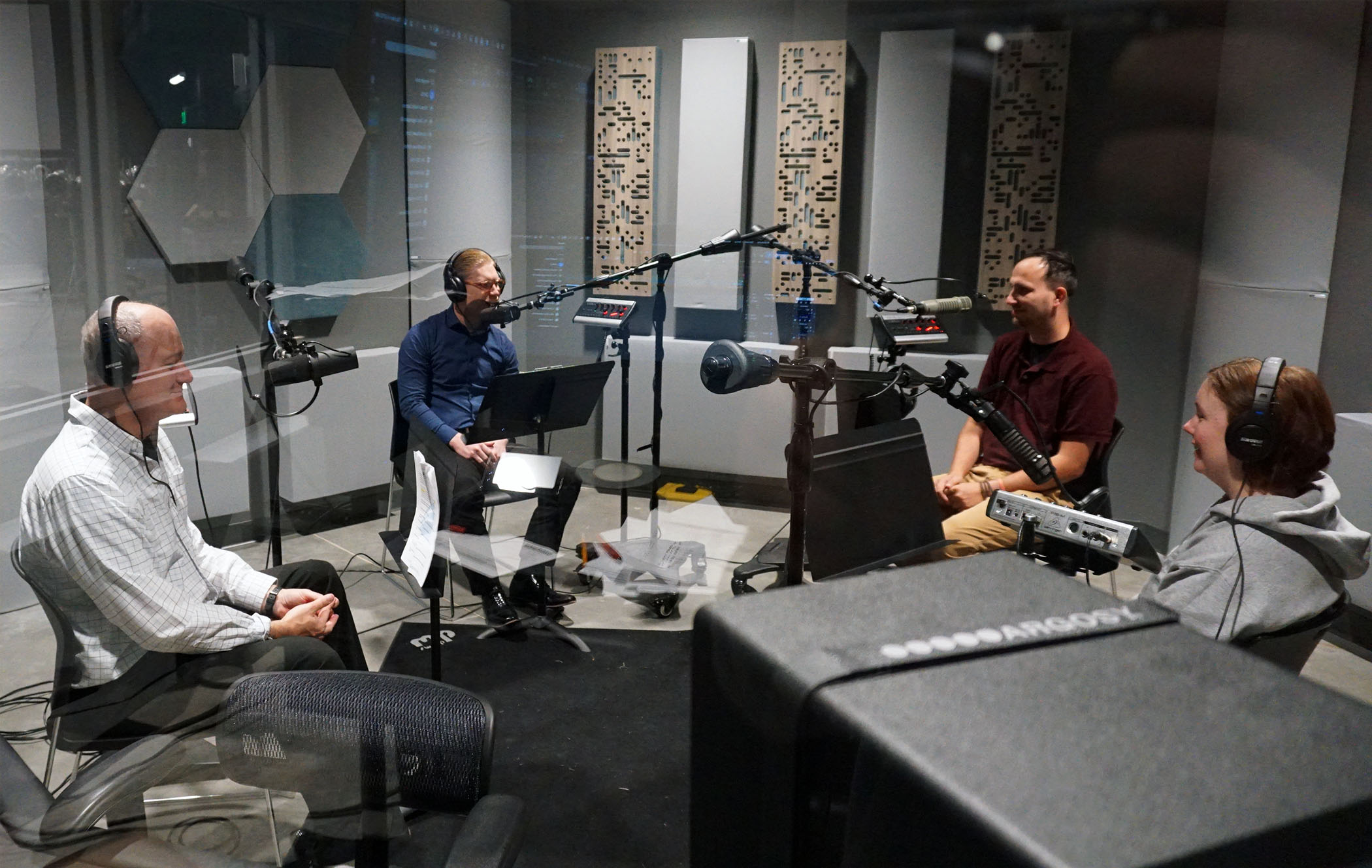
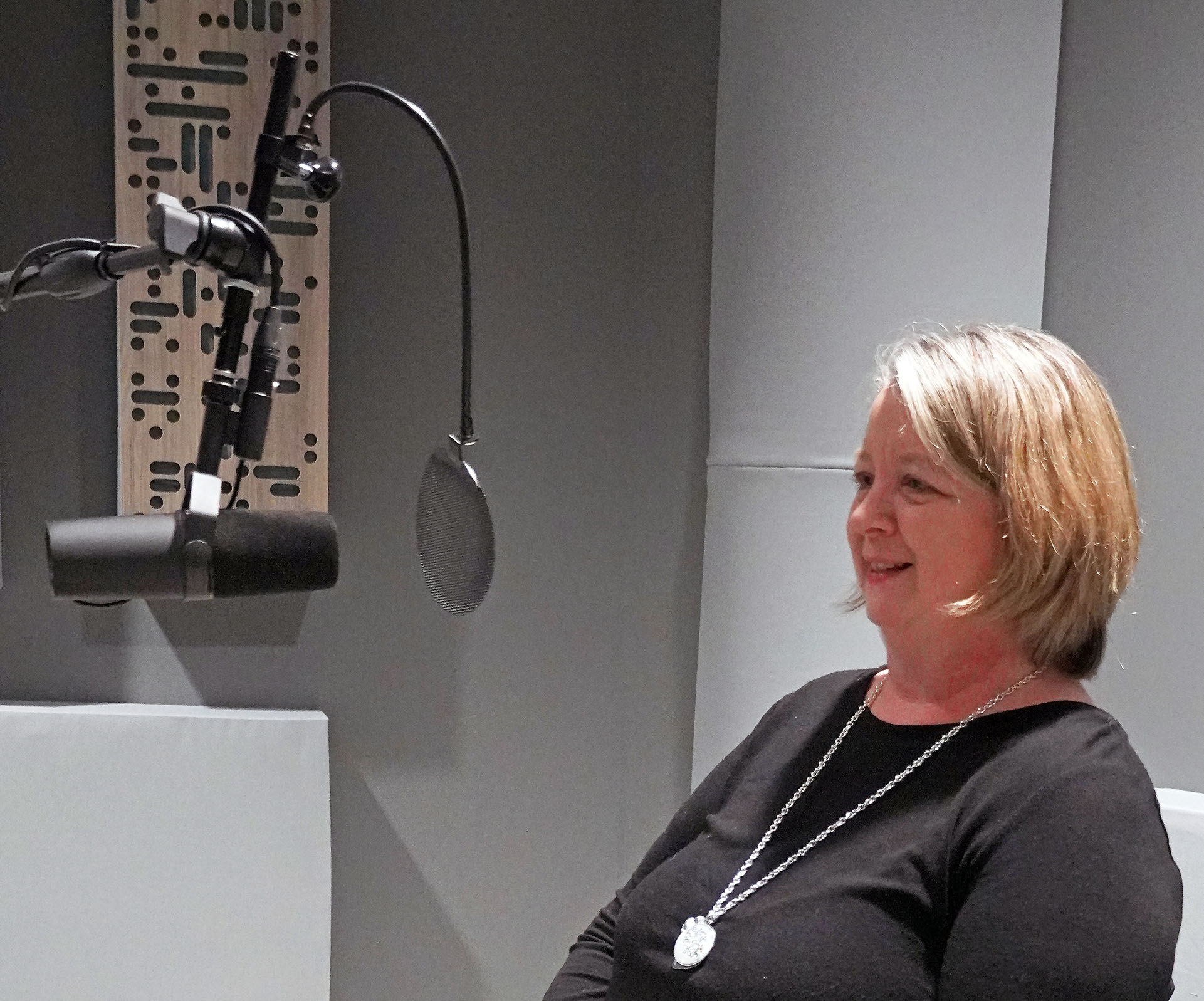
My name is Mackenzie Moore, Gent co hosting today alongside my colleague Thomas Wilson. We're recording from the entertainment technology studio in the technical education complex on our Blountville campus. And. And today we're joined by Vice President for Economic and Workforce Development, Holly Free Allard, as well as Director of Apprenticeships at Northeast State, Ms. Dawn Carter. Thank you both for joining us today. We really appreciate you taking the time out of your very busy schedules to join us to talk a little bit about all the partnerships, all the workforce development that's happening at Northeast State Community College and within our community.
[00:00:54] Speaker B: Thank you for having us.
[00:00:56] Speaker C: Yes, thank you very much.
[00:00:57] Speaker A: And to start off, let's just get a little background for you both. Holly and dawn, what do your backgrounds look like here in our community? And then all leading up to Northeast State and what you do here now.
[00:01:09] Speaker C: So I originally am from Georgia and I spent 21 years in higher education and the last several years of that journey, I was the manager for the State of Georgia for apprenticeship programs.
So upon leaving Georgia, I came to the state of Tennessee and became the state apprenticeship Director through the Department of Labor. And now I am here at Northeast State Community College as Vice President of Economic and Workforce Development.
We love apprenticeships. We were the first college to ever have an apprenticeship program officially.
So we are really excited and we continue to carry that journey with that learning type of platform.
[00:01:51] Speaker A: Wow, amazing. So this is. This role is nothing new for you by any means. Lots of experience, lots of knowledge.
[00:01:58] Speaker C: I feel I've been to doing. Working in apprenticeships for about 10 years.
[00:02:02] Speaker B: Wow.
[00:02:03] Speaker C: Quite a journey.
[00:02:04] Speaker A: We are very lucky to have you here along with us.
[00:02:06] Speaker C: Thank you very much.
[00:02:07] Speaker A: And dawn, what about you?
[00:02:08] Speaker B: So for me, it's a little different. I've actually been with the college for 14 years in various roles, mainly on the student services side of things.
And the Office of Apprenticeship was created by our president, Dr. McCord, about two years ago. And so this is a new role for me and I'm excited to be here.
[00:02:28] Speaker A: What did your role look like at Northeast State before the Office of Apprenticeships was developed?
[00:02:33] Speaker B: I have been on the student service side of things, so I've been in financial aid, admissions, advising.
I was director of the Kingsport campus for Student Services prior to this.
[00:02:44] Speaker A: Wow, amazing.
[00:02:46] Speaker D: Northeast State Norcam kind of initiated this apprenticeship program some years back. It's certified through the United States Department of Labor Tatulus. Little bit about what the apprenticeship program does how it functions and who it serves.
[00:03:00] Speaker C: So apprenticeships is actually a very flexible type of training mechanism and it allows us to be very involved with our employer partners. In fact, you have to have an employer at the table. They drive the apprenticeship program, they help create that curriculum and hands on skill set that's needed. So the first thing we do is we meet with our employers and find out what type of needs they want their employees to have. The other part of that is the employee piece, which means they are already employed. So they're an incumbent worker. For you to be an apprentice, you have to be already affiliated and working with an employer.
So when we have that put together to develop an apprenticeship program, we then tailor it, make it very flexible for the employer themselves and the needs. It also is a model that's known as earn as you learn. So those individuals are working and they're being paid a wage to learn a new skill or to upskill.
So it also those programs can span anywhere from 1 to 4 years according to what occupation or skill set that employer needs as well as when they complete the program, they'll receive a US DOL credential known as a journeyman, kind of an old term, a journeyman card or credential. But it is an industry recognized credential and these industry recognized credentials are known nationwide and worldwide. So it's portable. So if they leave us, they take that with them and it's recognized wherever they go.
[00:04:33] Speaker A: Wow. It seems like the benefits of this can be a little limitless really. Essentially. So they're earn as you learn, they're getting paid as they work toward this credential.
What would the benefits be of an apprenticeship program? I know we've already mentioned a few Earn as you learn, you're getting your credential as you're getting paid, which is amazing. What do those benefits look like for them in their careers later on?
[00:04:59] Speaker C: So it actually allows that individual to have a normal life. They can be home, they live, they have families, they work their normal shifts at work. We at Northeast State will customize and work with them on their hours. So they may not be able to come to school from 8 to 3:30 or 8 to 4. So we offer that classroom and lab, whatever's needed on alternative hours for them. So it really takes dedication from that individual. But they have the ability to continue working and continue at being at home. And when they finish, they have had had the ability to advance within that employer's perspective. It gives them the ability to move at the ladder. It gives the Employer the ability to fill in gaps. The more those credentials, those individuals learn, the more valuable they are to that employer. So they have the ability to fill in gaps when needed.
[00:05:54] Speaker A: Awesome.
I kind of have a two, I guess a two stage question here just regarding how many apprenticeships are currently.
How many employers are we currently working with? And then also, what have you noticed about the needs from our employers right now as it stands?
[00:06:12] Speaker B: Well, we're very proud to say that we have 18 registered apprenticeships right now and we just added an additional apprenticeship yesterday to our notebook. So we're excited about that. Employers. We have many in the region that we're working with and we work with everything from manufacturing to school systems because we do have a teacher aid apprenticeship program.
And the newest partnership yesterday involves the YMCA of Kingsport. And it is an early childhood education.
So really you can apprentice any occupation. And that's what we want to really get the word out is that it is. Our hashtag is endless opportunities.
And that's what we want to provide to the employers of our region.
[00:07:01] Speaker C: And we have around 30 employers that we are currently engaged with and majority of those we classify as our partners. So we will continue to add our partnership wall. And we actually have two walls. We have one here in Blountville that really showcase some of our employers. We also have a wall in ARCAM that showcases our, what we call our AMP partners, which is the Advanced Manufacturing partnerships. And some of those are actually also a part of our apprenticeship programs as well. So stop by and see the walls.
[00:07:36] Speaker D: What, what from your experience, Holly, what goes into kind of building that relationship with employers? Because it's a pretty wide swath of people we cover in industry. You mentioned teacher aid in our education systems. How do you. What's the best way really to develop that, that you've learned over the years or understood?
[00:07:54] Speaker C: So it's just talking, it's developing those relationships, really listening. What is it that they're looking for? What is it that missing? When you look at even the manufacturing world, we've got so many in our region, they may be producing something very similar to someone else, but the key is what it sets them off to be a little bit different. And when you can get to that point, then we can come in and customize that training to give them that little bit of difference that makes it just right for those individuals. When we talk about education, we know there's a teacher shortage that's been out there for a very long time, health care shortages. So you get to the heart of that employer by saying, what can we do to help you fill those slots and those gaps that you have?
Once we can see that, we help them to better understand how the apprenticeship works, we show them the benefits, we often have the opportunity to offset the cost.
Because I will say for an apprenticeship world, the cost of that training is not on the apprentice, it's actually on the employer. That apprentice should not be paying their way for this training. So we have many mechanisms to work. So it's talking, it's talking about how can we get you started. Oftentimes it is finances. Right. So we try to find. We've lots of grants on the non credit side. On the credit side, we have of course, our financial aid piece. So it's just really the collaboration, picking up the phone, if they call, go see them, go visit, bring them in a room.
So that's the key.
[00:09:28] Speaker A: And I know you had mentioned that there is a lot of flexibility as far as scheduling goes and working with the employer and the apprenticeship.
So every situation looks different depending on the individual. But I guess at a glance, what might the day in a life of an apprentice look like?
[00:09:47] Speaker B: The day in the life they will go to their normal work schedule Monday through Friday. For some it's 12 hour shifts, it's seven days a week.
So we work with the employer around those schedules as well to find out a time that they can leave their work and come to ARCAM to be trained or if they're taking credit courses. Then we work with the academic side of the house and we plan more online options than we normally would to accommodate those apprentices knowing that they are in a classroom. For instance, Monday through Friday from 9 to 3. So what classes can we offer in the evenings that would work for them or what can we do online for them that will work?
So we really collaborate with a lot of parts of the college to make this work for the apprenticeship schedule.
[00:10:39] Speaker A: And how many apprentices are there currently? How many people are training right now?
[00:10:45] Speaker B: So we have around 70 active apprentices right now.
And we do also provide what is called related training for several industries in this area that we do not sponsor. But we do provide training for those apprentices. So we're also actively involved with that group as well.
[00:11:06] Speaker C: And often we can have anywhere from 4 to 500 of those at one given time.
[00:11:11] Speaker B: Yes.
[00:11:11] Speaker A: Wow.
[00:11:12] Speaker B: And we play an active part with those partners as well.
[00:11:17] Speaker D: The global economy certainly has its wrinkles here and there, but our regional economy also has the need, I guess, when you start talking about teachers aid and childcare development.
But Even from that kind of trickle down effect of what the global economy is going on. What are employers telling you that they need in the future or what are you hearing? That they're projecting some things we may need in an apprentice in the next year or so.
[00:11:44] Speaker C: I definitely say they're just needing individuals first to step into the workforce. They need folks to join whatever occupation setting is out there. And once they join that workforce, what skills do they need? And we often see a gap. I know you all have heard Dr. McCord talk very often about gaps of people and gaps of skill, because once a generation leaves, that leaves a whole. If those that training had not been modeled down the line. So it's really important that we find mentors, mentors who've been in that workforce for a very long time to kind of handhold these new individuals walking into this profession, no matter what the profession is. But we also see a lot of AI And I feel like we don't need to be scared of AI, we need to get in front of that. Our employers have an expectation of us when our students leave to be ready to walk straight, straight into that workforce. So we are trying to on our side, especially in occupations such as machine and machine tool and die machining, there is a big push for AI. So we're trying to get ahead of that. What is it that the employer looks at as far as machining? The actual name brands they use? Because we know there's many out there and what product are they building and what curriculum is out there? What curriculum can we take to modify to fit that? So we're really, I think that right now is something we hear a lot about, is AI. And I know as a college we're working towards generating committees and trying to stay ahead of that. But it is, it is important then when graduates leave us and apprentices leave us, that they have the skill set to walk straight into that employer and be able to perform at the level that is expected.
So, you know, as the wrinkles come, we just have to adjust and iron them out and keep moving.
[00:13:36] Speaker D: Exactly.
[00:13:38] Speaker B: One of the things I will mention too about the apprenticeship programs that's beneficial to the workforce in our area is they can take a untrained person, they can hire that untrained person, and the apprenticeship allows them to then have a really skilled individual that can do the job for them and meet all of their needs.
So that does open up the doors for many of the industries in our area that they don't have to hire someone that's already trained if they have an active apprenticeship program with us. We train them, we help them get that training and so they can look at maybe a different set, different group of potential employees than they normally would.
[00:14:21] Speaker A: And I know you all had mentioned we're in talks, we have a relationship with around 30 partnership companies, around 30 partner companies.
Manufacturing, construction, healthcare.
What kind of companies hire from this program? Could we list off a few just within our own area.
[00:14:40] Speaker C: So what we see it's they don't really hire from the program, they are engaged in making the program.
So when we talk about, I think most people know in our region that Eastman is a big partner of ours and oftentimes if Easton wants to start a new program, we work with them to create that program. And we are not a sponsor for Eastman, but we are an RTI provider for Eastman. So we work collectively with them in that apprenticeship program.
Some of our new ones, again, we like to talk about the teacher aid because again, Northeast State was the very first to create a teacher aid program and we sponsor several of our county schools and we developed that program along their side. And not only that, Tennessee was the first state to create the teacher occupation. And I was very fortunate to be on that journey and be a part of part of that. So it's really exciting.
So even when we talk about why employers hire from, they're not really hiring from, they're help creating, they are building these programs and we're along that journey with them.
So we see that a lot.
[00:15:56] Speaker A: Awesome. And I have another question. And you know, it might just be totally. Just let me know if it's. Oh no.
So these credits, they, they work toward credits as they're employed with specific employers, they can earn their certificates. Are these credits transferable if they do want to eventually pursue an associate's degree?
[00:16:18] Speaker B: Well, again, back to the flexibility. We have several options for apprenticeship programs.
Mainly at arcam, we can build an apprenticeship program based on structured training, which would be a non credit course.
We are very, very proud of the fact though that we are now crosswalking those programs into credit courses. So for instance, an apprentice can finish a machine tool apprenticeship program and receive about half of credits towards an associate's degree program, which is awesome. If they have credits from prior college, we can award those as well. So they may have a handful of classes that they will need to complete to then have an associate's degree as well. So those are what we call stackable credentials. So we're looking at they have completed a Department of labor certification and then they would receive an associate's degree. So that's one pathway that we have. We also build apprenticeships on the credit side.
So along with the on the job training that the apprentice is receiving, they are getting courses here at the college. So they're taking credit courses.
And so when they finish their apprenticeship program, they will have a certificate from the college. They may have an associate's degree from the college along with their department of labor certification. So again, it's stackable. It's just in reverse if you think about it.
[00:17:46] Speaker C: Two folds.
[00:17:47] Speaker B: Yes. It's twofold.
[00:17:48] Speaker C: You can go either way.
[00:17:49] Speaker B: Yeah, go either way. And so that's what we're really excited about and is honestly I consider groundbreaking because it's not really been looked at and done before. And it's the hot buzz in the apprenticeship world right now because you want to be able to give someone that's worked that hard and been through all of that training as much credit as you can.
And for us to, as a college be able to do that for individuals in our area is pretty awesome.
[00:18:22] Speaker C: And it takes a lot of work between our side of the house and the credit side of the house. And we, we value that relationship. We work really hard on that relationship. And I'll say this too, I think we're the first college that has to actually create a crosswalk. So we're a lot of first tiers, which is really good.
[00:18:41] Speaker B: And it really does take. I want to applaud our academic side of the house because that's part of something I've worked really hard on since I came into this position is educating that side of the house on apprenticeship programs and the benefit that they can provide to our workforce in this area and having them to be able to offer those flexible courses, the online course options that we've not offered before to look at the benefit of. We are now working with working adults rather than a traditional college student, maybe. And I'm just so proud of the college and how we've been able to collaborate on that.
[00:19:21] Speaker C: And in turn, they've taught us what criteria and what courses are extremely important to be able to develop in that apprenticeship program.
We do a lot of, if you think of medical world, they've got licensures and certifications that they have to be able to pass to be able to practice. And they have helped us be sure that we are including the curriculum needed for those individuals to be successful as they leave us. So it has been definitely learning on both sides of the house.
[00:19:53] Speaker D: Now, the apprenticeship program sounds pretty challenging if you're in work and School, this is not.
It takes a lot of focus, a lot of attention.
What does an apprentice need to have as far as to prepare, to be successful, to carry this to the future, to get the certificate. And just in youralls experience, who is really a good apprentice?
[00:20:16] Speaker B: So apprenticeship program is the best candidate would be someone that is willing to learn, someone that has a desire to upskill themselves, someone that has a loyalty to the company, someone that can realize the loyalty that their employer is providing them.
Because this is a commitment by the employer as well, whether it be financial or whether it just be the time that the employer's taken to sit down with us and create an apprenticeship program.
So it really takes the loyalty, the desire to learn.
Some of the things that we teach are good communication skills. We hear that a lot. That's a buzzword in workforce right now. And with the apprenticeship program, it's all encompassing. So we're helping them to gain all of their skills, not just hands on that they will need, but how they will address others in the workforce, how they will speak to their co workers, how they will communicate written. So all of those skills are all encompassed in apprenticeship programs.
[00:21:22] Speaker C: I think one of the key things too is to know that those individuals need support and that we're here to support them. We offer tutoring services, especially when we're talking about some of the manufacturing that's out there. Our instructors take the time and set up tutoring labs and tutoring times to spend extra time with students who may need it. We can even extend the apprenticeship program. Let's say life happens and they do not, they're not able to complete within a two year time frame. That was initially the thought behind that program. We extend that time, we do what we can to help them and also we just connect them to the benefits that are there. You know, maybe, maybe they needed to step away for a little while or maybe they need some financial help and we do everything we can to assist that.
[00:22:09] Speaker D: Now if you're an apprentice, you also have the same. You mentioned tutoring. All the services Northeast State provides, you have access to all those as well
[00:22:17] Speaker C: if you're an apprentice? Absolutely, yes. Yes.
So we're able to help. Sometimes everybody needs a little bit of help. We all can't be well rounded in every subject area. So we're there to help them.
[00:22:29] Speaker A: It's national apprenticeship week. So April 26 to May 2.
What does that entail? What's been going on in yourall's busy schedule so far this week? I know that you secured another apprenticeship Partnership. Just yesterday.
[00:22:43] Speaker B: Yesterday. Yesterday we did so that the timing could not have been more perfect for us to get to celebrate that this week for National Apprenticeship Week, we are also going to be recognizing apprentice on Friday that has completed an apprenticeship with Cardinal Glass, one of our partners, and we're excited about that.
Tomorrow we are going to be hosting Apprenticeship Celebration at Arkham. We have invited all of our partners. We want them to bring their apprentices, some community members, and that will be from 11 to 1. We're going to just have lunch, provide lunch, cook some hot dogs, have some music, just make it a fun event.
And I have lots of apprenticeship swag to hand out, so that'll be fun.
We try to recognize that week in a different way every year.
So a couple years ago, we did a panel discussion between partners and apprentices, and that went really well. And this year, they actually changed from fall to spring. So we decided it's time to bring it outdoors and just have a fun time. So.
[00:23:49] Speaker C: And apprentices are being celebrated all the way across the nation this week. So that's exciting.
If you see it on the news or you see it on websites, this is a very exciting time that we celebrate them and the hard work that they have put forth in a program.
[00:24:05] Speaker D: Now, there's a rumor at this big celebration that Ron Broadwater's hot dog chili recipe might be included here. Because I never miss a chance to mention Ron Broadwater because he was a pillar over there at RCAM for just a tremendous teacher.
[00:24:18] Speaker B: Ron was a pillar at Arkham. And I do understand that we have acquired his chili recipe and we. I have coerced someone to cook that chili recipe for us for tomorrow. So we will have Ron's chili. Ron will not be cooking the hot dogs. We have Mark Baker that is a coordinator for the apprenticeship office, so he will be taking that over.
[00:24:44] Speaker C: He has a new duty as a servant.
[00:24:46] Speaker B: He does.
[00:24:48] Speaker C: And the chili might not be quite as good because Ron's not cooking it, but, man, we're excited about it. It.
[00:24:53] Speaker B: We are excited.
[00:24:54] Speaker D: Let's go have some fun at arcam. Yes, absolutely.
[00:24:58] Speaker A: Now, when employers are in early discussion with us regarding the curriculum that their apprenticeship program may entail, what skills are they seeking usually? Or maybe what credentials are there? What types of gaps are they seeking to fill? And this could vary by company to company, but even just one example, maybe.
[00:25:20] Speaker C: Well, again, when you look at generations leaving and new generations coming in, there's always that gap. And it could be just the simple gap of communication. It could be the simple gap of responsibility. And I call those simple. They may not be simple, but they are things that we try to teach every day.
When we have our apprentices come in the door, it's like going to their job. They clock in on time. And if they're not on time, then, you know, there's, there's those things that, those hard conversations.
So that is a skill gap. But not only that, it's just teaching these new individuals who may know nothing about manufacturing, who may know nothing about education, how to take on that responsibility. And being with a skilled mentor is so important.
So fill in the gaps of the skill. And watching someone who's been in that world for years and years and years, it takes a while. It takes a while for all of us. You know, they say when you're hired, your first year, your first two years are the hardest.
And I agree. But we always continue to learn, we always continue to build.
The great thing about, as dawn mentioned before, about apprenticeships is the flexibility. You may have not known that world and you stepped into it. I'm a perfect example of that. My background's nursing. I was in health care for many, many years. And just someone looked at me one day and said, we need help in apprenticeships. Would you, would you consider stepping in to this avenue and try? When apprenticeships were really big, and I was like, sure. So you need the unicorns of the world because that only builds those gaps in that knowledge. So there's gaps, we just have to figure out how to fill them.
[00:27:03] Speaker B: I think one of the things that makes our partnerships so strong though, is that we do sit down and really listen to what our partners need.
As we've talked earlier about how we keep those relationships, we often visit the site to actually get a visual of what, how the workflow is, how their processes work, just the attitude of their employees.
And that helps us to realize what they need as well.
[00:27:31] Speaker A: So when we say on site training, we have instructors going to these job
[00:27:35] Speaker C: sites different in some situations. We do like a lot of OSHA training, even through our adult education. And I know that's not apprenticeships, but it is apprenticeships too, because we have that relationship with adult education. We do have instructors who go into certain companies and do teaching, but also we rely that employer with an apprenticeship program that on the job learning is coming directly from the employer, coming directly from a seasoned employee in their company that works hands on to develop that skill of that other employee.
So that's a way we fill that gap. They may just be learning the culture and environment and when we talk about mentors, that's extremely important. And that's one of the things that employers, when we talk about going back to filling that gap, they want to find a seasoned employee to fill the gap if they're leaving for someone new to come in. So that on the job training is truly in that world and occupation on the floor, in a classroom, on the hospital floor, they're learning that skill set with a seasoned employee of that company.
[00:28:39] Speaker B: And us visiting and getting a visual really helps in the realm of manufacturing because oftentimes we will duplicate what their processes look like at arcam so that whenever they come to RCAM for their lab instruction, it looks exactly like it does when they're in their workplace. And we can often do that by donations of our partners. They will donate equipment to us and help us get that set up.
[00:29:06] Speaker C: So then they're learning that in class, they're learning the textbook, they're learning the hands on. Then they go to work and they're with a mentor for on the job learning.
[00:29:15] Speaker B: That's part of the beauty of an apprenticeship is it's all encompassing. It's coursework, it's testing and then it's hands on.
[00:29:23] Speaker D: Now we were at the, the signing we did earlier this week with the greater.
The YMCA of Greater Kingsport, I believe, for child care and how we're going to move into that apprenticeship. And I was talking to some of the representatives, the YMCA and for child care. They served almost 900 children, which if you want to talk about needs and where a demand is, if you have children, child care is a very real thing. Every day, every hour sometimes.
Is that a hidden need that's out there that maybe doesn't get a lot of.
It doesn't get a lot of publicity, a lot of talk about. But are there hidden, other hidden gaps out there that apprenticeships can serve? The way we're stepping in and kind of doing it with, with child care and even, even with teachers, aids.
[00:30:16] Speaker C: I think there's a lot of occupations out there that people often don't think of when we talk about apprenticeships. Apprenticeships is an old term. It's been around since Thomas Jefferson. It's been around many, many years. And we often affiliated that with trades. Well, it's not just trades. There's so many different avenues. You think about the medical world, it's the perfect scenario for apprenticeship. Why? When a student's doing their clinical rotation, they're on the floor, they're caring for a patient that is on the job training. So you can think of it in that way. Also, when teachers are doing their student teaching, they are on the job learning. That's an apprenticeship. Oftentimes, the term apprenticeship can be interchanged with internship. An internship is something we are very familiar with in higher education or in education in general. That's truly an apprenticeship opportunity.
We have so many. There's over 5,000 different occupations, and probably even more than that, since I've been in what they call the rapid system, which is our accounting system for the Department of Labor.
At one point, there were like 5,000 different occupations. You name it, There is something out there. You know, we're on the brink of even looking into culinary, which is exciting for us.
That is a perfect example of an apprenticeship. So if you can sit back and think of all the different occupations, are they hidden? Maybe. But are they just not talked about? Even more so. But we can develop an apprenticeship program with almost anything.
Anything. The employer just looks at us and says, hey, can you do this for us? We research it, we go into the database, we find something. We truly build it from scratch.
And then we can take what we've built and we can elaborate it and customize it to whomever needs it.
[00:32:04] Speaker B: Awesome.
[00:32:05] Speaker A: A lot of. A lot of opportunities available.
A lot of potential.
So that's exciting.
And I know that we had our first cohort of our radiologic technology program. We had them as guests a couple weeks ago, and they were talking about clinicals and the time and hours that go into that. What kind of health care. I guess apprenticeships are currently available. What do those pathways look like?
[00:32:36] Speaker B: The one that we're currently working with is the ccma, the Certified Medical Assisting Program.
We are open to looking at others, as always.
That is the one that we are working. We've got a couple partners in this area that we have established that with and have active apprentices in that area.
[00:32:56] Speaker C: And we actually have something called the Rural Health Grant. And this grant is a federal grant that's ran through the Department of Labor, which has opened up a lot of different avenues for different populations, but it also has anything to do with healthcare. So we have pharmacy tech. We've had several adult education individuals come through that program, doing their hiset, working with our workforce solutions, trying to get a credential for pharmacy tech. And we've had a couple who have done so, and they're prepared to sit for their exam, and it was paid for through this grant.
We have the ccma, as dawn mentioned, which is probably our most popular.
We also have what's called our. It's almost like a medical receptionist, but it's the medical assistant, administrative assistant, something along that line. I may have messed that one up, but it's the. It's a medical assistant who works front office, but it's more on the clerical side. We have that opportunity. We have billing and coding.
So we have lots of different opportunities. We have another one that's on the lines of coaching for drug rehabilitation that we're running. So here we again have this perfect scenario. If we've got adult education, working with workforce Solutions, we have money to pay for these types of trainings, and we continue to push them out and continue to work towards building more medical types of occupations for apprenticeships.
[00:34:28] Speaker B: And as Holly mentioned, we work as a team.
So oftentimes when we visit with an employer, they may not be ready to do an apprenticeship. They may have an immediate need of just getting employees in the door.
They may have an immediate need of just a quick training.
So by going as a team, we can offer all of those options to the employer.
[00:34:51] Speaker C: And of course, we also offer phlebotomy. I don't think we've generated an apprenticeship program through that, but that is a very, very popular program that could easily be transferred over into the apprenticeship model.
We at any time would love to talk to anyone who is interested in an apprenticeship program and visit, or they can come visit us. We love to extend that offer. So we're waiting.
[00:35:16] Speaker B: And oftentimes it takes many, many meetings. I mean, we've had up to 12, 15 meetings with an employer they will revisit a year later. They need to think about it. They need to figure out what their needs are.
So we, we spend a lot of time with our partners. Oftentimes it's not a quick take. It's many meetings, many discussions to get to the point of signing of them becoming a partner and us creating that apprenticeship program that works for them.
[00:35:47] Speaker C: And we also can step back and redo because with time and the changes of the world around us, things change and we go in and we change it and redo it. And we just want to get it right. So we work closely with those employers, staying adaptable. That's right.
[00:36:04] Speaker B: That is very happy. Very true, very true.
[00:36:08] Speaker A: Have you all ever had an employee coming through rcam?
Maybe they were in classes or.
But have you ever had an employee, not necessarily an employer, spark that idea of an apprenticeship for a certain pathway? Maybe an employee who went to their employer and said, I think we need this among the team, or I think this opportunity would help us.
[00:36:36] Speaker B: I think a Lot of our partners do get their employees input because they are truly boots on the ground a lot of times. And so they do bring in their employees.
Cardinal Glass, I would use as a really good example, because they have a really high number of already skilled employees that are doing the job. They don't have the credential. And so they came to us and said, we want to help these employees get that credential.
Can we look at some ways we can give them some prior credit for things they've already done?
And ultimately they will have the Department of Labor credential to walk away with.
So really, it is internal from our partner's point of view that they are listening to their employees, they are seeing what their needs are, and then they will come to us. But a lot of times there's employees sitting at the table when we have those discussions because they really know what's happening on the floor.
So I will, I would say, from that perspective.
[00:37:42] Speaker C: And of course, you know, sometimes employees leave. They'll leave and go to another company. And we have had those who were apprenticeship graduates or have their certificates that went to another manufacturing world or another location said, hey, I'm an apprentice. Have you ever considered starting an apprenticeship program now to say, have we been successful in that avenue? It's hard for me to say we have or we haven't. But I know we've had those conversations with some. Some employees that have left one company and have migrated to another. And we try to encourage that as much as we can.
[00:38:19] Speaker B: Most of our partners are involved in some type of workforce meetings in the communities, and they talk to each other.
We also do advanced manufacturing quarterly meeting of either partners that we have that are doing apprenticeship programs with us, or we provide structured training to them and they come together. And a lot of times there's a lot of chatter within even that meeting of they hear success of apprenticeship programs. And it also works on the credit side, because in school systems, we have a couple of school systems that we're partnering with. Other school systems in the area are hearing chatter about how successful that's being.
So that's where we get a lot of feedback. That's where we have people reach out to us that are interested, they hear good things about what we're doing, and they want to know how they can get a hold of that opportunity.
[00:39:15] Speaker C: And I will say, in some of our, what we call AMP meetings, the Advanced Manufacturing Partnership meetings that we have, they all feel very comfortable with each other. So let's say they lose an employee to another person. Sitting across the table from them. But they're not as hurt by it because they know the skill set that they may have been in the beginning of that skill set to give them the opportunity to grow. And now they're receiving it as a partner in the community who've been able to also be rewarded with that skill set. But that just speaks volumes about what we do as an institution and the fact that we are truly, truly preparing generations to come for the workforce. And I've heard that many times they laugh about it, you know, and give each other a hard time, but they're very confident and the training that those individuals are gaining through us.
[00:40:05] Speaker A: Now, let's say an employer is listening right now.
Maybe some thoughts are coming. How do they reach out to you all? How do they start? How do they launch this process?
[00:40:16] Speaker B: Well, they can reach out to me.
My information's on our website, northeastate. Edu.
And once they make initial contact with me, we'll start a discussion, see what their needs are. And I bring in, if it has to be a representative from rcam, if it has to be someone from the academic side, I'll start bringing in people within Northeast State to have those conversations.
And we just go through and talk about what their initial needs are and build a program from there.
[00:40:47] Speaker C: They can also reach out to me. I'm at a lot of community events. I am in many committees. I serve within our community.
They can call arcam, that's my office, ask for me, and I can connect that individual to whoever or even speak to them personally about what they may need.
[00:41:05] Speaker B: If they reach out to any member of our team. We make those connections wherever we feel the need, need can be met.
[00:41:12] Speaker C: We're here to serve and we're here to make our community a better place and make that a place for individuals to grow and live.
[00:41:21] Speaker B: Wonderful.
[00:41:21] Speaker D: Outstanding. Holly dawn, thank you both for joining us so much today. It's been very enlightening to learn about apprentice apprentices, the apprenticeship process, and what Northeast State has got to offer through, through the apprenticeship program that's done there at RCAM and beyond. Thank you for joining us so much.
[00:41:38] Speaker C: Thank you.
[00:41:39] Speaker B: Thank you so much, Tom.
[00:41:41] Speaker C: Thank you, guys.
[00:41:42] Speaker B: Thank you all.
[00:41:43] Speaker D: Well, that's it wraps up another episode of The Sound Bearier Friends, thank you for joining us. If you want to learn more online, go to manufacturing future.net that's manufacturingfuture.net go through the website. You'll learn a lot about the apprentices. So many things that Northeast States RCAM has to offer just on that website. If you want to know more about More Northeast State, NortheastState. Edu. That's NortheastState. Edu.
Visit the website, Register, Apply, Check out everything we've got online.
The online campus, the on ground campus. We're registering right now for summer and fall, so it's a great time to sign up for classes.
As far as The Sound Bearier well, you can find us on your favorite streaming service. Spotify, Pandora, Apple Podcasts, Google Podcasts, Amazon Music. We're on them all. Click us on subscribe, Leave a review. We're always happy to read your reviews and get a five star win would be great.
Until the next episode. This is The Sound Bearier We'll see you soon.