Episode Transcript
[00:00:00] Speaker A: Foreign.
Barrier. Northeast State Community College's official podcast. My name is Mackenzie Moore. Gent joined today with fellow co host Thomas Wilson in the entertainment technology studio in the technical education complex on our Blountville campus.
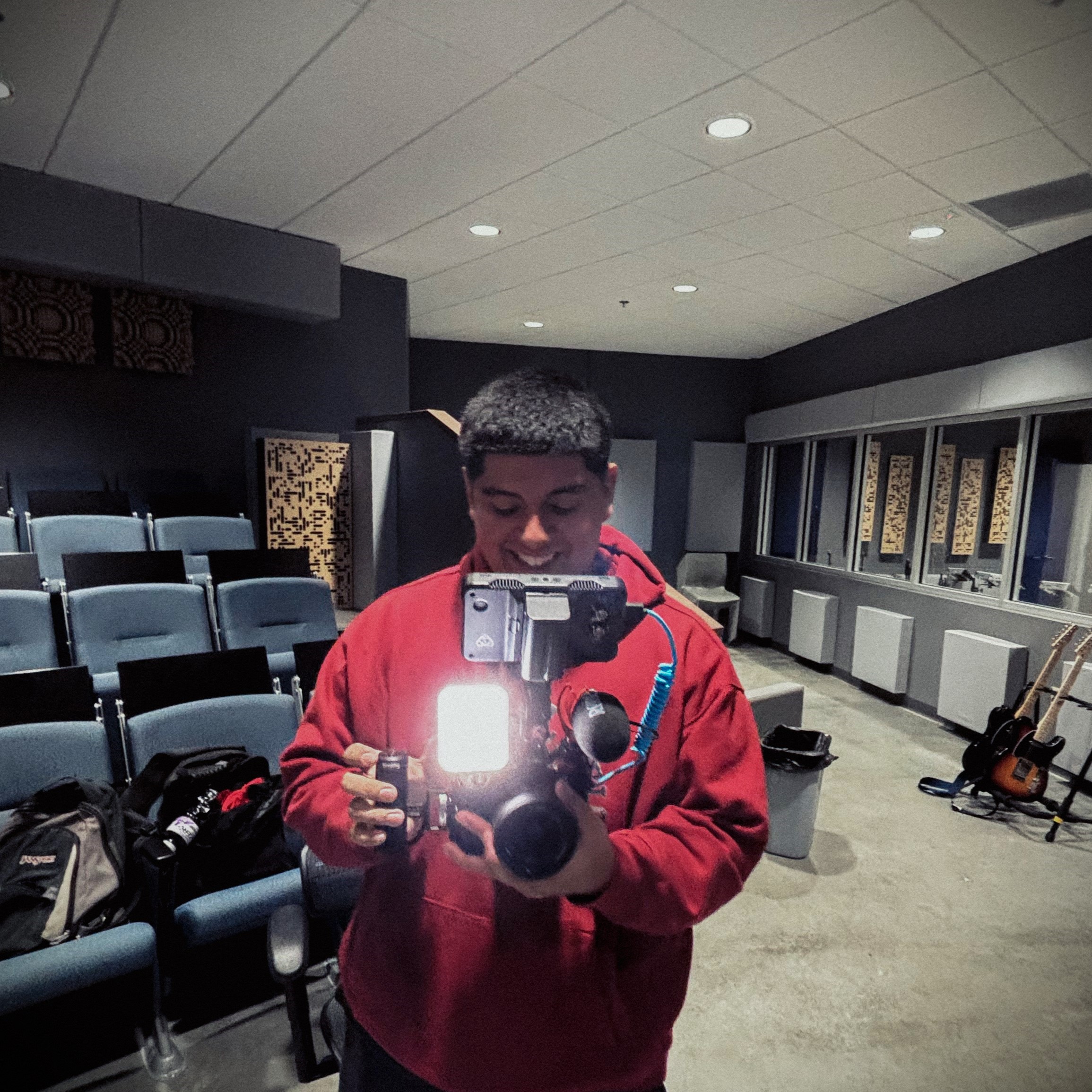
Today we're doing a little bit of a role reversal. We've pulled in the man behind the sound who has made sure that all our podcasts up to this point have been phenomenal. Working the soundboard, went through our entertainment technology program himself, Jordy Barrades.
Jordi, thank you so much for joining us today.
[00:00:49] Speaker B: Yeah, thank you for having me.
[00:00:51] Speaker A: Awesome. So now that we're in here, we're just really wanting to get a little background on you too. The man behind the sound, usually behind the scenes. Now here you are. You were in our entertainment technology program. So just a background about yourself and then what led you to Northeast State?
[00:01:08] Speaker B: Yeah, so I graduated in 2023 from Scienceville High School and kind of what led me to Northeast was just a bunch of unpreparedness, I would say. I was planning on going to TCAT at first in H vac just because I didn't really want to do like a whole traditional four year school. I wanted to go more into a trade.
And then my older brother, his good friend Brandon Logan, who actually went through this program and was a lab tech for a bit and was doing a podcast before I was, he let me know about this program since he already knew that I kind of like some of the technology stuff as far as like video and broadcasting and stuff like that.
So he told me about the program and then I asked some advisors at Science Hill about it. They kind of gave me some insight on the program and I was like, oh, well, I guess I'm gonna go there. And it was kind of a last minute thing.
Didn't really plan on Northeast as my first choice. Like I said, I was mainly thinking about going H vac route to tcat. But then I heard about the program and it really sparked an interest and I was already doing some AV stuff at Science Hill with their AV program there.
So I was like, oh, well, I'll just do that since I already like it and enjoy it. And I didn't even know Northeast had that as an offer here. So it was really kind of all in a blur how it happened. But I'm really glad I did do the program and now I'm the lab tech here. So yeah, it's been great.
[00:02:35] Speaker A: Awesome. Yeah. So you've since graduated and now you're working here. What's that transition been like?
[00:02:40] Speaker B: Yeah, yeah, at first it was a little awkward because some of the students who are still in the program, I was going through the program with them as well.
So kind of just like having a role as a student was a little awkward. But now that most of those, I guess my peers that graduated, I kind of oversee some of the younger first year students when I first got the role. And they're all really good kids. They really show interest. They. This first year class has been really great. And as far as the capstone students go, it's been a small capstone group, but they've been amazing. Really hands on and eager to learn. We did our spring festival a couple weeks ago out in the amphitheater and they were really urgent on stuff they had to do. So doing that was amazing.
They really show a lot of promise in the field.
[00:03:31] Speaker A: So they were like on all the soundboards, they were directing that. It was the ETSU bluegrass was playing, playing and then the sound was.
[00:03:41] Speaker B: Yeah, they, they've been very efficient with their time and planning throughout the semester. They have projects going on on top of the concerts that we produce during the semester. So they stay pretty busy. And once you do a live show, like an outdoor show, it's a lot of setup, a lot of hands on, heavy equipment moving around. So seeing them pull that off with only I guess eight capstone students and then some first year students participating in that event, it really shows like a good future for the program as far as like people dedicated towards the work even though they know it's a little bit rough. So yeah, it's been awesome.
[00:04:23] Speaker C: You said you had some experience, I guess in the AV club at Science Hill. You were doing a little bit of that the first semester as a student here within the program, what were kind of those first hands on experiences that the faculty here had you. Had you doing and what, what. How much of a transition was that? Was it a shock or how did you handle that first semester?
[00:04:41] Speaker B: Yeah, so when I graduated from Science Hill, their AV program is a little bit more different over there. It's more video related as far as like what we do is more live event and studio production.
We do some like MIDI stuff in Science Hill when I was there. But mainly what we did was like morning announcements broadcasting.
So we would have a teleprompter operator and then camera operators. I usually was like an anchorman, I guess for the like the morning news show. So I was on camera a lot, giving either just daily announcements or we did like a sports segment. So we had like sports anchors and Stuff the AV class. When I was there, the first AV class was in a room in the CTE building, which then we got a new classroom that's like behind the old cafeteria.
And it was a whole new setup. Computer lab with the studio in one big classroom and then a control room as well inside. So it was a big change seeing what they had here compared to Science Hill.
As far as like, first hands on thing here is going to be cable wrapping.
If you ask Will or Brandon, that's the main thing over under. Yeah, that's like the main thing that we emphasize being efficient on that.
Some people don't think it makes a big difference, but once you're out there doing a changeover, you got 10 minutes to change over. A band over under is going to pretty much save your life. So. Yeah. Yeah.
[00:06:14] Speaker C: What's. What's it like recording, kind of producing, mixing a podcast? Like what we're doing right now. What. What have you learned doing that?
[00:06:23] Speaker B: Yeah, so a lot of it is just monitoring audio levels. I guess when there's like big bursts of laughter is kind of. When I pull the fader down, I will say it's the setup. You kind of got to get it right. A lot of people don't really like the microphone right in their face, but it's kind of part of what you have to do to get the cleanest sound.
Because of You don't have it in front of your face and you're talking really loud, it's going to bleed through into the other mic, so. And then you just get a little bit of like, I guess, frequencies that you don't really want in there or sound you don't want in there. So.
[00:06:53] Speaker C: Yeah, that's why we put our phones on airport airplane mode.
[00:06:56] Speaker B: Yeah.
So I was told that sometimes there's like signal disturbances between, like having your phone with. I think it's just Bluetooth on. I've never really had a problem with it in here. I know Brandon Logan said he had some weird crunchiness in his audio when it happened once, so it was like a pain in the butt to clean up after. So.
[00:07:19] Speaker C: Yeah, I remember Brandon. I do remember Brandon well. Yeah, he was here for a couple. A couple seasons with us. Yes.
[00:07:24] Speaker B: Yeah. So him and my older brother played soccer in high school together, so they've known each other for a while, and they were going to go play soccer at Johnson University together, but my older brother ended up not going.
He kind of just stayed at home. And then John Brandon, I think, was at Johnson for a year before he Came to Northeast, so. Yeah.
[00:07:45] Speaker A: Oh, okay. And so when you were a student here, did you have an idea of what you wanted to do? Did it compare to what you're doing now? Did you see yourself actually working here when you were a student here?
[00:07:57] Speaker B: Not really.
When I came into this program, I was mainly thinking of kind of like video broadcasting, which I in some way, I do do that with bts.
I work on their production trailer during football season and then when they have graduations and rec rhythm and roots as well.
I also do some work with PISGAH AVL out of Asheville. And then as well, I've done some events with Express EAV as well. So I never saw myself in this position here at Northeast. But when Brandon got the lab tech position, the work study position opened up and he told me to go ahead and apply for it. I ended up getting that. And then he was only a lab tech for about like a month or two before he got the job at Discovery in Bristol. And then Will said that since the work study position kind of does what the lab tech does, I could just fill that gap right in as soon as he left. So kind of worked out. Really glad it worked out like that. It's been amazing being here, so I really enjoyed it so far.
[00:09:01] Speaker A: And so, you know, it seems like you've worked a lot of live sets, a lot of live entertainment
[00:09:09] Speaker B: that can
[00:09:09] Speaker A: get a little chaotic and has there ever been a time, I guess, that's most memorable to you, where maybe something wasn't going exactly as planned? What was that like? How did you. And I guess the team, if you're working with the team, how did you all navigate that? What's that like?
[00:09:25] Speaker B: Yeah, I'll say. Probably the most difficult obstacle we had to overcome was. I think it was my first year we had a show going on.
I can't remember exactly who it's playing, but we do a separate mix for our broadcast on our YouTube channel on our Digico console. We don't.
The Digico is a little bit harder to go in depth to just because there's so much you can do with it. And for some reason we weren't getting certain channels on the Digico and I think it was just a routing issue. But we were all huddled around it, going through all the settings, seeing what was patched in, and it was a really simple fix, I think we just didn't do. And did you go has a setting where you can do an auto patch where it goes like one through a certain number.
But we were trying to do it manually. And we misclicked one button, and then it threw everything out of order so our channels weren't showing up correctly.
It's just simple stuff like that every now and then that students ran into just like one thing you miss clicked or one thing you forgot to click. Usually what happens. But as far as memorable, though, working a live event, I would say the Flo Rida show at Freedom hall, the ETSU SGA show.
That show was really fun. And the Northeast students who did work that. Actually, a lot of us went on stage with fl.
He does it almost at every show where he brings a group of guys on stage, and then like after that song, he does a group of girls on stage. So I have some pictures and videos of that. It was really fun. So.
[00:10:54] Speaker A: So, yeah, I'd love to see this. That's awesome.
[00:10:56] Speaker B: Yeah.
[00:10:58] Speaker A: It takes humans. It takes humans with experience and the skills necessary to put on live shows to produce videos, entertainment. I mean, you said you have experience in broadcast, too. What's something that the general public, those who don't work in the field, what's something that might be surprising to them about entertainment technology?
[00:11:18] Speaker B: Yeah. So I guess I'll use my role at BTS as the main example. So. So what I do there is called shading.
So basically what I do is when we set up our cameras, I go through and color correct them.
So set white balance black levels, change different tints. Like, we have red, green, blue, and our whites, and then red, green, blue, and our black levels.
But a lot of people don't know that I'm changing that throughout the whole stream.
LED lights in stadiums usually put out a weird green tint on the image, especially with those camera sensors. They're a lot more sensitive, so they see colors that the human eye can't technically see better.
So those. Those LEDs are really hard to tame down. And then I'm adjusting exposure throughout the whole game.
Early fall season is a little bit harder because I'm going, like, full sun, sunset, and then night time.
So ND filters, aperture level and all that is changing constantly throughout the game.
Westridge is probably the most difficult during that season just because sunset is, like, behind their field house. So I get huge shadow throughout half of the field. So I'm kind of riding those aperture knobs up and down if they cross midfield. And then once they're stuck at midfield is a little tricky because the whole right side of the field is kind of dark, and then the left side's, like, fully blown out. So adjusting for that Is pretty complicated. So. Yeah, yeah.
[00:12:51] Speaker A: It's not all automatic. I mean, there are people who are changing settings that you wouldn't even think about.
[00:12:58] Speaker B: Our audio crew on BTS does amazing, too.
They have the announcers, audience microphones.
They ref up them. They mic up the ref, too.
So we got a microphone on the referee, so whenever he does a call, we can hear it. It's really cool effect that we get when he does a coin toss just because we can hear what he's saying to the players and then heads or tails. And hearing all that is really cool. So. Yeah, yeah.
[00:13:25] Speaker A: Because having just using the microphone that he might already have, that's like projecting from, like, the speakers on the field. You've got that echo.
[00:13:31] Speaker B: Yeah, yeah. Because we do go into their PA as well. We get signal from that for some stuff. But the ref mic is a really cool thing that we got going on. So. Yeah.
[00:13:42] Speaker C: Is almost everything wireless now? I know I knew you need cordage for a lot of things, but, like the referee's mic, the PA system at.
different schools, has everything gone into the wireless? The wireless setting now?
[00:13:56] Speaker B: So we use audio kits at bts, so the, I guess inputs go into the kit. We have a field kit and a booth kit. So our booth kit has our announcers, our pa, and then our field kit has our sideline reporter ref mic that are our wireless. We actually just upgraded. I'm pretty sure our wireless packs stronger signal and stronger antennas.
But then that field kit is ran back with fiber to the truck.
So we use two spools of fiber there. I can't remember. I think they're 500ft. So spools of fiber that we have, and fiber is, like, super expensive.
So we usually when we roll fiber out to the field, and then when we pack it up, we have probably like three or four people just on that cable, so it doesn't get damaged or anything. So. Yeah. But it all runs back through fiber and then all networked into Dante, which I guess if anyone who does audio stuff, Dante can get pretty complicated.
We do do a level one certification in live sound one and two, but if you're not really practicing it a lot, it can get pretty confusing. I haven't practiced it a lot in a while, so just like, being familiar with it. I'm not the best with it, but Dante is, like, super powerful. It's for audio and video, so you can do a lot of stuff with Dante as far as, like, network patching or networking microphones into the signal and then wireless. Wireless microphones and all that. So it's pretty cool the technology we work with every day. So awesome.
[00:15:36] Speaker A: Sounds like a lot. And.
And you'd also mention certificates available. So the entertainment technology program here at Northeast State, you can go through that. And that's an Associate of Science if I'm not mistaken.
[00:15:48] Speaker B: Yeah. So the two year is Associates of Science. And then we also do just a one year certificate for people who are mainly just trying to get into the workforce a little bit faster or just want that on their resume as fast as they can and not really trying to do all the Gen ed stuff. So. Yeah.
[00:16:06] Speaker A: And what other certificates are offered? You had mentioned sound. Is there lighting? I guess.
[00:16:11] Speaker B: Yeah. So we do Dante. We go through I think level one and two certifications which are free to do. And then we just.
My capstone year we started doing the Evolites certificate training academy I guess is what they call it.
That is our lighting programming that we use. So we use AVO lights. They just rolled that out. I think the year we did it is when they first started it.
And we've been trying to do a.
I think it's called the Horror Net software. It's for tuning the PA.
I think Mr. Hart went to one of the, I guess conferences they do where they set up a system and kind of show you the ins and out of their software how to get the most accurate PA tuning and stuff like that. And he said they do offer a certification and he's going to try to get them to come here and do a workshop at Northeast for local sound companies and stuff as well. So.
[00:17:13] Speaker A: Yeah, sweet.
Lots of different opportunities.
[00:17:17] Speaker B: Yeah. And like having th those things on your resume, especially around this area, is very helpful mainly in churches. Churches are like a huge employer in the AV industry nowadays. They got amazing productions going on at churches now. So it's pretty cool to see all that happening especially around the area. And then we got the casino.
I've worked there a couple times. It's a little tricky for me though just because I'm not 21. Kind of got someone with eyes on me at all times while I'm there. But it's fun working there.
[00:17:47] Speaker A: So there's so many different routes that you can go. Like churches. Bristol Casino. I know that we had one grad, he's working at Disney World now. Sean Bailey.
[00:17:56] Speaker B: Yeah, yeah. It's. Yeah. There's a lot you can do with AV and entertainment technology, so.
[00:18:02] Speaker A: Oh yeah. What are some other, I guess paths that you've seen as alum or just fellow peers who went through the program with you, what have their paths look like? What can you get into?
[00:18:12] Speaker B: So a lot of people that do come to this program already do some sort of music.
Like either it's just for fun or they put it out on streaming.
I will say he graduates this spring. Adrian Bundy, he. He's been in the band for a while. Adrian Bundy and his Honky Tonk Hearts.
He just confirmed for Bristol Rhythm and Roots recently.
So last semester he was telling me when we were eating lunch that they sent him an email interested in having him there. And then he just confirmed it a couple weeks ago that he's going to be playing there. So I will say a lot of the people who do music in the program are really in the program to, like, gain more expertise on how to better their own work.
Another graduate, he graduated in my class, Sam McAllister. He does a lot of music himself and he plays at Calvary Church, but he just recently did some work with Maverick City Music, which they're like huge in the worship music industry.
Yeah, he was doing some work with some of their artists. So it's pretty cool to see just like networking and how far that can get you and then putting yourself out there, especially on social media nowadays, and then the connection it's going to lead up to. So, yeah, it's been pretty cool to see the, I guess classmates go on to do big stuff like that.
[00:19:35] Speaker A: So, yeah, that's exciting.
Awesome.
[00:19:41] Speaker C: What you found, like the biggest challenge when recording either a podcast like this
[00:19:46] Speaker B: or, say, a concert, I guess the biggest challenge would be first, the setup. There's a lot to set up, especially in a live scenario, a lot of things could go wrong. In that instance, just plugging the wrong thing into the wrong input.
As far as like studio recording, the planning and organization is very critical.
We really try to express that here by reminding people that if you do rent a studio for a day, you're looking anywhere from $800 to 1500 or even more.
That's usually just the average price to rent a studio.
The cool thing that we do, though, is we try to emphasize that, but also get everyone to engineer a project.
Because some studios, you're paying that rental fee, but you're. You don't get a studio engineer.
So you have to hire a studio engineer and then pay them hourly, whatever their rate is. So that just adds up on top of the cost. Yeah. And then knowing the Gear Pro Tools was a big learning curve for me just because I didn't really have any experience with a, like a Daw or anything like that.
So. Pro Tools, yeah, was really challenging. There's still stuff I'm learning every day on Pro Tools.
Yeah, it's. It's pretty complicated, but once you know the basic workflow of it, it's pretty powerful what you can do with Pro Tools and stuff like that. So yeah.
[00:21:09] Speaker A: Oh yeah. That professional software, I mean you can really change settings that you would. You don't even know existing.
[00:21:16] Speaker B: Exactly.
[00:21:17] Speaker A: Yeah. As someone like I work in Adobe Premiere Pro and After Effects a lot and I'm learning new things every day and it's a lot, but it's rewarding too seeing all the things you can create with it.
[00:21:28] Speaker B: And yeah, I've been able to see a lot of the Capstone students projects this semester and they've been doing some really good stuff.
They did Misery Business by Paramore and it sounded really good.
Probably the best project, student project that's ever been done in the program. I feel like, like really, really professional sound that they got on it. And Brie, that's in the Capstone, did the vocals for it and she did amazing on it. She killed it. So yeah, it's pretty cool to see all those ideas and like, I guess talents coming together.
Zach was like the main engineer on it. He programmed a lot of the stuff, played the guitar on it. So he's. He's really sharp. He's.
He knows his ins and outs and Pro Tools, but he also uses Logic at home, so he's pretty skilled in different daws and knowing how to mix properly as well. He's very skilled in that. So. Yeah.
[00:22:22] Speaker A: And they recorded that all here.
[00:22:24] Speaker B: Yeah, he did some of the stuff at home, but most of it was done in here.
He likes Logic a little bit better for workflow, but he would put it in Pro Tools and do it in there as well. Just because some of the plugins we have here he doesn't have at home.
Which is awesome that we have that here. So we have the whole SSL ultimate bundle and every computer upstairs. And then I think every computer down here has it. And those are hundreds of plugins that individually can cost a lot, but we get them in a bundle. So it's really amazing that we have all this gear, plugins, equipment and all that stuff that the students can use here that they might not have at home. So. Yeah.
[00:23:06] Speaker A: And last week we hosted some middle school students here and I saw you, I was out videoing, but you were talking to a group, you were showing them around the studio. So instead of walking us through this could you talk us through like what's available here in entertainment technology? We've got sound rooms, recording studios. We have an auditorium right next to us.
[00:23:26] Speaker B: Yeah. So I usually do tours with the day of programs. So usually when they come through, I usually start in the live room showing them the lighting.
When we have cameras out, I usually let them play around with the cameras as well.
Our video switcher as well. There's a lot you can do in entertainment technology.
Sorry.
The lighting is probably like their favorite just because they get to see all the lights moving around. The video is pretty interesting too.
Once they know how a live stream works, they're kind of like, oh, I didn't know you had 10 different cameras that your director's viewing and then he's picking the best one and then telling camera operators what shot to get next and then how to position their shot.
And then the front of house audio, who's doing the mix for the room? We got that going on. And then monitor engineer. I've never ran as like a monitor engineer. It's a little bit more complicated just because you're kind of working with the artist on stage and each artist is a little bit different. So they want to hear different things in their mix. Whether it's a floor wedge or if they're doing any mix, that can get pretty complicated just because they're probably wanting adjustments all the time and depending on what song they want, certain things they want to hear. And then in here, our main studio, Studio A is our control room for a concert.
We have our director, producer, ptz, camera operator, which we got. We just got those this year. They're remote controlled cameras. So they run through a Cat 5 cable into our network and then we can into the controller and then control them with a remote. They do pan tilt zoom. So it's three new cameras that we got. So it just adds more value to our production.
And then we have our broadcast engineer.
We also have a graphics operator if we're doing lower thirds, naming artists on the stage or just any announcements we want to put down there during our live stream. And then our propresenter operator as well, putting graphics on the video wall or lyrics if there's lyrics to go along with the concert and stuff like that. So yeah, there's a lot to do.
Usually for setup, we. We try to spend the day before the concert setting up and then just minor adjustments the day of prepping for the show. So yeah, it's not as hectic as if you're in like a festival setting or like just like load in, load out setting. But it gets students that insight of how efficient and urgent they need to be if they were working in a professional environment like that.
[00:26:03] Speaker C: So yeah, where does the, where does the magic happen in the performance versus the recording of the performance versus editing. I guess as Bob Seeger once saying, what to leave in, what to leave out, where do you find that?
Where do you know? Is, is that also a learning process of knowing what you're hearing or seeing is the right thing and how to kind of edit it out?
[00:26:27] Speaker B: Yeah. So I would say mixing is probably the biggest part that elevates productions as far as studio recording.
I know Will emphasizes not looking at the plugins we're using like EQs and compressors, but rather closing your eyes and actually hearing what changes you're making.
A lot of people you'll see on social media be like, oh, you need to hit this certain level on your compressor. Your EQ needs to look like this for a vocal EQ or a guitar or whatever. But sometimes it's like really controlled rooms where you're recording in, where you can have the exact EQ on your drum kit every time.
But if you're recording for instance live, if it's a closed stage, it's a little bit more controlled. But if it's an open stage, you got wind carrying frequencies around. So your EQ is going to look a lot different on that aspect. And then the dynamics controlling those with the compressor, usually some people are like, oh yeah, hit 3 to 4 decibels of gain reduction, but sometimes you don't need as much or sometimes you need more.
So it's, it's stuff that's always changing and some people have guidelines for it which you can go off of, but it's better to kind of develop your own ear and see what you like.
And everyone's ears different. So some people like stuff more compressed, less compressed, some people run their sound a lot louder than other people. So yeah, I guess if you're talking about like where the magic happens, I guess it would be at the, the discretion of the engineer's ears.
Their experience has a lot to do with it. So someone who's just starting off may not have a good mix as someone who's been in it for 10 years.
But then again if you're doing it for so long, your ears kind of start to wear off, you're not hearing things the same. So then that, that's when that younger person might come in and develop a better mix. And someone who's been in it for decades or something like that. So.
[00:28:30] Speaker A: Yeah, and so you'd mentioned, like, you'd gotten to meet Flo Rida, be on stage with him and, you know, work his show.
What are some other, like, dream artists, I guess, who, like, you would, like, love working with?
[00:28:43] Speaker B: Yeah, well, my. I guess favorite artist of all time is probably Kanye West. He's.
I mean, my uncle, when he was growing up, would play him around when I was around him a lot. So I kind of grew up on that music.
As far as, like, older artists, though, I would really like to work with, like, Billy Joel and stuff like that.
He's been very influential in kind of the music I listen to. But then again, I listen a little bit of everything, so I like a lot of jazz music. Big J McNeely. He's awesome. He has a really good catalog of music.
Louis Armstrong, another great of all time in jazz. He's. He's probably the greatest of all time.
Really dynamic music in jazz. What he does and then, like, really soft and then goes really loud back to soft. Just stuff like that is really cool.
As far as newer artists. Two Hollis, he's amazing. He does a lot of, like, edm, hyper pop stuff.
He. His mom was Skrillex's manager for a while, so he kind of.
They kind of took him in when he was younger. And a lot of his music kind of represents how he kind of grew up with them and the relationship he had with them. So it's pretty cool music.
But, yeah, I kind of listen a little bit of everything.
The Tragically Hip, also another really good band. They're Canadian from the 80s.
They have some really good music, really good mixes as well.
And they have some of their stuff in Dolby Atmos now. So once we have our Dolby Atmos room, I'm definitely gonna listen to those songs again.
Yeah.
[00:30:27] Speaker A: Or what about.
You're kind of like an old soul. You like everything. I love Billy Joel and I love Kanye west too. I know that's a stark, different Alphaville. They're German. I love the sound. I don't know if you like the original, like, Forever Young, that kind of electronic 80s.
[00:30:42] Speaker B: Yeah.
[00:30:43] Speaker A: Cool.
[00:30:44] Speaker B: As far as, like, that type of music goes, I kind of like to listen to that while I'm driving. Kind of like those, like, older scents and stuff like that. Really, like, mellow vibes.
There's a newer artist, his name's McGee. I think it's spelled nk.ge.
he's been blowing up recently. He. I don't know if you've Heard Daisies by Justin Bieber.
He's doing the guitar in that song. So his setup is really complex.
There's actually, I guess, guitar pedal companies that are making pedals to replicate his sound just because it's so different. He uses a Fender Jaguar guitar and he has it baritone tuned with flat wound strings. And then he runs that through a.
I think it's called the Roland vga. It's like a guitar synth and then runs it through a Tascam audio interface.
But his playing is very dynamic. So the reason he uses some equipment is when he plays soft it sounds very mellow and clean. But once he plays a little bit harder, the interface he runs it through distorts a lot easier. And then he also has a distortion reverb pedal which he can gate, which is really cool. So he's playing really soft, really clean reverb. And once he's like starts striking it a little harder, the reverb gets a little bit of distortion causing a cool effect. He's, he's amazing. I like seeing his like guitar video rig breakdown that people do on YouTube. There's hundreds of them now. Just because he's been blown up like crazy.
His sound is really cool. Yeah, he's definitely someone to check out right now.
[00:32:25] Speaker A: So you had mentioned a lot of people who come through this program, they have previous experience and a lot of it happens to be music. So when students are deciding, we also have a music program here at the college. So when they're deciding between music and entertainment technology, what might the differences be? And I guess where what they want to do after school is concerned.
[00:32:51] Speaker B: Yeah, I would say entertainment technology is more geared toward like the at home artist that is trying to put their work out there.
Maybe become like a studio like sessions musician or who wants to just grow their name to be someone who like tours. Eventually we go a lot into music business law in the program as well.
So copyright, knowing how to get the most money out of your work on streaming, as far as like digital royalties and like mechanical licenses, there's a lot to it.
You have to register with a pro and then they collect your royalties for you.
Some artists that are smaller don't usually do that because oh, I'm not going to make any money. But it all adds up over time. So you're getting something and it's also protecting your work as well.
A lot of people don't really see the importance of it. But if you make a song and you post it on SoundCloud, Spotify and you're not Protecting your work.
Some other artists can listen to it and then they'll have it blow up and then you'll get no money off of that. There's a lot of instances where that's happened.
And also it protects you from sampling.
A lot of people sample music.
There's some songs you might have never heard of if you didn't see, like a sample breakdown video.
So sampling. Yeah, it protects your work from pretty much anything that you can think of going wrong.
And then you can either give them permission to use it and then you make money off of that as well.
[00:34:29] Speaker A: So what goes into it? So it's not just all technical. You're learning laws and like marketing, too, how to get yourself out there.
[00:34:36] Speaker B: Exactly.
We go through, like, different, I guess, websites or services you can use, like Distrokid. Distrokid's a big one that a lot of people use.
You just upload your music onto it and then you can choose where you want to put it out and you can pretty much have everything clicked on. So any streaming service that you can think of, it'll put it out there for you under your artist name and all that once you set up your account.
But there's also, like some music business law we learned for live event production, so.
And terminology as well. Just knowing kind of if you have a contract that you're looking to sign for performing at a stage, kind of knowing what the contract is telling you and how they're going to pay you, what the percentage is and how much you're making versus your booking agent and all that stuff. So, yeah.
[00:35:27] Speaker C: Do you learn about, like, writers fracts to what they demand for the dressing room or the green room and all that?
[00:35:32] Speaker B: Yeah. So Mr. Hart usually pulls up a. A couple writers from previous show he's worked. What they want as far as equipment. If they have it at eav, then they can just provide it. Or if they have to go rent it from a studio in Nashville. Yeah, some of the writers we've seen are pretty interesting. And then you can go online and see a bunch of different ones. I know.
I think Juice World, before he passed away, one of his writers was like, you had to have cereal in a green room and cinnamon toast crunch and like spring specific brands. A lot of artists are like that. They want certain things at their shows and they're very like. I want to say they're like, superstitious probably. Like, they had really good luck and so now they want to keep everything the same. And it makes sense. I mean, when. When you're trying to put on big shows and trying to really entertain your crowd. I'd want everything that I would feel comfortable before I go on stage in my green room as well.
[00:36:27] Speaker A: So, yeah, we're all just humans here.
[00:36:29] Speaker B: That's cool.
[00:36:30] Speaker C: The Smoking Gun dot com. If you ever go to that web page, they have a list of those writers.
[00:36:36] Speaker B: Yeah.
[00:36:36] Speaker C: That are just classic. Like Van Halen. No. Brown M M's.
[00:36:40] Speaker B: Yeah.
[00:36:40] Speaker C: Iggy Pop, his band, the Stooges, had one of the hilariously.
[00:36:44] Speaker B: Yeah.
[00:36:45] Speaker C: Funny writers ever.
Yeah.
[00:36:48] Speaker B: Yeah. I just saw a thing on Instagram the other day where it was the Met Gala.
Certain foods aren't allowed in there. I think onions was one of them. You can have anything that has onion at the Met Gala. So, yeah. Pretty interesting stuff that people require and then equipment, too. There's some people that only play with certain guitars or certain effects pedals and that they need. Or a lot of people now require Digico consoles. Digico is like a big name in the game right now for live sound.
And then some require Avid consoles. The Avid ones are pretty pricey, and I think around this area, I don't think there's many.
The nearest one would probably be somewhere in Nashville. So you'd have to rent that and get it on a truck, and then someone would have to come drop it off and then pick it up for you as well. So. Yeah.
[00:37:35] Speaker A: How much does a lot of this equipment run for? Like, if you were to purchase it just, like, outright?
[00:37:40] Speaker B: The Avid console, I think it's called. I don't want to butcher it, but I think it's the S6L.
I think just the console is like, somewhere 100 grand or more.
And then you would need the stage boxes for as well.
Yeah, it adds up really fast. The digital stuff is super expensive to the one we have, the S21, which is like their entry level. I guess it's about. I want to say it's like 14 grand for that one.
And then a lot of the Yamaha stuff, the Revage, those big consoles, those add up to. I think EV has a couple of those. They've probably put, like, more than $150,000 into some of those consoles. So, yeah, it adds up, like, really fast. So. Yeah.
[00:38:30] Speaker A: And what does our studio feature? I mean, we've got these soundproof walls. I know that can't be that. I mean, this is professional grade.
[00:38:38] Speaker B: Yeah. So I think I've heard Will say sometimes when he gives tours, an acoustic treatment for the whole studio side.
We spent close to like, 50 to $80,000 in just acoustic treatment.
If you go in the live room, those curtains that are kind of all around the room, those are also sound absorbing curtains. So those were put there. They're really thick and heavy mainly so you don't have a lot of those brighter frequencies bouncing off the walls and stuff. It kind of traps it all in, but then it also kind of makes it louder once they're all closed, like if you're inside of it. But yeah, it's a lot of like frequency.
Especially in the live room, there's a lot of pockets where frequencies trap. And if you stand there, you can actually kind of hear those little like artifacts in the air. It's pretty cool to hear once you kind of know what you're looking for.
As far as in here, we have bass traps and diffusion kind of just taming a little bit, everything down a bit.
A lot of people don't know that, I guess lower frequencies. So like the bass end. In music or any sound, those wavelengths are longer than brighter frequencies. So if you ever hear like a car playing music really loud, usually just hear the low end, like the rumble. And that's because those wavelengths are longer than stuff in the higher frequencies, like the vocals or like some of like the hi hats and drums and stuff.
[00:40:07] Speaker A: So yeah, I learned something new. So they just.
[00:40:10] Speaker B: Okay, they travel longer since their wavelength is longer. So yeah, you'll. You'll hear it more than something that's a little bit brighter.
[00:40:18] Speaker A: So yeah, I mean, so students really are getting a professional experience, but they'd experience in a professional studio here. Right here.
[00:40:26] Speaker B: Yeah. And the first things we go through is like terminology. So knowing wavelength, phasing, like polarity.
A lot of people in a professional studio usually mic up the snare with the top mic and the bottom mic. So knowing what polarity does for the phase cancellation.
So a lot of people don't know when if you're playing two different sources of like sine waves, but the sign, the.
The waves are like opposite of each other. You won't hear anything.
So it's like face canceling. So it's pretty cool. Once you actually hear it, you can probably look up like some sort of video on YouTube where it'll have the wavelengths kind of going in between each other. And then once they kind of meet at the exact same spot, it will. They'll like cancel each other out. So. Yeah.
[00:41:21] Speaker A: And when is that used? I guess in a live production or any sort of production.
[00:41:26] Speaker B: Yeah. So the top and bottom snare is probably the most common one where you're going to be, I guess, turning on the polarity switch so you don't have them canceling each other out.
I want to say trying to think the hi hat. Some people do a top and bottom.
I think the high has a little harsh to do that.
I'm trying to think anything else that does something like that.
I don't know why I can't think of anything right now.
I don't know. But I know, I know the snare is like the main one where it's top and bottom and you hit that little polarity switch and it'll usually take care of the problem all in all. But sometimes you got to go in and bring some of that bottom snare in or the top snare like EQ some things out.
[00:42:16] Speaker A: What does that sound like to like when they cancel each other out? Can you hear it or is it just completely.
[00:42:23] Speaker B: If it's like a perfect, I guess, lineup where they're hitting at the same time but in opposite. I think it's in the opposite ways that they have to do it. You won't hear anything at all. It just completely cancels each other out. So yeah, it's. It's pretty interesting. I know the main, I guess example people use for it is like a sine wave, like generator and then they do the phasing so it phases out and then you won't hear anything. And then it comes back in slowly, like in a video or something like that. Yeah.
[00:42:54] Speaker A: So we've mentioned Brandon and Will talk about, I guess the standout instructors here. What can students expect from our instructors in the entertainment technology program?
[00:43:05] Speaker B: Yeah. So Will and Brandon are great. They have a lot of experience in the field.
Will is, I guess more of the studio person.
He's done a lot of recordings and he did tour. He did tour as well when he was younger, I think he said, or I've heard that he started touring when he was like 16.
He did a lot of like Celtic music when he was touring. He still plays every now and then.
But they both graduated from Belmont.
So Belmont has a really good program out there as well.
Brandon was mainly in the live world stuff.
He does have a musical background, but he said he mainly went into like the technical side of it, especially the live world.
Yeah, he's really great at teaching different techniques for getting a good clean front of house mix.
He knows a lot of the lighting stuff as well and then the video stuff. He's kind of like well rounded in a live world setting. He knows a lot.
And then Will in the Studio. He knows all the shortcuts and pro tools, has a really good ear for mixes. Kind of tells you. Not doing it for you, but kind of guiding you in the right way so you kind of develop your ear.
And if you're a musician, he's always willing to help you kind of either make a new chord progression or figure something out that if you want to make an original song, make it sound a little bit cleaner.
And then always giving tips and tricks on pro Tools. And he does know logic as well.
So if students have some sort of question and logic tries to help out with that as well. So. Yeah.
Wow.
[00:44:47] Speaker A: So much experience.
[00:44:48] Speaker B: Yeah, a lot of experience. Yeah. That they have.
[00:44:50] Speaker C: So what's something about the industry?
Well, I guess just sound and recording that people kind of misunderstand or they're. They. They think, oh, it must be this when it's actually a completely different.
[00:45:03] Speaker B: Yeah, I will say a lot of people, the biggest misconception is auto tune. I feel like especially in recording and live sound world, auto tune is you have to still be singing in key for it to work amazing.
Unless you're trying to get a really specific sound. It's when you kind of sing off key to make the auto tune, I guess, more intentional.
But auto tune is probably a big one nowadays where like, oh, they're not a good artist because they're using auto tune. I'm like, well, they're just doing that to perfect the already good vocals that they're doing.
Just to really give I guess a listener a better experience.
Also recording, a lot of people think, oh, they probably recorded that in a day all at the same time. It's a lot of multi tracking, overdubbing, editing tracks together.
Some projects take forever because you got musicians that are trying to perfect a part and then completely scratch it and then go a different way.
As far as like hip hop industry, you see that a lot.
You get a leak of a song and then once they actually put it out, it's a completely different song. So there's a lot of back and forth. Especially if you're working with like labels and producers and stuff.
Producer might want the album to sound a certain way, but the label is like, oh, well, they did this sound on their last album. We kind of want to do that again. And there's a lot of butting heads in that aspect. So yeah, there. There's a lot that goes into it that people don't really realize.
Budget as well. Some people think these, especially with newer artists, if you're signed to a label you're giving a budget for a project and you have to, I guess, budget that for everything that you're doing. Renting studio equipment, renting, paying musicians that are playing on your music and all that stuff. So there's a lot that goes into it behind the scenes that a lot of people don't really know about. So.
And being in this environment is really cool to like, understand maybe something you didn't before on like how a certain song was made, why this artist didn't do as well with one album. I know we go through a.
In the music business law class. We go, I forgot who. What Bandit was. I want to say it was the.
The Beach Boys manager. He kind of like ruined a lot of their finances and kept it all for himself.
Kind of like a con artist thing. It's a huge thing I want to say was the Beach Boys, but it might be somebody else.
I might have to look it up. But he pretty much made a contract that they didn't really know about that where he pretty much made all the financial gain and they kind of broke even on a lot of projects that they were actually profiting from. But the contract was just written in a certain way where he was making all the money and they were kind of out of luck. So.
[00:48:09] Speaker C: So a great threat in the industry too, for artists that they. They may. May not understand all the time.
[00:48:15] Speaker B: Yeah, yeah. Especially with contracts and some of the language that contracts use. Some artists probably never even seen those words or kind of understand them. So they get taken advantage by someone who's been in the industry for a while and stuff like that. So that's why you see a lot of people doing independent now.
Just because they don't really want to sign up to label. That's going to be taking most of the profit and they're going to kind of be breaking even.
Yeah, I know. As far as independent artists go, Suicide Boys is probably the.
The name right now for that. They've. They've really know what they're doing now. They have enough experience where they can pretty much stay independent forever and not have to sign to anybody.
And they do really well. They have like really good shows. Gray Day is like their biggest ones that they do.
But yeah, they. I think they're probably one of the more recent ones that are independent that have been really taken advantage of kind of their, I guess, independence as like financial, but also their creative style. They don't really have to abide to a label of what they want them to sound like.
[00:49:27] Speaker A: So, yeah, I can get predatory I know that Taylor Swift was, you know, re recording all hers over a certain amount of years. And so much goes into just, like, legalities. Who's owning the music now when you sign these contracts, there's a lot of jargon in there.
[00:49:43] Speaker B: Yeah, there's a lot. And, like, reading every page is very important, so.
Yeah. Because she had to re record everything because she technically didn't own any of it.
[00:49:53] Speaker A: Imagine putting your life's work, like, just blood, sweat and tears, and you don't own it.
[00:49:58] Speaker B: Yeah. It's crazy.
I know the. I forgot who it was, but we were talking about this a couple weeks ago. The Bittersweet Symphony.
I think it was originally done by somebody else, but then someone else got a hold of it. I think the original group didn't get any of the credit or money from it as well.
[00:50:18] Speaker A: Was that the Verve?
[00:50:19] Speaker C: Yeah, I don't think so. I think you're right.
[00:50:22] Speaker B: Yeah, that one was a big one.
Yeah. And then with sampling as well, you got a lot of samples that don't necessarily get cleared, but people are still using them anyways. And, like, I know Kanye is, like, the most, I guess, controversial in that aspect. He's always sampling different songs, whether it's, like, old music or newer music or stuff he hears on social media. I know.
Think it was.
Forgot the name. I think it's called Talking is the name of the song. I forget what album it's in. I think it's in Vultures.
The intro of the song is a clip of a, like, a high school leader cheer.
And I don't think it necessarily was, like, credited or cleared, but it was something that was going on social media, and he kind of, like, sampled it, and then his daughter Northwest sings on that song. So, yeah, it's pretty crazy stuff that a lot of artists do.
And then, I guess taking other people's work and then making money off of that. So.
[00:51:26] Speaker A: Yeah.
[00:51:26] Speaker B: Yeah.
[00:51:27] Speaker A: And what is sampling exactly? Is that just like taking audio, I guess, from something else, be it like a piece of work, musical work, or just audio for maybe an event that went viral or. What exactly is that?
[00:51:37] Speaker B: Yeah, it's a little bit of both.
I know Kanye mainly does from other music, so sampling is a little weird because, like, there's some parts where it's like, oh, that doesn't replicate the original work.
But then a lot of sampling is, like, pitching it up, pitching it down, reversing it, chopping it up.
A lot of Kanye samples is like, chops.
He samples PYT by Michael Jackson and Good Life on His graduation album. And he pretty much pitched it up and then chopped it.
Kendrick Lamar, Money Trees. He.
He sampled, I think Beach House, Silver Soul. His was like a. I think it was a pitch down and a reverse and then a chop as well. So there's a lot of sampling that you. You'll hear, especially in hip hop, I feel like, is the main thing.
But then there's some samples that are pretty much just the original song and they're just rapping over it, so. But somehow it still gets cleared. Maybe they're paying the other person a lot of money for it to get cleared. So.
[00:52:51] Speaker A: Yeah, yeah, yeah. You see a lot of news articles about just different artists suing someone or band suing. Yeah. Oh, that's nor so.
[00:52:59] Speaker B: Yeah. And that, like, one thing I usually kind of talk about is like, there's going to be a point where there's so much original work that's been put out there that nothing's going to sound original just because there's going to be so much of it unless you're doing something completely revolutionary.
It's like every day we get less and less original just because there's so much inspiration out there that artists go off of. So.
And now that AI like Suno AI, it's like, terrible what's going on with that, because you're basically putting your work, your original work, and you're training the AI to sound like you.
So in some ways it's helpful, but I think in the long run it's just gonna take away the creativeness and originality of a lot of people's work.
[00:53:41] Speaker A: So, yeah, yeah, that kind of digs into another question. Just how is AI changing the industry?
[00:53:47] Speaker B: Yeah, SUNO is probably the biggest one right now. Making lyrics or just, like, tracks for you as far as, like, video world. There's a lot of AI editing tools now.
I don't really know how much in pro tools there is AI, but I know in Logic, there's like a AI mastering plugin that's built into Logic. So you pretty much finish your song and it'll give you a basic AI master of it that's pretty much ready to put out on streaming and stuff.
The lighting stuff, I don't really know how much AI can be used in that in EVO lights. I know, Grandma, which is like, I guess one of the other industry standards in lighting consoles, they have some sort of AI beat detection now that you can, like, sync your lights with. I'm pretty sure I've seen a couple videos on that. But lighting shows is probably going to be the hardest one to do AI with, I feel like, just because there's a lot of, like, patching you have to do and then, like, a lot of artists want their lights to be a certain way and you're syncing it up to a song with timecode, certain colors, certain movements and stuff like that. So I think it's. It's. Maybe I'm wrong, but I. I feel like lighting might be a harder one to do AI with. So.
[00:55:08] Speaker A: Yeah, kind of reminds me of the Christmas lights that.
Have you seen the Christmas lights where it'll play music and then the lights change in tune with the beat?
[00:55:17] Speaker B: Yeah.
[00:55:17] Speaker A: Is that. Is that AI?
[00:55:19] Speaker B: I don't know, because it's been going on for a while now. So I think people are usually programming it in some sort of way.
Like with drone shows, people program those and stuff like that. So I know, like, as far as, like, the best lighting show I've seen, I was camera operating at the Hard Rock in Bristol and it was Frankie Valli show. And their show was. Their lighting show was amazing.
To time code everything on B. It was. It was very well lined up and really cool. Like, different lighting scenes and movements with the lights and stuff like that. So. Yeah.
[00:55:55] Speaker C: How did Frankie sound?
[00:55:57] Speaker B: I don't think he was singing.
Yeah, I think it's lip sync what he's doing, but he's.
The tour he was on, I don't know if he's still on it right now.
He had his, like, backup singers. They were all singing and they sounded great.
But. Yeah, I don't think. I don't know, maybe he was, maybe he wasn't. But I've seen also a lot of videos online. It kind of looks like it's lip sync, but, I mean, I don't really blame him. He's. He's. He's really old now. Yeah, yeah. But it's a great performer. Yeah, exactly. They put on a good show.
The fact that he's still willing to tour like that is kind of amazing at his age. So, yeah, really cool. That was like, one of the most memorable shows I've been to. Just because he's been around for so long and seeing kind of him at the end of his career, mainly because, like, I grew up not really knowing about it, then getting into it and then seeing how big he was early in his career, like, and he's still this big now. It's kind of crazy how he's been able to stay relevant for so long, so truly.
[00:56:59] Speaker A: Drink your water and eat your Apples kids.
[00:57:02] Speaker B: Yeah.
[00:57:03] Speaker C: What's the one piece of like gear or software that you could not do without?
[00:57:08] Speaker B: I would say microphones is probably the biggest one.
You have microphones in your iPhone, your earbuds or anything. But a good quality microphone, it's really going to elevate the sound of your recording. You don't necessarily need the best of the best all the time.
And then software too. A lot of people have GarageBand on their phone or on their MacBook.
You can do stuff in GarageBand.
Steve Lacy is a big example of that. He did a lot of his early music is done in GarageBand with a wired Apple earbuds microphone. And it sounds amazing. So just knowing your gear, really practicing different techniques, knowing plugins, you can do a lot of stuff at home nowadays.
A lot more than what you could do back then.
Yeah, but microphones, dolls, I guess if you don't have a phone or computer is kind of when you're out of luck because yeah, you'd be recording onto something else. But yeah, there's a lot of gear that you don't that we take for granted. So especially here since we have a lot. So yeah. Oh yeah.
[00:58:16] Speaker A: Kind of a two part question and I guess that would be what makes a good entertainment technology professional. And then what would some advice be to current students?
[00:58:27] Speaker B: Yeah, so training your ear is probably gonna be the biggest one. Just so you know what you need to mix, what you need to eq, compress, gait, stuff like that. As far as advice goes, just different listen a lot of different genres.
Maybe you'll hear something that in like rock that's gonna inspire something in hip hop as far as like mixing and just different techniques, recording techniques.
Like for me, I didn't know a lot of drum kits are sampled. So like you do you record the actual drum kit but then you do like samples onto it. So you get a snare from like a different drum kit onto it as well. You can load in those samples into your recording, make it sound like very different. Like a Michael Jackson drum kit or Deftones drum kit or stuff like that. There's a lot that goes into it.
Yeah. Listening to different things is probably the most helpful, at least for me.
Like when I'm mixing stuff like acoustic, I like to tragically up a lot. A lot of their acoustic stuff is sounds really clean.
So kind of just inspiring my mix off of something like that. If you're going more rock heavy, I listen to a lot of like Creed and Deftones and stuff like that. So getting that distortion that they use, especially in Deftones, then, that, like, very snappy snare. As far as country music goes, you usually want the vocals to stick out more, but I like especially Keith Whitley. His drums sound amazing. They sound very chunky. I like that chunkier drum sound, especially in the snare and country music. So, yeah, there's a lot you can do and get inspiration from different artists, different genres.
Yeah, there's. There's a lot. As far as advice goes, though, yeah, just listen to different musics and try new things out, new techniques out.
Don't always go off of what is recommended.
You see a lot of EQ vocal charts are like, oh, if it's a female vocal, you do this, you cut out this frequency, boost this. But it's not going to match everyone's voice. So experiment with different EQ shapes and different compressor rates, ratios, and stuff like that. So, yeah, there's a lot that a student can learn. So, yeah, experiment as much as you can, especially when you're in the studio, take advantage of the equipment you have. So, yeah, it's probably what I have for them. Yeah.
[01:01:00] Speaker A: What's a chunky drum sound?
[01:01:02] Speaker B: What does that mean, a chunky or drum.
What's the best way to explain it without having to play it?
It's not. Not really. Like, I guess I would have to pull up the song that I'm thinking about, but Keith Whitley, he's probably got my favorite drum sound for country music. What's that song called?
[01:01:26] Speaker A: Yeah, I definitely want to hear it now.
[01:01:28] Speaker B: Yeah. Miami. Miami.
That. That drum is what I was thinking about, so.
So you hear the snare a lot more.
It's kind of got a chunk to it. It's a snap, but it. I don't know, it's.
I like it a lot more than just like a regular poppy snare.
This one sounds, like, thicker, in my opinion. Yeah.
[01:01:57] Speaker C: Yeah. There's a heavier, broader. It broadens, not snap.
[01:02:01] Speaker B: Yeah.
But then you got, like, really snappy snares, like Deftones in My Own Summer there. That snare is, like, very snappy.
[01:02:10] Speaker A: Are those more like high pitch? Like.
[01:02:12] Speaker B: Yeah. And a lot of it is like, the tuning that the drummer does. So certain drummers like their, I guess, drums tuned lower or higher and also do. It's also like their creative choice depending on how the sound of the song. So. Yeah. Yeah, there's a lot to it. Yeah.
[01:02:32] Speaker A: So what makes a podcast or any sort of production, what makes it sound or look amateur versus professional?
[01:02:41] Speaker B: Yeah. As far as, like, look goes, I would say the camera equipment you have.
But nowadays we're so lucky to have these amazing cameras on our phones.
For me, usually what I look in a video is like the color, color grading and stuff like that.
It's usually when I can tell, oh, this guy's been in it for a while versus oh, this person's kind of just starting off.
A lot of people don't really frame rates as well.
Like the main thing in video is the 180 degree rule. So if you're recording at 24 frames a second, you want to be at least at 1 over 48 or 1 over 50 shutter speed, stuff like that. It's like key like small differences that you can tell and then sound wise the mix, I guess, how EQ it sounds, how compressed it sounds, if they do any at all.
Yeah, stuff like that. Just really training your eyes or your ears to view or listen to what you're looking for. But then some people who don't really know about it don't really know what they're looking for a lot of the time. That's like one main thing. Like I'm like my biggest critic when it comes to like my photos or videos that I do.
My camera doesn't do 4K60 like how I want it to. I can do 1080 60. And when you upload 1080 onto Instagram, you can see a little bit more compression on it. Yeah, it's not going to look as clear but if you don't really know what you're looking for, then you're not going to be able to tell. But I'm over here, like I'm stressing about it and I'm like, why does it look so bad on Instagram but on Tik Tok it looks better and it's just different compressions that each app does and then bit rate, what bit rate you're uploading it and stuff like that. So yeah, yeah.
[01:04:38] Speaker A: So Sean Bailey's at Disney World. Are there any other students who are like, have really just gone on and you're just like, wow, look at, look at them now.
[01:04:48] Speaker B: As far as I know, Sean is probably the biggest one currently.
As I mentioned earlier, Adrian being able to be at Rhythm and Roots is also very amazing.
A lot of people that I know usually try to do more local stuff.
We had a student, actually two students that were in the program that didn't finish but they have been doing a lot of local stuff with their band.
So Andrew and Aiden, they, I think they were really close to finishing but I guess they got really committed with their Band, which I feel like it's been going great for them. They've been doing a lot of shows, like, in the Asheville region lately.
I can't really. I don't know how to pronounce the name of their band, but it's like all of Prima or Perma. I can't remember. It's. It's like.
I don't know what their name is, if it's like some sort of, like, Latin meaning or something like that. But yeah, they do more like, I guess, heavy, kind of like rock, indie rock, and, like, I don't know, indie rock, but also combining it with, like, an older rock sound as well. Um, and Andrew is, like, an amazing guitar player. He's.
He used to play at Calvary Church before he fully committed to the band, but he's. I've known Andrew since middle school because we played soccer together in middle school, so.
Yeah. But it was kind of unfortunate not seeing him finish the program, but at least he's doing good with his band, and he's been playing some really good shows around the area, so.
[01:06:26] Speaker A: All right, is it. I think I might have Alla Prima. Garage rock from Asheville, North Carolina.
[01:06:31] Speaker B: Yeah.
[01:06:32] Speaker A: Okay.
Stream. Wet Paint. Okay. So they've got new stuff coming out still.
[01:06:38] Speaker B: Yeah. I've been trying to catch one of his shows around the area, but usually when he has one, I'm always already doing something, whether it's like, photos for a team or, like, a video for somebody and stuff like that, so.
[01:06:49] Speaker A: Oh, yeah, they've got. They're touring. Yeah. It looks like all throughout May. I mean, Knoxville, Asheville.
[01:06:57] Speaker B: Chris Miller, he just went through the program, I want to say. Graduated like a year or two ago.
He's a drummer, and he's been touring with St. Evangeline, which is, like, local artists, but he got to play at south by Southwest in Austin, which is crazy.
[01:07:18] Speaker C: Yeah. Yeah, that's serious.
[01:07:20] Speaker B: Yeah, he was. He played there.
He's doing stuff with St. Evangeline, but I think he's still in school at. He went to ETSU for, I think, sports management, so he got to play south by Southwest with St. Evangeline. Did some shows in New York and LA with her as well, and she's been blowing up recently, so. Yeah, I think she's local to this area, so. Yeah.
Pretty cool stuff. I saw that on his Instagram. I was like, that's actually crazy. Crazy that he's there playing right now. So.
[01:07:49] Speaker A: A lot of talent in these Appalachian hills.
[01:07:51] Speaker B: Yeah, a lot. There's a lot of hidden Talent too, unfortunately, some talent that is never really gonna make it out there. But yeah, especially with like the bluegrass music in this area.
Like, some people know how to pick the banjo, but they just do it for fun and don't want to pursue it professionally, even though they should.
[01:08:11] Speaker A: Yeah, you listen to them just like, what?
[01:08:14] Speaker B: Yeah, there's a lot of talent in this area, for sure.
[01:08:17] Speaker C: We're right up the road here from, of course, Bristol, which has a long history itself. Also Hilton's, Virginia, where the Carter family fold is right up there. So the. The sort of. The musical influence of this region goes back a very long way. And so people still. Is everybody kind of in a band or sort of in a band or used to be a band that comes through the program, or do you kind of find that, or do you find just kind of a musical sensibility this area? Much more than say.
[01:08:50] Speaker B: I will say, I think this area does have a lot of musical talent due to churches. A lot of kids play at church at a young age and then develop more of like a bluegrass or like gospel sound, which I've always kind of liked that sound anyways. It's just very calming and like. Like very feel good energy and like gospel music.
And then I feel like. Also kind of just like, I guess the dialect. We have different tonality in people's voices.
With country music in this area, I think it's just very cool to see, like Aiden and Andrew, they're doing more of like rock stuff in like a more prominent country region. Kind of just seeing stuff like that break through every now and then.
Adrian, who's more of that country honky tonk music, sticking to your roots is also very cool and he's really good. I've seen a couple of his shows. He actually played here once, so on our stage with his band.
But yeah, there's a lot of talent that usually comes from some sort of country or gospel background. But then they either start listening to different music and kind of take what they've developed in that genre and put it in work with something else.
I know as far as like, edm, EDM has been growing a lot in this scene.
Shane and Dakota, who went through this program, they work with, I think it's called the flow Entertainment. They do a lot of like, EDM shows in the area and like a lot of DJ sets and stuff like that, which is pretty cool to see. I haven't been able to catch one of those yet, but I've been wanting to just to see what the sound of, like, Edm in northeast Tennessee is compared to like the big areas like New York city, Atlanta, Chicago, L.A. and stuff like that, where that might be a more prominent genre than it is here.
[01:10:53] Speaker A: So, yeah, I know I'd done a Bears to business with Brandon Burmeister and we had gone. We were in theater together in high school and he.
I think he came through this entertainment tech program or forgive me if I'm wrong, maybe he went into more business side. But he's a DJ and that's what he still does. And he's into all the EDM music, electronic, kind of awesome. Just a lot of talent that's coming through.
It's come through here and we don't want it to be a best kept secret anymore. We want to, we want to get the word out.
[01:11:25] Speaker B: Yeah, yeah. EDM's a very different one because there's a lot, especially from different countries. You got like house music, which is like very big in the uk.
[01:11:36] Speaker A: House music.
[01:11:37] Speaker B: Yeah, it's like very upbeat.
[01:11:41] Speaker A: It's like party, I guess.
[01:11:42] Speaker B: Yeah, like very party. Partyish music. Like dance.
There's like dance, house, party house.
You got French house, which sounds a lot different from like UK garage.
Yeah. And then there's like hard style, which is like very hardcore, like sounds and like drums beats, stuff like that.
Yeah, EDM is like one of those genres, kind of like rock, where there's a lot of different sub genres.
Yeah, but you kind of got sub genres in everything now, which is really cool to see. Kind of like different artist views and like how they interpret the genre in a different way than someone who's more like original, like original hip hop versus like some of the underground new age stuff that is coming out today is so different.
Yeah, the, the sound is completely different. Their vocals, way they're mixing them or doing them, completely different.
And you got like more like melodic rap, which is like very low key, mellow, not as hard hitting drums. It's more of like kind of like a jazz version of rap, I feel like.
Okay, yeah, there's, there's a lot out there. Um, I would say Freddie Gibbs and um, the Alchemist. They've done a couple albums together.
Alfredo is one of the ones that comes to my mind is like very melodic, very easygoing, kind of. He kind of just flows on the beat like throughout the whole song and then like some really old samples in those albums as well. So. Yeah, I think that's Coldplay playing in the background.
They're doing their lighting shows today. So one of the cool projects for the Lighting 2 class and usually taken around the same time as capstone.
You get to program a light show to a song of your liking and it has to be at least three minutes long and radio friendly just in case we got tours or something coming around. But yeah, the songs that they've been doing this year, pretty cool.
I think Aiden is doing the Viva La Vida by Coldplay. So that's what kind of led through from the other room just now. So I guess another standout person in the area, he didn't really go through the program but I think he came to one of our shows recently.
Dave Egger, cello player. So he actually did that opening part for Viva La Vida by Coldplay.
That's him playing on that. So yeah. And it's amazing that he's local to the area and someone working on big productions like that with Coldplay. And I think he's won a Grammy or been nominated, I can't remember.
But he's also worked with another of my favorite artists, Frank Ocean on the Channel Orange album.
I kind of just like once I found out who he was, kind of looked him up a little bit on Google and then seen some of the work he's done. So yeah, I saw that he did Viva if he did with Coldplay and then I forget what song on Frank Ocean's Channel Orange he did, but he was on that album as well, so.
[01:14:52] Speaker A: Wow. So Dave Egger. Yeah, he's a seven time Grammy nominee.
[01:14:56] Speaker B: Yeah, I've seen him play I think once or twice now.
I was doing video for Justice Perry at a fourth of July show, I want to say like two years ago now and Justice Perry played a set here this semester and I think Dave came to watch the set for a bit.
But he's very, very good musician.
He's very expressive in the way he plays as well puts. He really puts his like I guess soul into it when he's playing and his body as well. He's like very.
Yeah like I said, expressive in his movements and trying to entertain people and then also play amazing how he usually does.
[01:15:40] Speaker A: So yeah, it's just crazy the networking that's involved in the industry and you really never know.
[01:15:46] Speaker B: Yeah.
[01:15:47] Speaker A: Like maybe years down the road who you're going to end up working with
[01:15:51] Speaker B: and yeah, so I guess another thing about the networking, Sam McAllister who graduated in my class, we actually him and my buddy Payton who was also in the class, we had lunch like a month or two ago and he was telling us that one of his videos caught the attention of I Think Broad Wave's team and they reached out to him, but it was kind of one of those instances where they were kind of wanting him to do work for free, even though he's kind of already been doing work for a while.
So I don't think they came in an agreement with anything. But just knowing that what he put out on social media reached someone like Rod Wave, who's like, really big right now, probably one of the biggest artists in hip hop right now, and then them reaching out to him is kind of crazy. Yeah, yeah. It just says a lot. Yeah, yeah, it does. Yeah. And Sam's like, very talented. He has a couple original stuff out there.
He's been doing a lot of production, like beats for different artists. So. Yeah, yeah, it's. He's really good with the keys and stuff. That's mainly what he plays, so. Yeah.
[01:17:00] Speaker A: Oh, like piano.
[01:17:02] Speaker B: Yeah. He does Oregon too, every now and then. So I actually helped him.
I think it was our, like, third semester. He bought a Oregon organ with a cabinet from Marketplace and I had to help him move it into his room.
[01:17:17] Speaker C: It was.
[01:17:18] Speaker B: It was pretty tough, but we got it done. So it was. It was pretty cool doing all that together. So. Yeah.
[01:17:23] Speaker A: How'd you manage to fit it through the door?
[01:17:26] Speaker B: So we had to take it down to like the basement and it's like a double door type of situation, so we were able to get it through there.
But yeah, he had to put it in his basement because if he wanted to put it in his like actual, like home studio, we would have to go on up the stairs and there's not enough room and stuff there. So. Yeah.
[01:17:45] Speaker C: This is like a church organ, huh? Was it like a church organ or just a regular side?
[01:17:49] Speaker B: Like kind of like a regular size with the cabinet speaker and stuff like that? I think it was a Leslie speaker that came. Cabinet that came with it. But yeah, I don't know. I think he told me he sold it because he just wasn't using it as much. But his home studio is like, it's pretty nice. He has a lot of stuff in there. Um, we were actually doing like a behind the scenes documentary, I was filming it for him of a hip hop album he was doing. But he never really finished the album and I still have all that footage, so I don't really know if we're gonna do anything with it, but maybe, maybe he starts doing the. Working on the album again. But yeah, it was pretty cool doing stuff like that. Just like collaborations with different students. While I was in the program over the summer Peyton, he did it. He released an album and we did a music video for one of his songs, so. And we filmed it all in a day, which was a little hectic, but we got it done and I think it came out pretty good. And the song was really good too. So.
[01:18:53] Speaker A: Yeah, I have to check that out. What's it called?
[01:18:57] Speaker B: The. His artist name is Pay Up. P E Y U P.
And then the song is called Burn or I think it's Burned or Burning Stars. I can't remember what he ended up on. But yeah, very like kind of like all rock grunge type of feel song, but very like cool vocal stuff in it as well. So. Yeah, yeah, I think if you look up like Pay Up, Burning Stars or Burn, I think it'll be with the music video I did for him as well. So. Yeah, yeah, we uploaded on YouTube, so that was pretty cool. Yeah.
[01:19:31] Speaker C: Jordy, we appreciate your insight. We truly appreciate all the work you do here for us on The Sound Bearier Why does this podcast sound great? You're an enormous part of that. And also, of course, Logan and students who've worked on it previously in our past seasons. But we'll say thank you for that. Thank you for being on the show and all the work you do is really insightful. Like we said, you got a backstage pass not only behind this program, but behind the industry in general today. From Jordy. Thanks so much.
[01:19:59] Speaker B: Thank you for having me. Thank you.
[01:20:00] Speaker C: Well, that's it, friends. We're wrapping up another episode of The Sound Bearier If you want to learn more about the entertainment technology program here at Northeast State, go to NortheastState. Edu. That's NortheastState. Edu. Go up to the old search bar there, type in entertainment technology, and they'll tell you all you need to know.
Thank you for joining and listening to us. If you. If you want to listen to The Sound Bearier please do. We're on Amazon Music, Spotify, Pandora, Apple, podcasts, iHeartRadio. Anywhere where you get your streaming services, you're gonna find us there. The Sound Bearier Leave a review. Leave a like 5 star reviews only, please.
But tell your friends about us. As always, thank you, Northeast State. Thank you, entertainment Technology. And thank you to the marketing and communication communications department of Northeast State for making this podcast happen every season.
Until next time, this is The Sound Bearier signing off.