Episode Transcript
[00:00:00] Speaker A: Foreign.
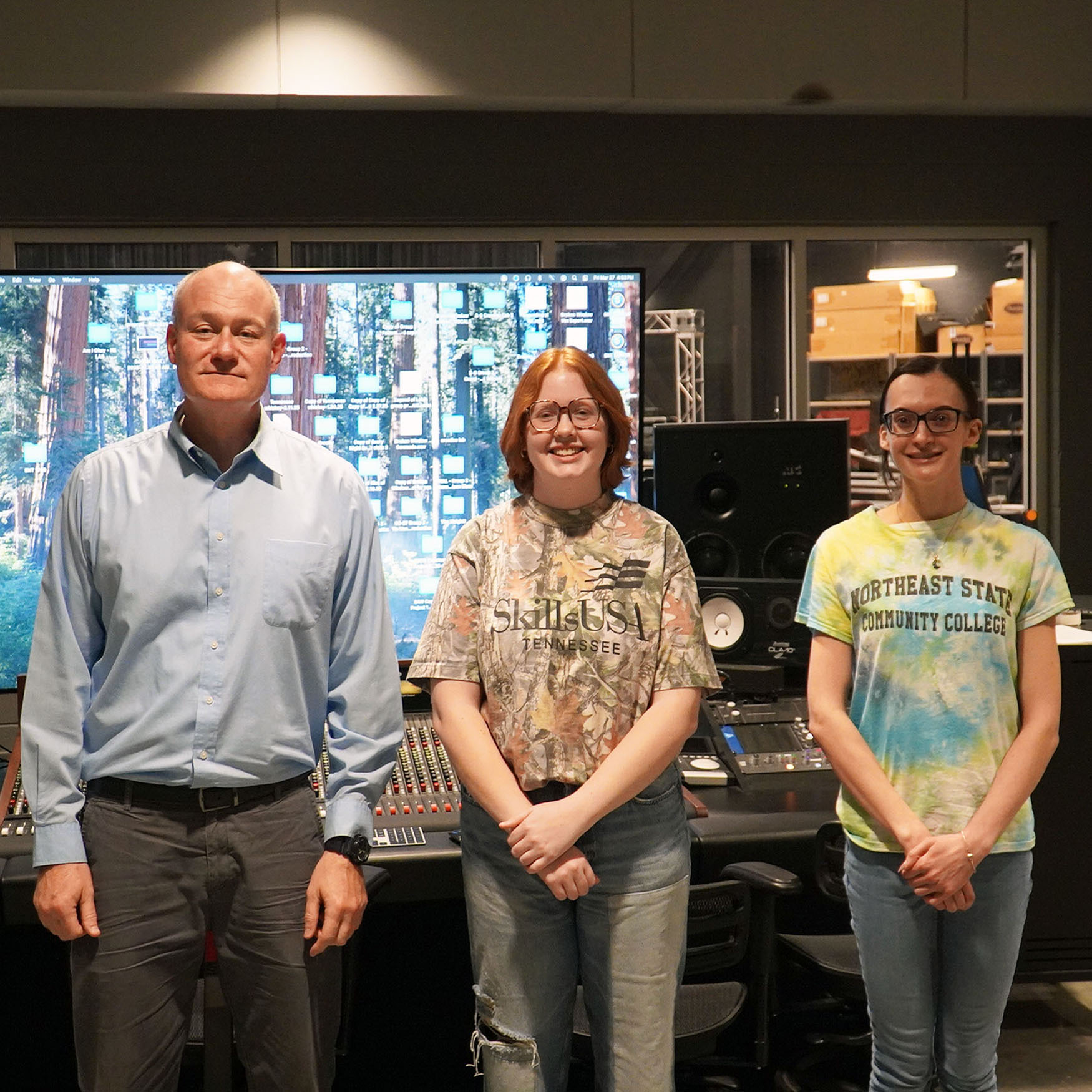
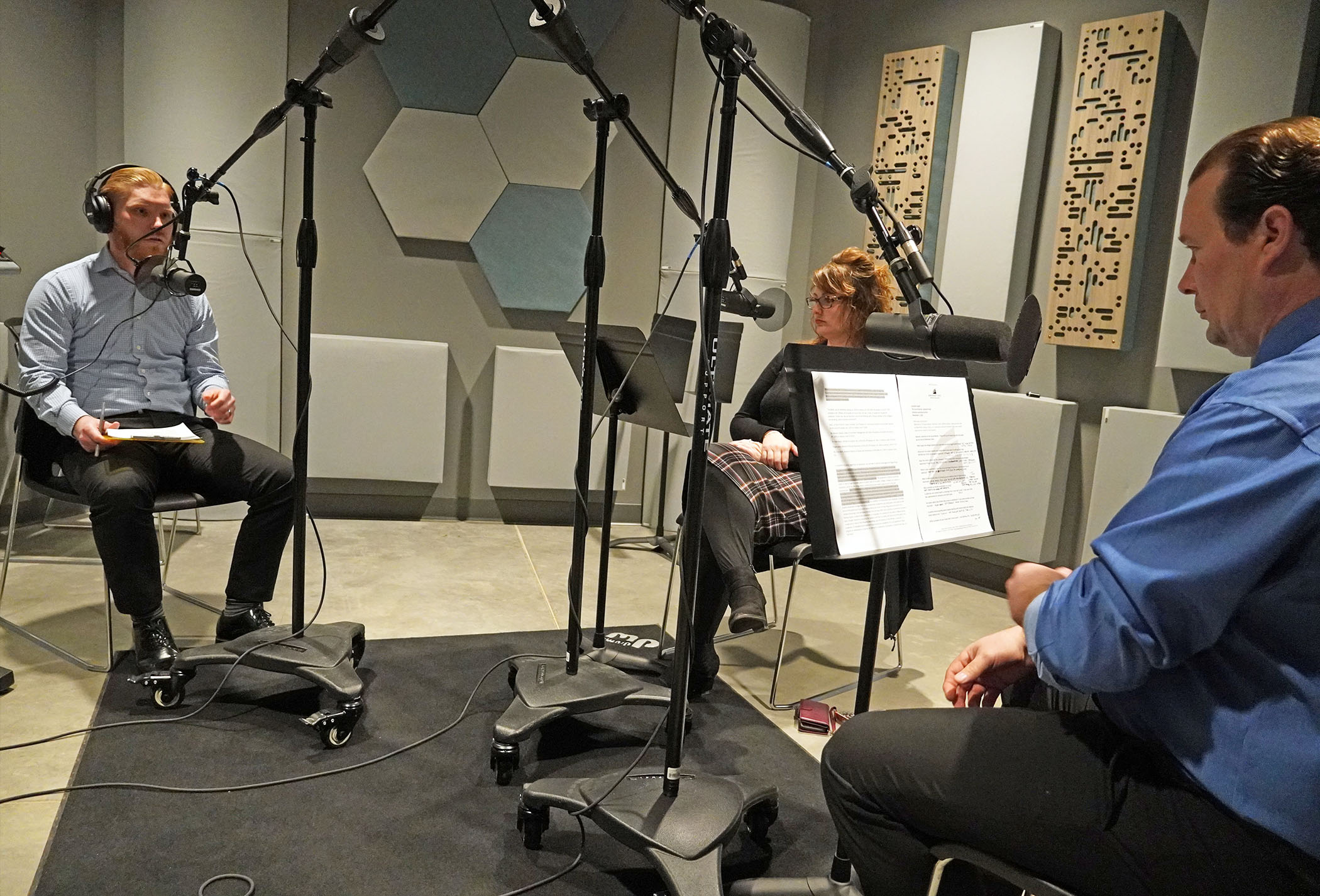
[00:00:08] Speaker B: Welcome to the sound barrier, Northeast State Community College's official podcast. My name is Mackenzie Morgent, here along today with fellow co host Thomas Wilson. Today we're recording from the entertainment technology studio located in the technical education complex of our Blountville campus.
Got Jordi out there recording. Thank you so much, Jordi. So today we've got a special guest. She's been very busy, Very busy.
Rose Bleckley, Skills USA gold medalist winner, silver medalist winner. You're gonna have to start a metal wall or something I hope you've got going on right now.
[00:00:45] Speaker A: They're just hanging in random spots in my room, wherever, wherever they'll fit.
And not make noise when my fan's on because they like to hit the wall a lot, which is really.
[00:00:55] Speaker B: Oh, yeah. A lot of clanking.
[00:00:57] Speaker A: Oh, yeah.
[00:00:58] Speaker B: So, Rose, thank you so much for joining us today. I guess we can just start with you telling us a little bit about yourself, about your background.
[00:01:06] Speaker A: I graduated high school in 2022 and went to MTSU.
I made it a semester and a half before I got in two car crashes a month back to back from each other.
And then I got some more concussions later that year. Ended up doing some physical and speech therapy up at Vanderbilt and was about to go back to school there when I fell out of a treehouse, fractured my pelvic bone, and got my last concussion, which caused me to move back home.
And then I was like, I'm not gonna go back to school ever. I don't want to do it anymore. I'll just start working somewhere and work my way up until.
My neighbor Donna used to be the dean of the technology building here, and I was walking her dogs for her, and she's a really amazing lady and was like, you could try it out. So she set up a meeting with me and Mr. Acker, and he took us through the whole building, and we kind of just went down a list of majors, seeing what I could and could not do due to my health issues, and got down in between the entertainment technology, because that's what I was in beforehand.
But I was really worried that the way my ears were so messed up after all my concussions, I wouldn't be able to do it anymore. So we looked at engineering, design and technology, and I was like, well, not. Why not? I'll just give it a shot. Go for it. And I did end up really loving it, mostly because it was so hands on. They just gave you a problem and you had to do it whether you understood it or not.
You Just did it, drew it, you get corrections and you get to go back and change it.
And I really liked it because I didn't have someone just talking at me and expecting me to know what they were talking about and just put it back out on a test. I was actually doing it myself as well. So we got to learn how to do rivets and make our own threads and we've even built a tiny home in the shop and all that stuff. So we were very hands on being able to learn how to. How to measure rafters and do things like that and not just do it on a drawing, but do it in real life too, which I really loved. So it definitely made me fall in love with the program overall.
[00:03:20] Speaker B: What kind of equipment do you use and what kind of equipment have you used?
[00:03:24] Speaker A: Oh, gosh, I couldn't even. I probably couldn't even list it, but I know how to do a handsaw, power saw, drill, all that stuff.
I been able to learn how to make my own threads for screws and stuff like that. We even got to go in the welding shop.
We create welding symbols in class and then go into the welding shop and do one of the symbols that we drew out for them, which is really cool and was an amazing experience because you get to keep most of the stuff you get to make and stuff. So in front of my tv, I have a plethora of random little things that wouldn't make sense to anybody else because there's pieces of metal welded together. But I was like, I never got to do this before and it was really, really cool for me. So I have a whole bunch of random things like that.
We've also learned how to use the laser printer and being able to make our own logos and print them out on wood as well as in a 3D printer.
So those have been really cool. Some of my favorite things to learn, actually.
[00:04:24] Speaker B: Oh, you were talking a little bit about your project, I guess. Is it the final project you have?
Can you talk a little bit like a candle? I know.
[00:04:33] Speaker A: I don't know if it's our final project, but it is one of our bigger ones. It's the one we talk about for two years. So I've been excited about this project for two years.
It's a candle mold. So you come up with the design for your candle. It has to be in a three by three candle and you come up with. So like last year they made a Patrick Star, which I was like, that is so cool. Someone made a Yoda. I mean, they get real, they get to get real crazy with this stuff. I wanted to do a gecko or, like a possum because I love animals. So that's what I was at first going for. We ended up on a beehive with a little bee on it and a little doorway, and I love it. It's a lot bigger than I thought it was going to be. I thought it was going to be tiny. This thing is huge. It is so big.
And we have to create a presentation for it and stuff like that. You're normally working with a team, and then you're selling it in your presentation. So. So we're trying to act like we're selling it to Michaels or Bath and Body Works. We want them to buy our candle.
So one of the other groups, they're doing a doctor Enough bottle, and someone else is doing a dumbbell. And my personal favorite right now, they're doing the Eye of Sauron from Lord of the Rings. And I was like, that is so awesome. I was like, that is so cool. I was nerding out over it. And they were like, how do we make a presentation? And I was like, well, you know, they're making a new movie, so. So you could be like, hey, you could sell this with your new upcoming movie.
So I've been. I'm just really excited to see all their presentations, and you get to dress up and stuff if you want to.
I told the boys doing doctor Enough to dress up as doctors and have the name tag, hello, my name is enough.
And they were like, oh, that's actually. That's actually pretty good. And I was like, please do it. I wanted to dress up as, like, the beekeepers, but my partner, he's a little down low about things, and I don't want to embarrass him by making him do it because I personally wanted to do a Volkswagen because I was like, we can dress up like hippies and I don't have to buy anything. So I already have a bunch of hippie clothes at home.
But I was like. I was like, oh, he would die if I made him dress up like hippie for a presentation.
So we settled on our beehive, and I'm super, super, super proud of it right now. And I bought beeswax for it and everything to make my own candles at home when we're done with the mold.
So I'm actually going to pick up our mold for him this weekend and make some at home. So for our presentation, it'll actually be yellow for our candle. So I'm super excited about it.
[00:07:06] Speaker B: Sweet. That sounds really adorable. Like, it's something I would buy. I love bee. Oh, I don't. I don't know. They're so cute. But they do scare me. But they're also cute.
[00:07:14] Speaker A: I have a bee tattoo on my leg, so. So I was already like.
And my mom is really allergic, so I've always been scared of them.
I'm like, do you have your EpiPen? Every time we go somewhere, like, please just make sure you have it on you. She's like, I left it in the car. And I'm like, how is that gonna help us if we're like a mile down a hike and you need an EpiPen?
So I used to be super, like, wary, but I've started realizing, like, you don't mess with them, they don't mess with you.
And actually, the bee population, especially honeybees, are decreasing rapidly.
Between 2024 and 2025, they lost 1.6 million colonies.
So that was another reason I started doing all this research for a project. And I was like, dude, we need to have a slide in here. That was like, plant some stuff, like, stop using pesticides or, like, certain pesticides because it's kind of scary how fast they're, like, rapidly declining.
So I was always like, well, I love them. I was like, this makes me want to work on it more. But I. And I found these beehives that I really love, but I can't bring them around because I'm still too nervous that something might happen to her. But I was like, when I move out, trust me, I'm getting like, three beehives.
I was like, I watch the videos of them relocating them all the time. I just. I love it. I think it's so cool. And they're really fascinating creatures.
[00:08:37] Speaker B: So indeed, that kind of goes hand in hand with what you'll be pursuing. Over. You said you're transferring to University of Tennessee, Knoxville?
[00:08:46] Speaker A: Yes, I'm transferring in the fall. I'm super excited. I'm going into biosystems engineering, which is trying to help save the environment, but also combine the construction element and environment together.
So making building things more sustainable and friendly, creating less toxic emissions into the air and stuff like that.
I'm really passionate about finding new ways to make concrete so that it's one. It can be stronger. But concrete releases a lot of toxic emissions, and especially over time, the more it breaks down, it releases more, and then you just have to re. Go over it again.
So they're like, Clemson right now is adding algae to concrete to make it stronger and release less emissions. But they're also making biodiesel fuel and are running all of the cars on campus off of their biodiesel fuel, which I thought was amazing and is a really good step in a great direction.
So you can go either one of those ways with biosystems and I think I'm going to go in a little bit of both because I'm really interested in the biodiesel fuel, but it's a lot more complex in that area than I'm not. I'm not as good at combining different gasolines and stuff like that to find the right way. But I'm also really like, I love learning about it. And there's a guy right now who actually is making fuel out of plastic and he doesn't get talked about a lot because, you know, big companies don't really like that stuff.
But I've been following him for quite a long time and it's really cool. He's been running muscle cars off this stuff and I'm just. Plastic? Yeah. I just think it's awesome. I'm just like, like that's crazy that you can do things like that. And I'm also like, I'm like, I'm a little, I'm a little scared of it. You know, there's part of you that's like, is this gonna absolutely mess everything up in the car or is it actually, you know, plastic made fuel? Is it not? He could be, but from what I seen, like all the stuff he's, he's created, it's really, really cool to learn about stuff like that and realizing it's possible. We can definitely make oil and fuel from different sources. It doesn't have to be like fossil fuels and stuff like that, which is really cool.
[00:10:57] Speaker B: So you just got done with. Would this be your second SkillsUSA competition? So last year. Let's start with last year. And you just hearing about SkillsUSA and what led you to it?
[00:11:09] Speaker A: I wouldn't say anything led me to it. I would say our professor finds you and you're doing it.
Which is not a bad thing either because I don't think I would have done it unless he had kind of fooled me into it, which he always tells me he said the first thing I heard was you talk.
Because I am a naturally loud human being most of the time.
And I mean, I grew up singing and all that stuff, so I was very used to, I mean, they used to turn my microphone down when I was a kid and just turn it off because I was so loud that I didn't need one.
And so he was like, you can talk, like, you can be heard from anywhere across the room, which is great for presenting. So he pulled me into job skills, and I did. I got super excited about it after a little while of working with it. Jennifer Farmer, she was a former student here at Northeast, and she did job skill. She trained me. We lived five minutes from each other. She would come over to my house, like, every night or every other night, and we would just work on it, run through it over and over again until I got comfortable with it. We'd tweak things and stuff like that. But I got super excited about it. I pulled my brother's story into my presentation, which a lot of people think is one of the highlights of it, is it makes it very personable to other people because, I mean, really, I just made a toothpaste squeezer, but when you make it, like, personal or something that, like, happened in your life, it really, like, makes people be like, oh, this actually, that can actually be really helpful. And I've started realizing, actually recently I need one, like, my own toothpaste squeezer. I was like, I should have. I should have kept one with me because mine's gotten really low, and I've. I'm like, I just need to keep getting it out of it, but I can't. I was like, oh, maybe I need to give one to my mom, too. I was like, we're really just wasting toothpaste. And I didn't even realize it, so. But he really pulled me into it and got me all excited, and we came down to competition.
I was terrified, because even though I have, like, sung my whole life and stuff, you still put me in front of people. I will shake like a leaf, and I will be so nervous, and I just think, even though I know what I'm doing and I know I have it memorized, I get in there, and I panic. Adrenaline rush.
I start speaking so fast that no one can understand me.
So we were having to learn how to overcome that obstacle. Like, I was gonna have. I have to run it once beforehand, and I run it fast the first time, and the second time, I'm always taking 10 times slower.
And I guess it's just my brain just trying to get it done the first time and the second time, being able to actually work through it slowly.
So it was really cool. And, I mean, the first time I did it in front of the judges, I had the wrong mouse in my pocket. So when I pulled everything out and it didn't work, I went pure panic mode.
Thankfully, it was in the backpack that was sitting right beside me. So I switched it out really fast, but that made me, like, freak out for the first five seconds, so I had to force myself to calm down and go. And then I left, and the projector screen I was using, like, fell off the car as I was walking out the door. And I think that just. That just hit me there. And I felt bad because I just cried. I didn't mean to. I was like, I didn't feel bad about it. I was just like. It was just like one thing went wrong after another.
And then after that, that's all I could remember. I was like, I forgot the mouse.
And everything fell off my car at the very end. And so everyone kept asking me how I did, and I was like, I genuinely have no clue. I was like, I couldn't even tell you. Like, it's all a blur. It just happened. It's over. We're done.
And so sitting in that room for awards, mine was the very last called at state, so it just kept building and building, and I was like, pure panic. And then every time someone went up for an award, they tell them what I placed.
And so they'd come sit down beside me and be like, I know what you got. And I was just like, why are you doing this to me? It's making it so much worse. I'm terrified.
But then at that point, you know, I knew I'd placed.
I just didn't know where.
And that was cool enough for me. I was like, I don't really care. I place. That's pretty cool.
Everyone had left all the other schools because their competitions were over by the time we got backstage.
So it was just me and one other guy when there's normally three people. So we just told each other what we presented, and they were both like, wow, that's pretty. You know, I don't know how you did, but I don't know how you did, but congrats either way.
We get up to go on stage, and they say, you don't need bronze. Bronze isn't here.
So me and him knew. One of us was first, one of us was second.
So before we walked out of that stage, I turned to him and I said, congratulations. And then we walked out. And then we stood there, and then.
And then he got called for silver, and I got called, and I was like, oh, God, the video they have of me, my. My jaw drops to the floor. I had no clue whatsoever. I was freaking out. And I did. I had Told him, congratulations. I was like, you won. I was like, I know you did, you're fine.
And then we got back out and everybody came, rushed to me. It was the best feeling. And calling my mom and grandma right after that. I was like, guys, I can't believe it.
And they were like, they're like, we knew you could do it. And going to Nationals, I mean, it's the same thing again. Because when you get down there, you're like, wow, I still have to do the same thing, and I don't know how it's going to go. I mean, they might not like me or they might like me or.
And like, the table was smaller and regulations were different when you got down there. So I was like, oh, this is different. I don't know how this is going to go. You know, the plugin's in a different spot than it was beforehand. I have to recognize that and stuff.
And the table was like, maybe like 7, 8 foot long, but 11 inches wide.
So the projector and the computer and stuff, I had barely fit on the table. So I was like, oh, I can't adjust anything. Like, I have to adjust the screen. I have to do this. So I was panicking, and even then I was like, I think I did okay. But that time someone sat in there with me and he was like, you went over. I'm pretty sure you went over time. And I was like, there's no way I went over time. I was like, I was the one looking at the cards. I don't think I went over. So then I was like, well, maybe I did.
And we get there in awards.
And my professor had hurt himself at the College Football hall of Fame tackling a dummy, and I wasn't there for it. Me and Professor Rowland had left before they left. And so we didn't know that happened until we got to awards.
And I knew I had placed because we got there really early. And when mine was about to be called, I watched him hobble down the stairs to come see me on the floor. So I knew I'd placed because I watched him hobble down.
And then when I got called, I jumped up and he jumped to hug me. And then I was like, I gotta go. I was like, because I don't know where I'm supposed to go.
So we went back and then, you know, I was talking to the other girls because we don't know what each other did. One of the girls made a shrimp scampi in, like five, seven minutes. The other one taught him how to do three Braid styles. So I was like, wow, I really have no idea how this could go.
And we got up there, and Braids was third, Scampi was second, and I ended up being first. And I was super excited about it. And I saw my professor jumping up and down on the floor, but then he hurt himself again because he was already injured, but he was down there basically crying. And I was just like, oh, wow, this is insane. Okay.
And afterwards, I think the thing I was most proud of was I got my score back, and I got a 99.73 out of 100 at nationals. And so I was literally like. So they put the banners up, and I was like, I don't care about a banner. You should write my score on there. I was like, because that is awesome.
I found out me and second tied, and I won because of the test I. You have to take before you go to nationals. I got a higher score than her on the test, and that was our difference. So it was like a very. And I was like, that's. That's crazy. I was like. Cuz I had. I thought I bombed that test because I didn't know anything about the nationals competition. And that test is all about nationals.
[00:19:39] Speaker B: Oh, I was gonna ask.
[00:19:40] Speaker A: Yeah. And I was like, I'll just. I'll just try. And so, yeah, finding out that that was the difference was crazy to me. But I was so proud of my score. I was like, I don't care what happens next. I was like, I got it almost perfect. I was like. I was like 0.17%. I was like, I don't care.
So it was just the best. And we all went out to, like, celebrate and stuff later, and it was great. I mean, we got to sit and watch other people's. And I was excited. Emily Johnson got silver and collision damage and appraisal, and we got to sit there and watch that. I was over the moon excited for her. She did amazing.
So it was just really cool being there to experience that and then coming back and being with my family and stuff after that, because they were watching online that time. So I was like, I can't really call you. You know what happened? But I just got a flood of texts from my aunts and uncles and grandma, and everybody was like, oh, my gosh, you did it. And I was just like, yeah. I don't know what to say.
I did.
That's so cool.
So it was just as an amazing experience, and I think that was the best part is what I tell everybody is that that unknowing and then going there and then you just find out you place and then you have to wait for that. But then finding out that you won, like, the. Not just the relief, but you're just like, wow. Like, I actually did that. And I think it was the state was the best because I genuinely had no idea how I did because all I can remember was the things I messed up on.
So that moment I tell everybody, I was like, that's like a core memory for me was just that just hearing your name is so cool. So I was like. I was like, who cares about what you win or whatever. Like, hearing your name but get called was just the best feeling ever.
[00:21:30] Speaker C: So now you went Back to the SkillsUSA State Conference again this year, and you took what happened this year. You would. There was a. The category you competed in, I think
[00:21:42] Speaker A: was Job Job Skill demo. Oh, I did the open one this year, which means it doesn't have to apply to your major. You can do anything.
[00:21:50] Speaker C: So it's a wide swath of it. How did that go?
[00:21:53] Speaker A: I got silver, which I was. I was still super happy with.
It was very. It was. It was. Let's say, a lot of things changed last minute, and I think that really threw me.
My setup ended up being completely different because my time started when I walked in the door instead of my time starting when I got in the box. So I had to move the table and the extension cord and then set up all my stuff all within three minutes, which is because my setup's like two minutes. So having to move the table and the rest of those things outside of my regular setup time put me over.
And I knew it had because I ended up just stopping, adjusting everything because I already knew I was over.
So my projector was a little wonky and stuff because I couldn't get it fixed properly.
And so I was kind of stressed just because I found out the morning of all the changes. So I couldn't even practice the changes or anything, which I really struggled with coming to terms with, honestly, because I was like, this should not be told the day you're presenting that everything's moving and everything's changing.
But after that, after it was over, because I competed on Monday while everyone else competes on Tuesday. So I was kind of glad that it was over and then I could just be the helper the rest of the time.
So Josie, she did Job Skill A this time, and I couldn't be there for her presentation. But the night before, we practiced for, like five hours.
We really, really worked on it. She absolutely Killed her presentation. She ended up getting super proud of her.
And then I say, like, as soon as people came out of their competitions in my class, I was there, which meant a lot to me, being able to hear how they did and they'd come out and they were so excited, so proud of everything that they'd done, no matter what. And that's why I kept trying to tell everybody to remember that, because when awards came, it was difficult because Additive got silver by 0.5 points.
Extemporaneous, he got fourth by 23 points.
It was very small margins every time, which hurt me for them, because hearing them talk about what they did and how well it went and then being so excited to them, you know, going there and being like, you know, it just. It hurts. It's. It stung for sure for most of them and watching them break a little bit, because, you know, last year, just about everyone in our class got first for the most part. So then going this year, you know, expecting everyone to get first, first, first, first everyone gets to go. There was a lot of silver, which I wanted them to still be really proud of. But, you know, when it's that 0.5 point difference or whatever and, oh, just. You're like.
It's just so close. Like, so unfair.
But I really. We all, like, texted the night after and stuff, and I don't want to tell them, like, you know, I feel like a proud mom, because I was like, that sounds weird coming for me, But I was like, but this is what I want you to know, because on Tuesday, when you all came to me to tell me how you did and how excited you were about what you did, I called my mom and was telling her how proud I was. And I was jumping up and down because I was just like. I was like, they're so excited. They did so well. I don't care how I did or what anything else happened. So when someone else was called and they didn't place, and then I had to go up, I didn't even want to go up. I didn't care what I had gotten because I was really hurting for them because I got two years, so I got to compete. And, you know, I did win and do all that stuff, but I still got another year to go. They only got one year, so they didn't place. They don't get to go again, which is always really, really hard. And I think was the hardest thing for most of them to accept is.
I mean, some of them do. We had technical and another team in Additive, they get another year and they didn't high school, so, you know, they've had that experience, but most of them, it's their first time hearing about it, first time going, and, you know, getting 0.5 difference from silver and not being able to go do it one more time is always hard. So I really wanted to make sure that they were just proud of what they did and remember how much fun they had while they did it.
[00:26:28] Speaker B: I mean, be very proud. If you're listening, any SkillsUSA Northeast State
[00:26:32] Speaker A: competitors, they absolutely killed it, crushed it. Oh, yeah.
I was over the moon for them, whether they had done it or not. So, yeah. And it was just. I think it was really cool to watch, and that's why I told him. I was like. I was like, if you should just let me go as an advisor to Nationals. I was like, so I can just be there again? Because I didn't like going to compete, but being able to go there and watch everyone else and see how they did, I was like, it'd just be so much. So much fun and just gets you so excited for them for their competition.
[00:27:04] Speaker B: It sounds like you all have built a really good support system among each other. How has that helped shape your experience, not only in SkillsUSA, but just here at Northeast State, too?
[00:27:14] Speaker A: Oh, I think it has really helped me in knowing that no matter what I go into or where I go, they'll still be there.
Whether it's, like, not just my classmates, but the professors that I have gotten to know along the way and stuff like that.
Especially at Nationals, like, I really got to know people that I didn't really interact with and stuff before.
But the worst part is going, your first year, you're not there with anybody in your class.
The second year, I was with people that I've been with for the past two years. So actually getting to know them outside of class, it was really nice. And getting to know that they didn't hate me or whatever, because sometimes you get in your head, you're just like, it's okay. But when you're the only girl, I'm just like, I just annoy them. Like, I'm just. I just know that I get too emotional, and they just can't.
But, like, you know when you text people that a group of you were going to dinner, and they'd all be like, oh, we're coming. I was like, cool.
I was like, I'm not like, the. Because towards then, I was having to bug people about getting their clothes or filling out a form or whatever. And I was like, I don't want to be that person that is, like, I know I'm the president, but I don't want to be like, I don't want you to see me like that. I just want you to see me as your peer. So being able to go, like, I really got to experience that, which I really loved. And a lot of them are going to all work with each other or jobs close to each other and stuff like that. And so I'm super excited for them to be able to go in that. And they've been super supportive of me going to continue my education because it's.
It's difficult to do. But I've gotten to learn that a lot of them want to go back for surveying or things like that. And the jobs they're at now will actually help reimburse them for surveying. So I've been like. I'm like, yes. Like, do it. Like, if you can get there, like, please do it. So I've been being able to know that they're all at these jobs and doing these things. I'm super proud of them, and I hope they're really proud of themselves, because they really work their butts off for it.
[00:29:16] Speaker B: Well, I hope you're proud of yourself as well.
[00:29:18] Speaker A: Yeah, I am.
[00:29:19] Speaker B: Your future's looking bright. I mean, you'll be making a move this year. Can you talk to me a little bit about how you're feeling? I mean, commencement's just around the corner, and then it's Knoxville.
[00:29:31] Speaker A: Oh, yeah.
I'm a little nervous one, because it's difficult, especially, like, my mom and dad have actually all three. Me and my two brothers, we're all graduating this year. My oldest brother's getting his master's, my second brother's getting his bachelor's, and I'm getting my associates.
So they've been paying for college for quite a long time now.
And so it's been a struggle because, you know, I want to continue. But I've been trying to get as many scholarships and stuff as I can to be able to lessen that burden, especially because since I'm coming as a transfer, I won't be staying on campus and stuff like that.
So I have been nervous going into it because, one, I don't like Knoxville. It scares me, but that's because I don't like driving in Knoxville.
It's terrifying.
So every time we've gone, I have probably been a big pain in my mom's side because I'm freaking out the whole time, but that's mostly because I'm freaking out about all the other drivers that are around us because none of them know how to drive. And our first car crash was in Knoxville. So every time we go, we're all. It was. My mom was driving that time. We're all, like, on edge, looking around every single corner, making sure we're good.
But I'm also really excited because moving back home was so difficult.
And I have just started realizing that it wasn't just difficult for me. It was definitely difficult for my parents because they were having their own lives while I was gone, and I have moved right back in and interrupted those lives.
And so we've come to, like, we've gotten to a great place to where they're really excited for me to move out as much as I am.
But I'm also excited not to be as far away. Like, I'm not going to be four and a half hours away to where it's a lot to drive home for a weekend because, you know, I do get injured quite a bit. So being that far away and getting injured makes them all really nervous.
So I feel better about, if something happens, I can go home or. But I'm also far away enough that I am independent in where I'm at.
So I'm excited, but also extremely nervous because it's a whole new thing again.
And new things can be terrifying when you haven't done it in a long time.
So it being about three years since I've moved back home, I'm ready for a change. But the change is also really scary. So
[00:32:04] Speaker B: I have no doubt you'll.
You'll figure it out and you'll push through it. You'll persevere as you always have.
And what are you. Is there anything from Northeast State that you're gonna take with you? I guess anything you've learned here, any thing that you just feel like you've gained out of this experience here, be it through SkillsUSA, the support system that you found in students and colleagues, skills, other SkillsUSA competitors.
Is there anything, I guess maybe, that. Are you gonna miss us?
[00:32:42] Speaker A: That's what I'm asking. Part of me will. Yes.
Part of me will be really excited to leave. We'll miss you, too, though. No, but I, like, I've definitely learned a lot of not just life skills, but knowing I can do any of it. I mean, him teaching us to use the handsaws, the power tools, build our own rafters, build our own walls, stuff like that has made me realize, like, I can do this, like, really, if I set my mind to it, right? Now me and my dad are on a project. We are building a, like, a little stand roof for this bed swing that I got my mom for Christmas. And so when we were coming up with it, I was like, we can't just build this. Like, we don't have to buy that. We don't have to do this. Like, we can do it. I'm like, I know how now. I know how to figure out rafters and things like that.
And being able to get that experience has made me feel a lot better. Like, I don't need someone there to be able to do it. I can do it on my own. And I think him giving us a lot of the projects and helping a little bit, but just mostly giving us. If we turn it in, he'll give us the critiques and the things we missed, and then we go back and redo it. It's not like a do it this way, then do it this way, then do it this way. He'll show us little tips and tricks after we've learned how to do it the hard way to make it easier.
But that's made me realize, like, you just give me a drawing, and it might take me a while, but I can do it on my own.
Whether or not, like, doing the architectural stuff made me really excited because I was like, I could design my own house if I wanted to. You know, I don't need to pay these people to do this or do that. And I even started talking, talking to my dad and them about it because we have a lot of our family friends have their own little businesses where they buy houses, redo them, sell them. You know, my aunt and uncle do that all the time.
Buy land, put a house on it, or redo the house that's on it and sell it. And so me realizing now, I'm like, oh, I can really like, the plans that they need that they find from other people I can do.
Which, you know, didn't realize how much of a big part that is, which has kind of gotten me really into watching YouTube videos of people redoing old schools or houses and stuff like that and be like, oh, wow, I could do that. You know, I could really. I could do that. If I had the money, you know, I could get there, which has helped a lot. I mean, we definitely learn personal work and life skills here, which has made me really excited.
And, like, he even, like, teaches you how to shake a person's hand properly and teaches you interview techniques and stuff so that when you get out there, you know, you. You are Confident in yourself and teaches, teaches the boys how to, how to dress properly for an interview or things like that. So we like, we do a business presentation. Last semester we did it.
And you dress up properly and you give a presentation on your bridges and stuff like that. And it's a really big thing and you have to dress nice and you have to do it in a formal way. And I think that's awesome because when it comes down to it, you know, if you start working in this hybrid, you're gonna have to do that at some point. So being able to have that experience helps me not be as nervous about it when it comes up later. And so he does do one formal one and then one fun one, which is our candle mold presentation. And it helps get them used to being able to ask questions. And not even that, just present your ideas to people, whether it's a little idea or whatever, like, you know, you know what you're doing. If you have an idea, you know, talk about it, mention it, bring it up.
Because even if it, they might not go for it, you know, you still did it. And that's like a, that's a big step, like being able to, to do that. People will start looking like Connor, one of the guys in my class, he's doing, he's built, he's doing a design for a church right now.
He's designing a church for people. And so like, like people would just come to you with things like that and you can be like, yeah, I can do this. Just give me amount of time. And so they've done a lot of things like that. And I. It's been really cool to see like, people will. People need that stuff and you don't even think about it. So it'll definitely help in the future for all of us.
[00:36:55] Speaker C: Now on another note, you've talked kind of openly about your health journey and how have kind of those challenges kind of shaped your experience as a student.
[00:37:04] Speaker A: It was really hard at first.
When I was doing speech and physical therapy, I found out like I had the balance of an 80 year old. As a 19 year old, I was struggling to have conversations with people because I couldn't remember words, like the simplest word.
It just would not come to me. And I could describe it to you. I could do everything but come up with a word.
And then when my hearing was all messed up, my whole life, singing and music had been all I was ever passionate about and loved my whole life.
And so I was like, I can't do anything else. I don't know how to do anything else. This has been everything for me.
So losing a lot of that was. Was really hard. I mean, it took a big blow. Which one of the reasons I didn't want to go back to school, because I was like, I don't know how to do anything else. I was like, so what is there to go back to school for? Because I can't do it. I'm not. I mean, my mom's always been like, you're good at numbers. And I was like, yeah. I like seeing the patterns. Like, if the clock shows 12:34, it goes 1, 2, 3, 4. Like, yeah.
So going here and doing skills and all that has helped me realize one, though I have had a lot of brain trauma and things like that.
Thankfully, now they're putting you in physical and speech therapy to work on those things and get better, which I have a better balance now, and I'm much better at the memory stuff.
But, I mean, they used to tell you to lay in a dark room for like a week or two, and then it should get better. And so I was going to class, not being able to read a book in class because I would forget the sentence that I just read, and then I'd have to go back and do it over again.
So being able to work through that, you know, helped me realize I can continue to work through and keep going.
And being able to get those goals and stuff and skills made me realize, like, I can do this. I can do something other than sing and play guitar or things like that.
Which at first was kind of hard because I loved it so much. I wanted that to be the center of my life. I wanted to do it all the time.
But I have found that love for it again and have started playing my guitar again and singing and stuff.
Because when you get out of those spaces in high school where you're in a choir all the time, you're in acapella all the time, you're doing it all the time, and you lose it when you go in. And it's hard because there's not many places to do it. And then you feel like you. You're stuck. Like there's nowhere. There's no outlet for you.
So being able to find something that I was good at outside of that, that I could use to help me in my future and also still be able to find space for that, for that love of music and stuff, and even at times, I'm able to connect it to each other. I mean, one of my favorite parts in class is we listen to music all the time when we're doing stuff. While most of them listen to country music, and I. And I get very, very tired of it very fast. They're also listening to old country music, though, which is. Which is my heart.
Like my mom calls me. I'm a little hippie. I listen to oldies only really exclusively, except for, like, one or two other artists in Broadway. And so she. She always makes fun of me about it. And I've been able to during those classes, like, the music will help me think things through or take time to focus on that stuff, or it even helps me just focus in general with everything else going on around you.
And I think it's honestly brought us together too, because a lot of people will all start singing in class, random songs. And one day I did put on ABBA and Fleetwood Mac form, and somebody else was singing with me, so I was like, yes.
And thankfully, the. The newer class likes rock music, so I've been getting less country, which is so exciting.
But sometimes the rock music, I just. I. I want to focus on it instead of what I'm drawing because I love it so much.
Being able to find that cross together has been super helpful.
It has definitely made me realize, like, even though those things happen and they definitely altered my journey majorly, it was not a bad alter in any way. Like, it was at the time. It felt like it. It felt like my world was falling apart. Especially when all that happens in one year and you're like, what did I do? Like, it's just one thing after another, and it really did it. I realized it opened a door for me that I never would have looked at, ever.
I told my dad that for the longest time. We used to argue about it all the time. I was like, I'm gonna be a musician. I'm gonna be a singer. This is what I'm gonna do. This is what I'm made for.
And he has came back to me and helped me realize I can still do it.
While I'm working on all this other stuff, while I'm doing it, that can still be a part of me and I can still love it and enjoy it. So it's. It's.
It's been good.
[00:42:13] Speaker B: And how have, you know, all the accomplishments you've achieved since?
How has that shaped what you're going to be doing in the future with at UT and then just in the future with the environment and building?
[00:42:26] Speaker A: I think it made me feel more confident, for one, but also made me realize, like, these ideas that I have, I can already start working on if I really, like, want to. I mean, there are sides that I still don't know, like the concrete stuff. But I've started looking up prices and all these different things, because certain concretes, while they may be better for the environment, most of the time, solar energy, concrete, are very pricey if they want to be environmentally friendly. So it's hard to do that for other people.
But I've also started realizing that housing in general is just a huge problem.
And there's these groups who are taking the industrial, like, you know, the big cargo boxes that they put on ships and stuff, they've been turning those into tiny homes for people and stuff like that. And you don't even think about it. But that's a really good idea because a lot of them aren't used, they're just left.
And you can put electricity and plumbing in those so easily.
So I think it has definitely helped me realize that even though I have this little aspect of it, I can start working on it already. I can start forming those ideas because most of the softwares we use, you can go ahead and make the material what you want it to make so you can come up with prices and stuff like that.
And so, like, solar energy, you know, it's great in the more southern hemisphere because they have so much more sunlight than we do and things like that. So people in Florida gain that money back so much faster than we do because it's a lot darker and it rains a lot more and stuff like that. And so being able to find those instances to where you can combine it together.
And the guy who's the head of the biosystems in the school of agriculture at UT showed me a lot of the senior projects they do.
And I think that got me even more excited because your senior project can be as little as fertilizer for different plants to trying to build ways in Haiti for them to have plants and be able to continue grow plants during the major weather conditions they have there. And he was talking to us about it, and he was like, you know, the only thing they really struggled with was like, the goats, because the goats jump up and eat all the plants and stuff like that. And so he was like, so that's. He was like, that's like your biggest problem. But they came up with a way for, like the gutter system for the rainwater to trickle down the plants evenly every single time. And they could build the plants into the walls so that one, they would reduce the heat from the outside into the inside, and that water consistently draining down them that they didn't have to worry about watering them all the time. So when they had a dry, dry area, whatever they had stored up would still keep going down them. So I.
Being able to learn that these projects can go anywhere got me really excited because most time the students come up with the idea for the project, and then they give, like, four or five ideas a year, and they pick from those four or five ideas. And so I was like, I already have, like, five ideas that I would love to present to somebody, but him, like, walking me through that helps me realize, like, oh, wow. Like, you know, one of them was, like, doing stuff for biomedical because it's. It's such a big engineering department and it continues to grow that, like, we can even do smaller things for them while they're focusing on more of the, like, the bones and the things that they're growing and trying to make. We can focus on, like, trying to make the stuff that holds the computers or their systems or the.
The CT scans, stuff like that, make it more environmentally friendly and more accessible to them and not just being like. Because a lot of times they have to keep the computers or the machines on a certain caddy to move around with them. But that caddy isn't always made structurally, and a lot of the times they break very easily. So being able to find a more environmentally friendly way to do it and work with it, but that also makes it affordable so that hospitals can have many and not just like one or two per floor and stuff like that. So being able to learn how wide of an array can go was super exciting to hear, so definitely made me want to pursue it even more.
[00:47:12] Speaker B: Awesome. So glad to hear that you have that, you know, that passion and that interest, too. It's so important to have and, you know, trying to decide, you know, what you're gonna do.
[00:47:22] Speaker A: Yeah.
[00:47:23] Speaker B: So what do you hope that others take away from your story and from your experiences?
[00:47:29] Speaker A: Honestly, one of the things that people kept telling me is, like, a lot of people, when they. They hit a hard year or things like that, especially like a mentally hard year, and I've had quite a few of those that, you know, you just.
You just don't think there's a point in trying anymore after a certain time, because it gets too much over and over again, and people will tell you, try this way, it'll work. It's not always going to work for you that way, which I have found a lot this past year. I've started standing up for myself a lot more, even just medically realizing that Just because I've been on this medication for a long time, that it doesn't mean it's working for me anymore.
There are things that you have the power to say something about, and as a college age woman, I have struggled with it because a lot of times people will be like, they won't give you a straightforward answer. Especially when I was moving and having all these issues and you'd be talking about pricing or something for a apartment. They don't want to talk to you, they want to talk to your mom or the person who they're going to be taking the, the score from, your credit score from things like that or where the money's coming from.
And I have had to realize that one. I'm gonna have to step up to that at some point. Like, they're gonna have to listen to me.
So being able to grow in that here and throughout has made me realize, like, it's hard to be able to stand up for yourself in a world that makes you feel like, you know, you can't because either you don't have the money for it or you don't have the mentality for it and things like that. Like, you really do. You just have to. You have to find it and fight for it. I mean, I still struggle. A lot of times I'll spend the day laying in bed because the week has been a lot and I need that time to decompress. But, you know, being able to stand up for yourself and say that, and that's okay.
And I think one of the things I really want people to take away is those things also don't define who you are or how far you've come.
Just because you still struggle with it doesn't mean you haven't done amazing things.
I know I still struggle with.
I have horrific anxiety and I struggle with it all the time. There are days where I do not want to go into school or whatever, and they'll let me sit there with my headphones in and people won't bother me, which is nice. But I realized, like, yes, I still really, really, really struggle with this. That does not mean that I haven't done so many really awesome things and overcome it in that moment. Just because I still fight it in these moments doesn't mean I didn't, I didn't overtake it. A different day and like, you know, not working anymore. You know, you feel like you're alone all the time, but you're, you know, you're. You're not in this world. A lot of people feel the Exact same way or. And have gone through things worse or equal, as bad, or maybe not even as bad, but they still will take time to understand if you. If you really. If you really talk to them about it. And I think that's what I've also learned from my classmates is we are very different.
But that does not mean they don't understand my differences, and I don't understand their differences, and we can't still work together because of that. Yeah, there are crazy boys, and they say things, and you hear the most random, weird stuff that you never thought you'd hear in your life.
But they still will talk to me now, which I know it took a little bit to see me as a.
Not just someone who was just work, work, work, but, like, also a person. And that's probably from watching me cry week after week in class over one little problem that I just couldn't understand.
But, like, that's okay. Like, it's fine to have those emotions and to feel those things, because you're going to, whether you want to or not. It's gonna happen.
But just being able to take it and know it's happening and still be able to be okay with everything else that's going on around you and to work on it.
Working on it is hard, and it sucks, but it always pays off in the end.
I have learned it, and it took me a really long time, and I'm still learning it. I'm still learning it. Every day is still a battle, but, you know, you still come out of it. At the end of the day, it's. You're still.
You can't take life as seriously.
You have one life.
You live it. And things are gonna go wrong. Things always go wrong. But that doesn't mean it's the end of the world or the end of your life. You just gotta keep pushing.
So.
[00:52:27] Speaker B: Wise words.
[00:52:28] Speaker A: Thanks.
[00:52:28] Speaker C: I mean, true, buddy.
[00:52:31] Speaker B: That was solid.
Very wise words from a very wise student. And human being.
Very resilient. I hate that we have to be resilient sometimes. I do. But it's good seeing that resilience because you do make it out to the other side. You have.
You came out with gold, too.
Silver. And a really exciting journey ahead of you to Knoxville. And you're gonna crush it just like you crushed it here.
No doubt about that. Rose, thanks so much for joining us today. This has been another episode of the Sound Barrier.
You can listen to us on any streaming service, really. Apple, Music, Spotify, Pandora. I probably missed a few, but we're on them all. So go and give us a listen. If you want to learn more about the programs at Northeast State, go to NortheastState. Eduardo, that is www.nonastate. edu. Thank you so much for listening. And we'll catch you again on the sound barrier.