Episode Transcript
[00:00:00] Speaker A: Foreign.
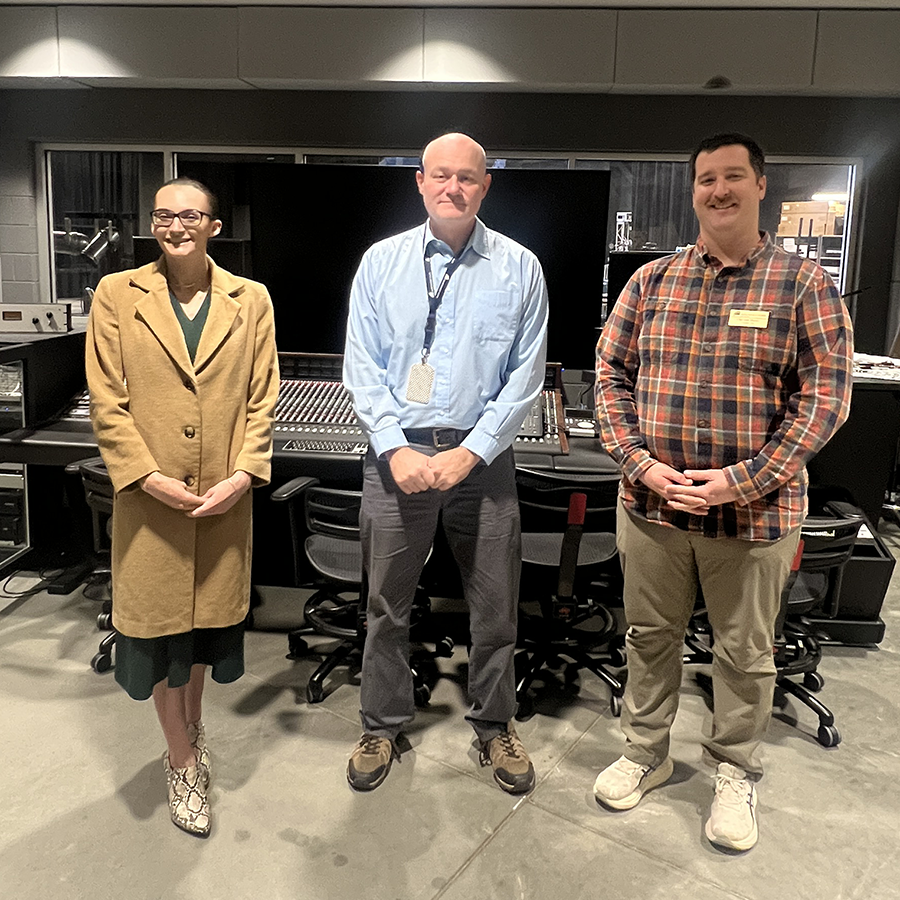
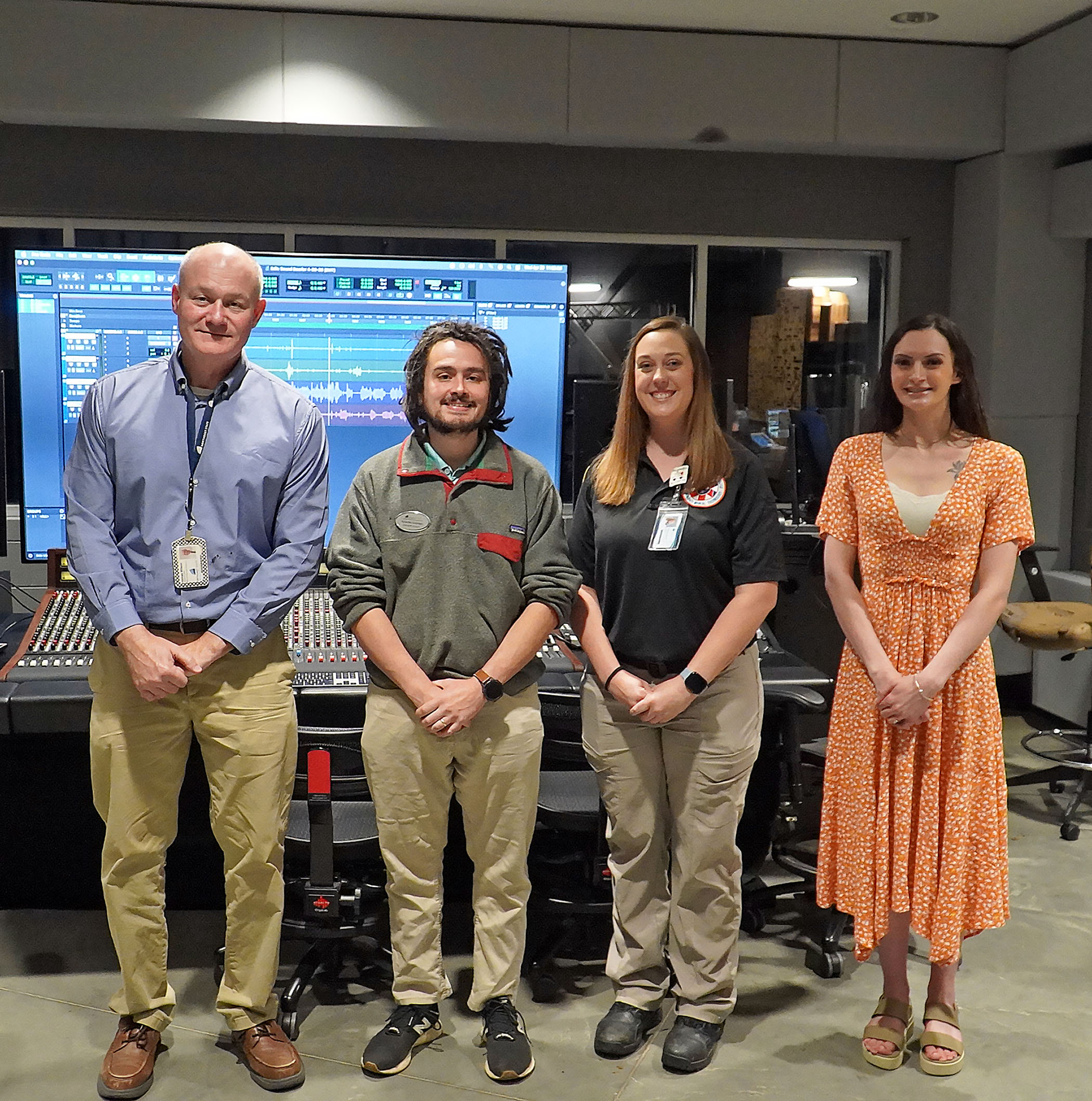
[00:00:08] Speaker B: Welcome to the sound barrier, Northeast State Community College's official podcast. I'm your co host Mackenzie Moore Gent along with my co host Thomas Wilson. We're coming from you live today in our entertainment technology studio in the technical education complex on our Blountville campus.
We've got something cooking up on this episode, a very special episode. We've brought in the program director for our newest program, Culinary arts chef Joshua Murray. Thank you so much for joining us today.
[00:00:40] Speaker C: Hey, thanks for having me.
[00:00:41] Speaker B: Very special episode cooking up. And we're just going to dive into the culinary arts program, talking with Chef Murray, who is a seasoned professional himself, very well versed in the culinary arts world, talking a little bit about what students can expect from the program, all the exciting new things coming up with the program, including a new space. But we'll get to that later. First of all, Chef Murray, can you talk to us a little bit about your background and how did you end up at Northeast State?
[00:01:08] Speaker C: Sure. My. My background is very non traditional in every sense of the word. My initial culinary training came from the Army National Guard. I was stationed in Mountain city in the 1776 Division, the detachment up in the mountain.
We started back the kitchens after those kitchens being closed for National Guard units for so long.
And from there I ended up getting a job offer down in New Orleans, Louisiana, very unique opportunity and ended up transferring from Tennessee National Guard to Louisiana National Guard.
And I acquired this job in the movie catering industry. I was catering for cast and crew, the folks that would run the cameras and hair and makeup, lights, props, all the, all the, all the different pieces of movie industry. We were feeding between 5 to 1500 people a day, all from scratch cooking, working with the best chefs in the world.
The movie industry, they like to throw money around and we like to take their money and make beautiful food out of was a long, hard, hot industry.
Working off a taco truck and a box truck with baking equipment in it.
And that's really where I believe that I learned to cook. And I moved through there, started setting up tables and chairs and then I ended as a chef driver where I was running my own crew at the end of a couple years after that, a buddy and I, the movie industry got slow. Tax credits came to Georgia and a lot of the industry moved to Atlanta during that time. During one of the last seasons of the Walking Dead, a lot of things were moving over there. So decided to open a new restaurant. We opened a Puerto Rican Irish fusion restaurant.
[00:02:57] Speaker B: I never would have thought anything like that. That's awesome.
[00:03:00] Speaker C: It was. It was a lot of fun. We were doing things like, like spring rolls that were rolled with cabbage and had corned beef hash in the, in the middle with horseradish sauces.
We were doing tempura vegetable plates with Guinness aolies. We did a shepherd's pie dumpling, if you will. We took shepherd's pie mix, thickened it up really thick, put it inside of mashed potato balls, and then floured them in cornstarch and fried those. But that Guinness aioli on top and a little bit of sriracha for some heat. We were doing some really fun, innovative things.
[00:03:33] Speaker B: Yeah, innovative is the first word.
[00:03:35] Speaker C: We were. We were the top five. One of the top five actually were the fourth best new restaurants for the year of 2014 in the city of New Orleans, which, if you don't know about New Orleans food culture, it is the central hierarchical reign of New Orleans.
[00:03:52] Speaker A: That's.
[00:03:52] Speaker C: That's the heart and soul of the city.
And it was very cool experience, but through that, it was a lot of work. I was married at the time, had one, one child at the time. And I ran into a lot of personal issues in my life.
I'm from northeast Tennessee, born and raised here, went to Science Hill High School, native of the area. And I knew that I needed to come back. It was for a personal, spiritual reason that I just needed to be around influences that will point me in the right direction. So I came back and I acquired a job as the banquet chef at Wellington's inside the Carnegie Hotel.
And I was there for four years, helped write a lot of their book on catering recipes, recipes that I believe that they still even use today. Those folks are family.
And I begin to through that process, the four years there, just working through the grind and figuring out how to manage staff and manage the kitchen.
I felt the call towards pastoral ministry through my spiritual life. And at the same time, I felt the call towards teaching.
I believe that teachers are called, not that they're just fabricated and made, but there is a deep calling in this.
I moved towards education at the same time as ministry. And the door open for me to be the culinary arts teacher at Sulfanes High School. For the past seven years, I taught and educated ninth grade through 12th graders. We had a lot of fun. We got to build a new kitchen right before I left. We won many different awards. We were second in the world two years ago through Disney's Cook around the World competition and won multiple state championships. State placers had a lot of students that were doing really, really cool Things A lot of those students did not go in the culinary industry and that was okay.
They, they are the world's best doctors and lawyers and realtors and businessmen and women and still have a lot of great connection with those, those competition teams and, and getting to see them grow and flourish.
And unexpectedly last summer, you know, someone reached out and said, chef, you need to apply for this job at Northeast State. I wasn't really sure that I was ready to come to the postsecondary level, but through multiple divine occurrences, it was made clear to me that this is exactly where I was supposed to be. Started here in July with the new project of upstarting a brand new culinary arts program that would change the very fabric of the culinary industry around here. As we're growing growing area, the industry is growing and has huge upload for, for the future as to what's going to grow.
And was blessed to fall in at the right time when Northeast State was looking to answer that need and was blessed to be selected to be the one to lead the charge.
I mentioned a little bit before we started this morning of the support around this program and the support around this college has been overwhelming in a positive manner. Just I know that this, this program is going to be great and it's not because of me. It's because of the institution that backs it and the students that enter it. And super excited about what's going on and very blessed to get to be here today.
[00:07:21] Speaker B: Wow. First of all, we're lucky to have you.
[00:07:24] Speaker C: Thank you.
[00:07:24] Speaker B: That what an amazing, impressive background. Like for starters, New Orleans is like, I've only had the opportunity to go there once and I was just blown away by the feeling Food, it's got a very distinct flavor, a lot of history in the culture there and the food there. And then the fact you were there creating different fusions that were kind of just outside north, that were outside New Orleans norm and like Puerto Rican Irish fusion. Like I never.
What a brainchild. Never would have thought anything like that. Wellington's Restaurant, another very highly known, highly regarded place place in our community in terms of gourmet, really good cuisine. And you had a hand in creating the catering menu and that's just so impressive. Your students at Sullivan east, we're lucky to have you. In Northeast State students are lucky to have you as well. So that's just awesome.
[00:08:18] Speaker C: I appreciate that. My, my hope and prayer is that the culmination of all the people that poured into me during those times. I can do the same. Back to these students.
Super, super Excited about what's. What the future holds.
[00:08:30] Speaker B: Well, they're obviously learning from one of the best, and that's awesome. And what can they expect from the program?
[00:08:35] Speaker C: So the biggest thing that they can expect for the program, and particularly for me and my, my philosophy in education and culinary arts overall is, is to, to get their hands dirty, to get in there and to get experience with the industry, to get experience with the possibility of a food truck coming and caterings and different things that, that we possibly have coming to learn the industry while they're working in the industry, to sharpen those skills, to learn how to run successful entrepreneurship kitchens, or to fall into an institutionalized side of the industry where they can manage and grow. And I think the real heart behind what they should expect.
One of my mentors that is the program director at Walter State, he told me, he said, chef, when you start thinking about every detail, this program start as if you were designing a dish. We would design a dish by saying, this is where we want to go. This is the roadmap of what we want to end up at. Now we're going to reverse engineer and pull everything back so they can expect, when they walk into this program, that they're going to be challenged to, to see deeper than just food. You mentioned in New Orleans and something that I learned there, that food is the center of culture and community.
And it is a, It's a, it's a, it's a painting on a plate, if you will, of what that culture looks like, of, of memories, of history, of, of. Of stories.
It's a, it's a time of communion where you sit with your loved ones and friends and you break bread and you get to enjoy their fellowship together. You get to enjoy that time.
And they should, these students, as they walk into, into this program, knowing that they should know that they are going to get to display their heart, their background, their history, and they're going to have a say in what the culture of the even fabric, the fabric of the culture around here even looks like in everything because food will sit at the center. And as that grows, then a more positive and unified culture is what we're really looking for here. So that's, that's kind of the overall expectation that they should, should really think and, and hopefully be excited about when they walk into the program.
[00:10:49] Speaker A: A painting on a plate. What a metaphor. Fall was your first semester teaching, correct?
[00:10:53] Speaker C: Yes, sir.
[00:10:53] Speaker A: Okay. In this first semester, what is the student, a culinary arts student like? Is there a specific type? Do they come from all walks of Life. What are they seeking when they came in your classroom?
[00:11:03] Speaker C: I am really glad you asked that question. The kitchen, the co industry, a microcosm of the world that we live in.
It's so beautiful because I've worked with people from various different heritages and backgrounds. I have worked with various different people with personality traits that ebb and flow and that are sometimes a class and we learn to find a way to make them fit together.
But a culinary student is anyone that is passionate about the effects that food has on culture and, and really being able to bring enlightenment to people's life. And I know that might seem a little far fetched and tacky in some way to say, you know, food brings enlightenment, but it's the whole experience of the dining experience and of the culinary experience.
Someone that's really passionate about people, I think is really what it is.
Some positions, they hide in the back of the house and they cook food but really at the end of the day it's about making the customer happy. It's about providing an experience where folks say hey, that was divine. That was something that was excellent. And I want to go back and do that again and again because it did bring betterment to my life in some way, even if it was just for a moment. So any, any student. I've worked with folks that have disabilities. I've worked with folks that, that are, you know, they, they, they have very math geared minds or maybe drawn towards English and writing.
I've, I've seen kinds of different talents and gifts and abilities in the kitchen and, and I think of a whole lot like a human body. If you were to cut your hand off, you, your body would not be able to function properly. The kitchen needs all that different color and variety and diversity of people.
It is a very inclusive environment.
As long as you come in with the mindset and being ready and prepared to like I said, work as different functioning parts that work all towards the same goal.
[00:13:05] Speaker B: And what can students expect outside the classroom like after finishing this program? What does, what do the opportunities in this field look like? Not, not just here, but maybe they can go anywhere with this really.
[00:13:16] Speaker C: So that's a, it's, it's a really, really unique and, and fun part of culinary. There are tons of, of jobs around here, institutional, stable jobs.
While we don't have the huge market for the boutique and the small eateries yet, that's going of, that's going to come and grow out of having these institutional jobs. Entrepreneurs starting their restaurants or their food trucks or businesses in different ways.
But this is a field where there are tons of growth opportunities. We're currently seeking accreditation through the American Culinary Federation. It is the American Culinary Federation, but it's recognized worldwide. There are internships. If you wanted to go to France or Japan or, or anything like that, if you went with certification that we'll offer out of the degree program, then you'll be automatically qualified to work anywhere in the world that you want to. That you want to go. You'll also be qualified to move into supervisory management here, and you'll have the basis and qualifications to be an entrepreneur if you want. So you've got a lot of different options, a lot of different shades of where you can take this. I believe that this degree, that it will open the world up to these culinary students that aspire to, whether it's be here or to. To go there.
[00:14:34] Speaker A: When you talk about the culture, food being that kind of uniting culture, and to go back a little bit to your time in New Orleans, because that, that city is one of the most unique in America, certainly probably the whole. The whole world, because of the blend of so many things that are going on down there. How do you kind of.
And I know it doesn't happen overnight or even over a couple of years. What was just kind of feeling the kind of the zeitgeist of that city as far as the food, the people, the music, how that all kind of came together. And how do you kind of maybe make that happen here in Northeast Tennessee?
[00:15:09] Speaker C: I'll. I'll talk a little bit about the city of New Orleans and my time there just to kind of lead into that.
I tell folks that from this area that visit the city of New Orleans, it is a magical city. It just happens to be dark magic, but it is a magical city nonetheless. And there's a. There's a stark reality that New Orleans, that it suffers from a lot of crime, as many, many and most big cities do. And there are dark seasons, especially when you talk about hurricane seasons. You remember back to Hurricane Katrina and other hurricanes.
You, you. Even some of the. The governmental things that go on, that go in on every realm. But it seems to be more prevalent down in Louisiana, being under the Napoleonic Code and food, music. And in those times of gathering, it was like a peace treaty in the midst of a war.
And while every part of New Orleans does not always feel like a war, there are certainly times and seasons when it does. And those times, I especially think back to Mardi Gras. Mardi Gras is a time filled with celebration, music, food, family, Friends, statistically, the crime rate reduces by over half whenever Mardi Gras is going on. And you would think during the chaos that the criminals might be more abundant there, but it is like everybody puts their battle spears down and they raise the white flag for, for a time.
And because of that, I, I believe that that culture, even throughout the year, as you know, restaurants seem to be protected establishments just by unwritten rule. Um, in. Even. Even in that area, you know, you keep the, you keep the, the fistfights and the arguments away from the restaurants because there is, there's a joy in that space. There is a, There's a time of peace in that space.
And, you know, that was that. I believe that that plays a lot into.
A lot into the culture. A name that I'm going to mention, Leah Chase. She passed a few years ago. She was the. The daughter of the late Dooky Chase.
Dooky Chase had his restaurant named after himself. And that restaurant was the meeting place for Martin Luther King and the. The governmental authorities that they would meet and talk about civil rights there. In a history that is so plagued with a history of racism and, and. And all of the terrible things that go along with that, this was the neutral ground, as they called it. Dooky Chase was that meeting place. It was a space where some even say that civil rights agreements were struck and informally signed there and then taken into legislation later. So I think that really represents that culture and how communal that eating experience and the culinary experience is in the city of New Orleans. That's really. While we don't suffer from the same things, we're a completely different culture in a different place. It's really what we want to bring here. We want to bring that culture here to be able to be a place where folks can put down the hard work of the day, other differences, and they can gather together and join in a meal or an eating experience together.
[00:18:22] Speaker B: Great answer so far.
And you had mentioned before that you had seen all types of people in the kitchen. How does culinary arts.
Where do the technical skills and the creative skills, how do those collide and help each other and build off of each other?
[00:18:39] Speaker C: That's a really good question because it is as a hand in hand kind of thing. You know, having the, Having the technical skills is important for you, being able to create your vision and your dream.
I wish I could say that I could infuse vision into students, but what I've found is that through the teaching of technical skills, a lot of times students will find their vision and their heart behind what they want to do with the industry.
So I think that it goes hand in hand.
I remember being in New Orleans and some of the chefs that were. I was working with, that were had most renowned, they had the James Beard awards, they had worked in restaurants with Michelin stars. The ones that were the most impressive, they were technical, they knew what they were talking about, they knew what they were doing. They were confident in. In their skill and in their task. But they had great vision. They had, they had this idea of how food had impacted their life and how they wanted to impact others lives with food.
I think about a couple of my mentors down there, Jeff Beck and Wilfredo Leon.
That's the gentleman that was Puerto Rican that I opened the Irish and Puerto Rican fusion with. And those guys really taught me a whole lot about that.
You can have the technical skills to make a sauce, but only your vision can allow it to taste like grandma made it. And that's the, that's the, that's the key. You've got to be a manager as if you were a CEO. You've got to cook like grandma.
You've got to work. Work as if you were a frontline worker in, in any other field. You know, it's. It's this combination of multiple different things at once. And I believe that students who would get engaged, who think that they might be interested in this program, it's a great opportunity to find out who they are and what it is that they want to bring to this world.
It's not the only path. There's many, many different other paths that we offer here at Northeast State, but it is one that if you particularly like food, you feel connected with food, you feel that it is more than just a bodily function that it is. There's. There's something holistic and communal about it. This is the place for you. This is the place for you to be able to see that vision that you're trying to clarify throughout these college years.
[00:20:59] Speaker A: Cook like grandma's? Yeah, that's.
Have your students kind of mentioned at all, like, oh, well, my grandmother made it this way, my mom made it this way. And I'm kind of trying to get that recipe or she gave me this recipe because recipe books get passed down certainly all over the place. Yeah, this recipe has been in the family for 100 years. Do students kind of mention that when you talk to them?
[00:21:21] Speaker C: So when we begin this program the first day, I'm different by every means of the imagination of probably what a culinary teacher ought to be.
But, you know, we walk in And I just asked them, why are you here?
Why, why do you, why, why do you, why do you feel drawn towards this? And I was overwhelmed by the responses of grandmas and mothers and family members that inspired these students to cook. My inspiration to cook comes from my late grandmother, my, my, my whole family. And I, I urge them and encourage them to, to, to find out and to, to centralize who their inspiration is. And then they could begin to, to reverse engineer engineer their career goals and different things like that. And this particular class, this cohort, this first one, they seem to be passionate because this has been a connection of who they are through grandparents, through recipe books being passed down, through as they modify recipes for culinary nutrition to make these things heart healthy or tree nut free because we're working with an allergen or they're rewriting these recipes. I'm seeing a lot of family recipes pop out. And honestly some of the best dishes I've made, they're family recipes that I've used, that I've modified, that I've, that I've used in different ways. So yeah, I think that, that having those, those family recipes, it tells a story of your heritage. It tells a story of, of how things were passed down. And a lot of folks might not look at it as a storybook, but I'll tell you certainly right now that I look at my nana's cookbook right now and I can see who she was. I can see who she was because of how she cooked and because of the love and attention and care that she put into our family, my dad and my uncle and, and so many others in our community.
And I really want to urge our students to see and know that where they come from is important and that they have an opportunity to display that to the whole world.
[00:23:17] Speaker B: We do have a new space that's currently being renovated. Do we want to talk about that a little bit and what there is to look forward to in that?
[00:23:24] Speaker C: Sure. Yeah. We are, we're currently in process of, of having our space remodeled. We are, don't quote me on this, but the last time I looked at the drawing plans, I believe it's around a 10,000 square foot space. So it's a massive space with only a couple thousand of that being lecture rooms. So we've got a huge kitchen and a dining room. It's a 50 seat dining room.
The kitchen is getting all brand new equipment, all gas driven with a kitchen lab where everything is going to be brand new. It'll be all with the northeast state color scheme and There's a lot of excitement around that because of all of the availability that we'll have to do every cooking technique.
Dr. Nathan Weber, he might kill me for mentioning his name on this podcast, but I'll ask for forgiveness later.
He has been the brain trust for all this, the building, talking to the architect and all these different things. And no piece of equipment that I would ever need was left out. It's amazing to see a man that taught biology be able to come in and, and figure all these things out. This was laid out for me before I even walked in. And the equipment that we've got, it's, it's going to be everything that you would need and more with the, you know, there's going to be so many different possibilities for hands on learning experiences. Internships, externships, apprenticeships, workforce development and even some small talks about the possibility of a food truck in the future.
So there's the. If you, if you want a place with resources, there is no question that Northeast State will have the most state of the art and the most resource driven program in the area.
[00:25:12] Speaker B: Awesome sounds, state of the art and just amazing.
[00:25:16] Speaker C: It is that I know my cohort, they have been super excited to get their hands on it.
They want to go in and clean floors and organize dishes. That's how excited they are to go in.
They want to get, get to it because it is such a beautiful space.
[00:25:32] Speaker B: And what would be some advice that you have for students who, you know, might want to go into the culinary arts field, but they're indecisive in terms of maybe job opportunities or what would they do with this degree? What would some advice or message be for those students?
[00:25:48] Speaker C: You know, you heard my background, you heard my classical fine dining training background. This can go against everything that went on in my life.
But as you prepare for this program, get a fast food job.
The top hiring quality for someone going into the culinary arts industry is consistency, is being able to learn processes. Do something like that or get any kind of culinary job. But don't sleep on your McDonald's and your pals and your chick fil A's and Burger Kings.
Holding those jobs for multiple years in a row. One will allow you to see the nuances of the up and down, the ebb and flow of the culinary.
It'll teach you how to work well with people and it'll prepare you with basic skills to be able to learn the advanced skills from us. And you're already hirable the second that you stop step into the door here.
But get some kind of job in it, get some experience, even if it's just for a summer. If you can hold that job for multiple years, go, go, go take a stab at.
Doesn't matter where you go in the country. That's going to be one of the things they look for is do they have the technical skills and knowledge, but are they consistent? Are they a good worker? Are they somebody that's passionate about this field enough to go through the grind at the beginning and get to reap the benefits later?
[00:27:07] Speaker B: Now that you mentioned it, like I worked at Pals, my first job ever, 15 years ago and I'm still using the skills that I learned at Pals. I'm using it today. It's been so hard ingrained into just the way I function in a kitchen. Like with food. Safe and don't touch your face hair out of the way. Just get it going.
Wow. I never actually thought about how those skills that I learned all those years ago, I'm still using them every single. Every time I make dinner, every time I make anything in the kitchen.
[00:27:36] Speaker C: It sounds like you would pass safety and sanitation with flying colors today.
[00:27:40] Speaker B: Nobody getting sick of my kitchen.
[00:27:41] Speaker C: That's that Those are base principles that they can all carry with them.
[00:27:46] Speaker B: Wow.
And the people skills involved. There's so many different types of skills involved. You've got to be very well rounded in a lot of different things. Creativity, technical safety, food safety, health, people and just the equipment too. Equipment use, knowing how to use certain things to make things. And wow. There's a lot.
What does like a day in the life of a culinary arts student look like really?
[00:28:12] Speaker C: So the day.
And right now we're on an augmented schedule to be able to build our building. But typically when you start you will have your intro classes and the first semester we seek to put you into the lab class Culinary one fundamentals early. With that you also have food and safety, sanitation.
We have to make sure that our food is safe. If we have the most beautiful creations in the world, it makes people sick. Then we won't have a restaurant for very much longer.
So we. You have a pairing of. Of that plus your. Your basic culinary math. Learning how to cost out recipes and. And do some more basic math. When you get into the culinary world you revert back to fifth grade where you're working with decimals and fractions.
You don't really need A squared plus B squared equals C squared in our field.
There's plenty of other fields that that's relevant in and. And it's a. It's a learning process there, but that helps you get your footing on the math that we're doing, converting recipes.
And then we'll have our lab classes, which is our fundamentals, where we're picking up a knife and we are cutting vegetables and we're creating recipes.
Those are longer lab classes. Those are five hours. So we will be cooking and creating. There'll be competitions infused. I am, I'm an old football coach. I actually played college football my first run through that was prior to my culinary career.
And I think that competition drives excellence and friendly competition, not cutthroat competition, but having some good competitions within class and being able to compete against one another.
And then, and the community events. Community events is going to be something that they're going to be involved in early and often. We seek to take our first years to SkillsUSA to compete on a state level and then go win a national championship. And then their second year we're going to take them to compete with the American Culinary Federation, which will be a southeast regional competition. And then we're going to go up to New York to Culinary Arts Institute of America and we're going to take first place in the national competition there. So, yeah, I'm slightly competitive.
I've been, I've been told that a few times.
And, and, and I do want our students to, to enjoy that competition in a, in a fun but focused spirit. So they can expect a lot of those, a lot of those different shades and really just a full color picture of what the culinary industry looks like from the management side to the technical side and even our 1000 level class that the big question there is why do you want to pursue culinary arts? So interpersonal seeking of oneself plus a sharpening of one's skills and also looking at the industry around here and seeing how that we as a class or cohort, how we can respond, how we can answer needs.
[00:31:07] Speaker B: What are some, like, what are some culinary arts tips? Or just you said, you know, they're going to pick up a knife and you know, learn the basics. What are some basics that maybe would surprise some people who aren't in the culinary arts world?
[00:31:19] Speaker C: Oh, I think the biggest shock to the, to the common person is the level of safety and sanitation. If you remember back to the novel coronavirus pandemic that we all went through through in 2020, the first to respond even before government agencies were kitchens.
And the reason is, is that we were already practicing many of the viral protection protocols just naturally in our habits.
You mentioned the habit of scratching your face or touching your hair and different things like that. I think that's probably one of the biggest adjustments, and that's one of the reasons we put that class up first and in the forefront.
The rest of it. You know, if you've watched cooking shows, if you've watched Chopped and. And Bobby Beat, Bobby Flay and all those things, our classroom will look a lot like that. You, you know, there's. There's. There's always a surprise. There's always a place to pivot.
If you've watched those cooking competitions, nothing ever goes according to plan, and nothing ever goes according to playing in the culinary world.
That's what's so beautiful about it, is that we now have to find a way to take what didn't go according to plan and bring it back into the center to the finish of that plate.
And that's the end goal, is we're going to get everything working together despite.
Despite the resistance that we have, is perseverance. It's perseverance. And, yeah, I would say the biggest unnatural thing would be the sanitation side of it, but from there, it's. It's being resilient.
[00:32:59] Speaker A: So how have cooking shows kind of. Because the Food Network is certainly a thing out there in the culture, and you've got the various shows on that has that kind of influenced people's interest in becoming chefs and kind of getting.
[00:33:12] Speaker C: Involved in the industry 1000%. I.
I've always joked and said, even at Sullivan east, and now here. My one part of my job is to recruit this program.
I've been so blessed to. I. I feel like I've not done any recruiting because Food Network has done it all for me. All I have to do is say, hey, I'm Chef Murray. I'm the culinary arts guy. And folks are interested already.
So Food Network has. Listen, it has been a godsend for the culinary industry in America because. And I would even say internationally, because it has given people insight to what really happens in kitchens, to. To how things work, to the creativity that you can use, to the. You know, you think about Paula Dean or Rachael Ray telling her stories about life behind this cooking show that she's doing.
Students and adults alike, they're interested in telling their stories, and it has made it extremely easy on me.
I hope and pray that they continue to expand Food Network and make my job easy.
[00:34:17] Speaker B: And you said that a lot of your cooking had come from a lot of your inspiration from your nana, which I think is, you know, really neat and not an uncommon human experience by any Means, like, I know that my nana, I got the quiche Lorraine recipe from her. And then my husband, who, he's like, you know, before I met you, I'd never had quiche. I'm like, well, all quiche Lorraine is quiche, but not all quiche is quiche Lorraine. There's like a lot of different quiches. And he's like, oh, like, I've never had it before I met you. And it's kind of funny just how we get that from our family. But speaking of, you know, where, you know, you started your passion with, with culinary arts, where that started from. What's your favorite dish? And, you know, this could be from family or something you've created, but what's one of your favorite to make?
[00:35:03] Speaker C: My favorite to make. Wow, that's. It's a question I get asked often, is a very broad, broad field there. Because the way that I was trained in New Orleans, we would do a different nationality every single day.
I can cook everything from. From Asian to European to truly American. The melting pot South American.
Where I was trained in New Orleans, I lean towards Cajun food. I do a John Best recipe for jambalaya. And I rarely do it because it's very time intensive, very work intensive.
But I love the melding of all the different flavors and how that John Bash, he creates flavor from the first cut to the last finishing garnish.
So I really do. I don't do it enough, but I enjoy making jambalaya. But I would say the. The dish that kind of tells my story and tells. My inspiration is a meatloaf sandwich.
I love all walks of food. I actually eat a cold bologna and cheese sandwich every day for lunch. I love Oscar, my bologna, but I also can eat the most prime Kobe filet.
Very, very vast expanse of food likes and preferences.
During the summers, my Nana, she would. She would host our whole family after Sunday church, and we would all go to her house and we would eat. And I have such rich memories of playing with my cousins and watching my poppy fall asleep on the chair while he was, quote, unquote, watching a NASCAR race.
The conversations from my uncles that are all pastors talking about their faith and community and life and different things like that. And my favorite meal that she would always make would be her meatloaf. The days after, we would have meatloaf left over. And I remember spending summers where we would be working on the farm or in the yard and dad would sneak in just a little bit earlier than me. It would be the one time I wouldn't complain because I knew what he was going to do. He would take two pieces of white bread and he would put mayonnaise on one side. He would take the meatloaf, he would heat it up with a piece of cheese on it, would drizzle some ketchup on and cap it up for a meatloaf sandwich. And it was always one of my favorite lunches that I ever had. It brought back memories of the Sunday afternoons, plus it was great memories of my father.
I recreated it using my nana's meatloaf recipe. And actually it's my mother's. Excuse me, it's my mother's meatloaf recipe. But I put a pickle that's a lot like my nana's pickle. I do Texas toast to make it a little fancier, a little nicer, and toast the bread.
And I adjusted, amended it by. I put a pimento cheese that we make that goes on top of that and then do a ketchup glaze, which is like half brown sugar, half ketchup, adds a little sweet pop to it, and got to put some nice pretty greens on it. And it's a really decadent large sandwich. When we do Teacher Diner at Sullivan east, it was the fan favorite. It was the one that people asked for all the time.
So that was, you know, that speaks a little bit into my inspiration. That one is kind of a. An iconic dish that I've created. And the other one that I also get requested for a lot. I actually forgot to mention this after I moved from setting up tables and chairs in the New Orleans industry. I was a baker first. I was a baker first and then I ended my career in the industry as a butcher. I had a catering company at one time called the Baker and the Butcher, because I do both and everything else in between.
And I wrote over seven years, course of seven years, a cheesecake recipe that the movie industry loved. They, they, they wanted it all the time. I rarely, rarely make it. But if you get a cheesecake for me, then you are a very special person. My nana that's passed, my father and my wife are the only ones to have received those since I've. Since I've stopped catering in the movie industry. So those are just a few of my. Few of my favorites.
[00:39:08] Speaker B: Awesome meatloaf sandwich. I mean, sounds pretty appealing, honestly, more you think about it. I've never thought. I've never. It's never passed my mind. But I mean, you have roles sometimes when you have meatloaf, so it makes sense just putting it all together.
[00:39:24] Speaker C: Kind of combines it back.
I was, I was talking to the entertainment technologies teacher. The hope is that this sandwich will be resurrected whenever, if and when we get a food truck and we get to come to the bluegrass roundup.
That's. That's done in the spring here through the entertainment technologies division.
Nothing like bluegrass in a meatloaf sandwich.
[00:39:46] Speaker B: Ooh, yeah.
[00:39:47] Speaker A: Truly. No, that's the magic combination.
[00:39:49] Speaker C: That's it.
[00:39:49] Speaker B: I'll have to grab one for sure.
[00:39:51] Speaker A: Does cooking that. When you went through the story of the meatloaf sandwich, something that sounds so simplistic, but what about food and recipes? And this kind of goes back to the communal and spirit of the recipe. What about it? What about food that creates a sense of longing because when you eat something, it reminds you, oh, I'm eating this. But it, it takes you back to being 10 or 12 years old when maybe life was a little less adult and a little less hectic. What is it about food that creates that longing that chefs really are trying to get, trying to communicate to a diner?
[00:40:26] Speaker C: I think first and foremost, it's the memories that are connected with that food.
And just talking about the negative side of things, there are many folks in our area and the world around that have negative relationships with food because they've had negative experiences around food.
You know, that. That food and the flavor, the recipe being exact and being exactly what you ate, there's something there. You know, we live here in the south and we talk about comfort food. And the thing that I believe that comforts us about that food is the memories that we have from the past, but also the new memories that we're having the opportunity to create.
That meatloaf sandwich, like I said, it was a memory from my past, but I hope and. And still be in the communication with a lot of my ex co workers and teachers, There was great memories created in that culinary classroom. There was great memories that I still see students and they, hey, Chef, you remember when I put too much salt in that meatloaf? That's a memory. That's something that we get to laugh about and, and remember how we fix that and, and persevered through that. So it is the, it is the occasion so much more than the dish itself. The dish just happens to be the medium. It's the vessel that that occasion is remembered by and that you can think back on. And those, those flavors, those aromas, the textures, they bring you back.
The best visual example that I could paint of this, if you've watched the movie Ratatouille, one of my Favorite movies all time.
Antoine Ego, the food critic. He is sitting and he eats Remy's ratatouille dish that he made. And you see this flashback where he flashes back to his mother's kitchen. He scrapes his knee. His mother goes and cares for his knee, gives him a bowl of ratatouille, and he felt comforted, he felt loved, he felt at home. And in that moment, when he takes that bite, he felt comforted, he felt loved, he felt at home. The movie ends and follows after they find out that rats are running the kitchen. Antoine Ego is a regular diner because he felt comfort, he felt loved, and he felt at home.
[00:42:37] Speaker B: Like, your smell is like. How closely related is your smell? Like, your sense of taste?
[00:42:42] Speaker C: Like, oh, they're like a 50, 50 split. There's a. There's a reason we don't like steamed broccoli. It's the smell. The flavor is actually not much of anything.
You put cheese sauce on it, and you mask the smell, or you roast it in a really hot oven to blacken the edges, and it goes away. So when we teach. When we teach flavor, we teach aroma.
Those are. Those are equally important concepts. The first thing that you eat with when a dish touches your table is your eyes. It has to look appealing. The second thing is your nose.
You don't taste with your taste buds until at least third, if not fourth. If you hear, like I think about fajitas coming out of the Mexican restaurant, sometimes your ears are playing a part of that as well.
So, yeah, you really get all the senses there covered in that. In that presentation of the dish. So aroma is critically important, and we cover all kinds of depths about aromatics, and that's infused into everything that we do when we're talking about flavor building is very, very important. And is something that is.
It's not.
It's not expertise of many of your home cooks. It's something that you do have to be around and you have to have experience around, and you have to smell all the different aromas. You have to smell the different aromas. What happens to rosemary when I put it under heat for 30 minutes? Does it change? Does it shift? And they do. So getting in the lab and really learning through experimentation is the best way to do it.
There are some combinations and aromas that I never thought that would work well together. One of the best dishes I had was at Timber in Johnson City, and they had. It was the most simple dish. They had torn up mint and basil on top of fresh sliced peaches with honey and champagne vinegar drizzled on.
Doesn't sound like it would go at all.
Yeah, it doesn't sound like it would go at all. But when you would that hit the table, you could smell the aromas of the herbs. And then you got the sweetness of the peach paired with the honey and the slight tart and the bubbly of the champagne vinegar. And it was this explosion in your mouth that it's like the world turned to color for a moment. Wow. It was so aromatics and aromas.
That is a. That is a deep study in the. In the. In the study of developing flavor. And there are so many cool combinations that you can do with it. Some that I believe that are even undiscovered still. So there's a lot of discovery to happen in that field of flavor.
[00:45:11] Speaker B: And maybe that discovery will be made by a Northeast state student who decides to enter our culinary arts program.
[00:45:16] Speaker C: That's right.
[00:45:17] Speaker B: Absolutely exciting.
But really, I also got something from this. You mean I can stop stinking up my house by microwaving broccoli and I can pop it in the oven and it takes away that stench or. Oh, wow. Is the stench always going to be there?
[00:45:30] Speaker C: 100%. If you.
And here's my. My shortened, shortened recipe. 425 degrees, lightly tossed. And I prefer olive oil, but whatever oil you prefer. A little salt and pepper. If you want to do any other aromatics in there, you could not necessary. And you lay it on a sheet pan, you roast it for about seven minutes, shake the pan, make sure that they break up, roasted for another seven minutes, and you will not have that lovely stench of broccoli. You'll smell the roastiness of it and the flavor. Oh, man, the flavor. It really. Because the aromatic, the undesirable smell is out of it. You talk about flavor and broccoli, you can do some really fun stuff with that.
[00:46:11] Speaker B: Okay, noted. Thank you for that tip.
[00:46:14] Speaker A: I learned some adventures in broccoli.
How much does the geography of an area play into a restaurant, a diner, where you're maybe where you've got a restaurant? Because here in New Orleans, you're right on the ocean. A ton of different influences around there. The geography here of Tennessee, there's still a big agricultural base around here. A lot of farming, a lot of home. Home gardening, home farms, a lot of hunters, a lot of wild game opportunities around here. How does geography kind of play into the role of dining and culinary yards?
[00:46:45] Speaker C: It's. It's another one of the foundational building blocks. As I talked about community and culture, the geography shapes those things. And. And because of that, it shapes the food scene as well. I'm going to highlight a restaurant that is new, newer and growing.
The chef, Travis Milton, up at Nice Wonder Farms, and his executive chef, Andrew Stafford.
They are. They are changing the game here because they're leaning back into our roots.
And I'll explain through a short family story. My father's grandfather went through the Great Depression, and dad, when he was a child, he was asking his grandfather, he said, you know, how hard was it during the Great Depression? And he said, oh, Richie, that's my father's name.
He said, we barely had anything to eat every night. We had corn and green beans and cornbread and brown beans, and we had chicken and pork. And he lists all these things, all to say that during the Great Depression, this area, we were already so impoverished and poor that we were already growing and bartering all of our own food anyways. And because of that, Nice Wonder Farms, they have answered that history and that heritage.
Almost 90% or more of what they're cooking and what they're producing is being produced at their farm on site.
They're growers. They have growers that are there.
Chef Stafford came to speak to our classes. He had a meeting, I think, this month or maybe the beginning of next month, where he's going to sit down with the growers and they're going to form a plan of this is what's going to be grown so that this can be served in the restaurant.
That is geography affecting. Affecting the culture of food, and that is the opportunity that we have. And that's really what I'm alluding to, is the opportunity of being able to tell our story, to be able to tell the story of what is known as the Southern Agrilachian Mountains. We're in the Appalachians, but this is an agricultural epicenter. We have farmers, we have growers, we have. We have the best corn in the world. I found at the Abingdon Farmers Market last summer.
And it piqued my interest as to what can be made with this corn, because this is grown by someone that their ancestors or my ancestors likely moved here around the same era, same time.
And how can I tell their story as farmers? Through making a dish. And when things like that begin to happen, when things like that begin to move throughout the whole food culture now, you're going to not only see culinary arts establishments that are growing and blossoming, but you're going to see the farmer. You're going to see the one that maybe doesn't have all the resources to produce massive amounts of corn for cattle feed all the way across the United States. But the one that's selling corn faithfully at a farmer's market, we get to see those people highlighted in their lives embedded because of the things that we can do and accomplish in this area through this program and through the culinary arts industry as a whole.
[00:49:40] Speaker B: Where is that located at?
[00:49:41] Speaker C: That's so the Virginian Golf Course. It is their boutique resort and vineyard. So it's a nice one here. One nice one to Farms vineyard is how it started. And now they're farming all of their. All their stuff as much as they possibly can.
[00:49:58] Speaker B: Very neat.
[00:49:59] Speaker C: Such a. Such a cool concept.
Such a neat concept.
[00:50:03] Speaker A: Yeah.
[00:50:03] Speaker B: Like literally from. From farm to table.
[00:50:05] Speaker C: Yep. I think I heard Dr. Weber say from backyard to table.
[00:50:08] Speaker B: Yeah, even.
[00:50:11] Speaker A: Yes.
[00:50:12] Speaker B: And you did mention nice Wonger Farms and you've mentioned several others. But what kind of partnerships exist right now within our program and how are we looking to build that?
[00:50:19] Speaker C: So right now, and I have to shout out Ramona Jackson, she is the.
She was the executive chef at Medevieu. I believe she's like the general manager now.
She was played a large part in. In the inception of this, I believe Sasha Johnson, the culinary teacher at Science Hill High School.
So we've both got partnerships in industry and in education as well.
We are working very closely with Mediview Sodexo, which runs the eateries for Eastman as well as etsu. Different places like that Mets our here at Northeast State. Our culinary side, we're working with them as well as local partners. Blackthorn Club, Nice Wonder Farms, a lot of those folks like that Wellingtons.
It has been a resounding echo of support from not only the institution and the students, but from the community at large.
We are talking through partnerships with Hard Rock Hotel and Casino.
There are opportunities, there are plenty of partnerships as well as seeking to in August of 2026 to start offering dual enrollment for this program at our local high schools. And like I said, that's. That's. It's community partnerships from every. Every phase of the imagination.
From the business side, from the culinary side, from the education side, a lot of support from the community.
I do have to say one. One more quick thing about those partnerships.
Washington county has been extremely gracious to us, Mayor Joe Grande and Dr. McCord. They've been working very closely. And the things that they are opening up and allowing and supporting this program that has given us an actual physical space and support from our Washington county that that space will Be seated in.
Super excited about that. From the governmental side of the as well.
[00:52:19] Speaker A: What's the strangest kitchen tool or not? Maybe not the strangest, but the most unique and specialized, because there's a lot of specialized tools.
[00:52:28] Speaker C: The most unique and specialized, I would say. Okay, I'm going to talk some current culinary arts, one that we're going to teach.
It's one of the newer techniques. If you're looking at the history of cooking, it's sous vide or an immersion circulator. And the way that it functions, you have a tub of water normally in a heat proof container and you would have a machine, normally a stick like machine that you would put in there. And what it does, it circulates the water. You would put whatever your product is, whether you want to sous vide potatoes or when you're wanting to sous vide a steak to proper temperature. And it's very low heat, normally under 225 degrees. And it's all about accuracy. What they found is that water, that they can circulate it more consistently, consistently than they can air because of the leakages of heat that come even through an oven. But the water, that once they get it up to temperature and start circulating it, that it keeps more steady and more even on that. So you vacuum seal your product, you submerge it in water and you might be 180 degrees for 12 hours to get to the proper temperature. But it cooks things, everything cooks from the outside in naturally. But it does a really, really accurate job of cooking from the outside in. And every piece of your product has the same texture. It's amazing to see some of the things that they're doing. We live in a world where I think we're realizing that textures matter to a lot of people. My wife is a texture person. She is. If it's too crunchy or too soft or too, you know, whatever, whichever direction, she's not going to eat it. And they, the culinary industry, they've answered the call through that sous vide, the immersion circulator machine to do that. It's such a neat way of cooking.
And then, and then some of the other deeper gastronomies, keeping creating foams and different things like that, using your, your whipped cream canister for even savory items, taking a, like, say like a parsley infusion, like an infused liquid and turning that into a foam to put on top of plates.
Some of those items that take gastronomy to the next level, those are some of the hottest and newest items coming in. And that's the way our field is moving.
The best chef in the world as of right now is Thomas Keller. And he's a traditional French chef that owns the French Laundry in the Napa Valley.
And he trained a man named Grant Achatz. And Grant Achatz owns a few restaurants in Chicago. And he is taking gastronomy, or the study of the science of food. And he has transformed it into this dining experience.
You're seeing some cool stuff. He does a sugar balloon they bring you at the end of the meal that has helium in it. And the whole table eats the sugar balloon while speaking in high pitched voices.
So some of those items and some of those techniques, maybe even techniques even more so than the equipment, those are some of the newest emerging things that we see in culinary arts right now.
[00:55:38] Speaker A: Hence the term arts.
[00:55:39] Speaker C: Arts. Yes, that's right.
[00:55:40] Speaker A: That's right.
[00:55:41] Speaker B: Sorry. I never would have guessed any of what you just said. That. Not, not in my wildest. Just imagination. That's awesome. Like cooking with water, essentially.
And, and I guess I could see where the foam would almost like a really, really, really whipped butter kind of.
[00:55:59] Speaker C: Extra lighter, but even lighter. Yeah, even lighter. You're getting a lot of aromatics there too.
[00:56:04] Speaker B: And not the calories.
[00:56:05] Speaker C: Right, right.
[00:56:06] Speaker B: Or the saturated fat or what comes with butter.
[00:56:08] Speaker C: And that's, that's another great point. Nutrition is at the center of everything we're doing. You know, we're, we're in the ozempic age, if you will, and people are really hyper aware of what they're eating. These techniques are also healthier techniques too.
[00:56:20] Speaker B: So can we expect to see, did you say it was called a sous vide?
[00:56:23] Speaker C: An immersion circulator using the sous vide technique. But yes, you can expect to see some of those items come about out of our kitchen.
[00:56:31] Speaker B: Wow.
Will they be like everyday household items someday? Do you think they.
[00:56:36] Speaker C: Our hope is that, is that we can, we can begin selling food to students at.
Of a food truck if that, if that becomes a possibility. And yes, those, those would be items where, if we're learning those techniques, we don't want to be wasteful with food.
That's another partnership I do want to talk about with Second Harvest Food bank. But we don't want to be wasteful of food. So we're going to use all the things that we learn techniques in to make dishes and create and to sell those items or to give those items away.
And just talking real lightly about our partnership with Second Harvest Food bank, we were so welcomed by their staff over there. They've they've built a new culinary kitchen to feed after school programs. And they allowed us to come the Monday before Thanksgiving and to come serve to sort boxes. They allowed us to go work in the kitchen.
The heart and mind behind even if we do get a food truck coming from Dr. McCord all the way down, is that if and when something like SNAP benefits going out again were to happen, natural disasters like Hurricane Helene, that we can answer the call to feed hungry people.
And that's going to be a really, really cool component of this program because like I said, we're community based, so we want to give back to the community there as well.
And maybe some frontline workers that are cleaning up from a natural disaster. They're going to get some sous vide steak and sous vide potatoes out of that as well.
[00:58:04] Speaker A: Awesome.
[00:58:05] Speaker C: So we'll be using that in all those different realms.
[00:58:08] Speaker A: There's just a kind of an unlimited ceiling here for what this program can do and really what the college can do as well.
[00:58:14] Speaker C: The world is our oyster, as they say.
[00:58:17] Speaker A: Yes, indeed.
[00:58:19] Speaker B: What's the weirdest dish that you've ever been, like? Is there a dish you've ever been, like, surprised by? Like, you weren't expecting to like it or. And it turned out to be, oh, wow.
[00:58:27] Speaker C: So I always walk into an eating experience as if I'm gonna enjoy it. I would say the weirdest dish that I've ever had. There's a.
A Chinese dim sum restaurant, which is small, small plates over in Asheville called Red Ginger.
And they have chickens feet in a black bean sauce and a black bean paste. And I was a little hesitant. I'm like, okay, do I try this? This is gonna be weird. And it was certainly weird. The textures were odd. You do have to. To spit out the bones of the feet. They're really little.
But the most unique flavor, this black bean sauce that they had been braised in.
And there was a lot of cartilage down there, very gelatinous and. And had this chewy texture to it. That would probably be the weirdest that I tried, but I even enjoyed that one too. So some of the ones that. That would really throw people off, a lot of those are going to be like terrains and pates where you're taking heart and liver and you're pureeing it and you're. You're forming a, A something for a charcuterie board where you'd smooth over a cracker.
There's a reason a lot of people don't like Spam, because they don't know what's in it. And those are, those are the similar kind of. Similar kind of products that way. So.
Yeah, those would probably be the weirdest.
[00:59:48] Speaker B: What about you, Tom?
[00:59:49] Speaker A: Well, it was a sushi restaurant, but octopus.
[00:59:52] Speaker C: Oh yeah.
[00:59:53] Speaker A: Which is, it's, it's certainly, that's certainly a different texture, but it's certainly. You can get used to it.
Squid. Call it some of the calamari. Y. It's some. I've have it fried and I've had it not fried. And it's, there's, there's a, a texture to it, but it's also an experience that you have to add either soy or a little bit of wasabi. Although you have to. Well, I don't want to talk out of turn here, but the green wasabi usually get is not real wasabi. It's right. Green horseradish that's been dyed that way. The real wasabi you have to get. Don't they grow it like it's a basic trees in Japan? It is super rare.
[01:00:30] Speaker C: Super rare.
[01:00:31] Speaker B: Wow.
[01:00:31] Speaker A: For real wasabi is.
[01:00:33] Speaker C: Real wasabi will as, as my, my father used to say, put some hair on your chest. It is hot.
[01:00:40] Speaker A: Oh yeah, it's hot.
[01:00:41] Speaker C: Hot, hot. Oh, it will. It'll burn you up. And it's that nasally horseradish hot.
And it's a, it's a different level. Right.
[01:00:48] Speaker A: It'll punch you in the face.
[01:00:49] Speaker C: Yes.
[01:00:50] Speaker B: Never had real. I don't think I've ever had real wasabi. Then I thought I, I thought I liked wasabi, but I guess I just like green dyed horseradish.
[01:00:57] Speaker A: There's nothing wrong with, with green dyed horse.
[01:01:00] Speaker B: Had me fooled.
[01:01:00] Speaker A: But hey, don't Asian restaurants out there don't, don't, don't email us. But it's still very. It's good. It, it, it's, it's a replica of.
[01:01:11] Speaker B: Wow.
[01:01:11] Speaker A: Yeah. But the real.
[01:01:12] Speaker C: But it's like as close as they can get without spending a fortune.
[01:01:14] Speaker A: Yeah. Because it's a fortune of. It's like saffron. Saffron is also very extremely.
[01:01:20] Speaker B: Okay. Yeah. I knew about saffron, but not wasabi.
I feel, I don't feel cheated. I just feel maybe I do.
[01:01:30] Speaker C: Like the fleece has been pulled over your eyes. Yeah.
[01:01:33] Speaker B: Wow.
I think mine. I had. We had neighbors, Filipino neighbors, and they traditionally would cook just amazing food. And they were like the best hosts I've ever had. I've ever known to this day. But we went over. I think it was one New Year's and it was cow tongue and a tomato based sauce, I think. And I didn't know it was cow tongue and I liked it until I knew what it was. And I was a teenager at the time. I was, like, very surprised. Like, you know, I kind of peeled away some of the sauce. I was like, oh, like, I can kind of see what this is now. But then I, you know, I ended up eating it. It was fine. It was good. It was kind of tender. Like a lot more tender than I would have expected. I don't know why. I just always thought, like, would it be like, chewy, like octopus or. Or calamari? Sometimes chewy. I will say one shao has really good calamari because it's not as chewy.
[01:02:24] Speaker C: They do a really good job with theirs.
[01:02:26] Speaker B: They do.
And you have to try it with marinara sauce, I think, like a tomato sauce and some lemon. Yes, it's pretty good.
[01:02:33] Speaker C: That's the, the Greek, the Greek way of doing it. New Orleans Greek festival. You can get like a pound and a half of calamari for five bucks.
[01:02:42] Speaker B: Wow.
[01:02:43] Speaker C: It's amazing. They give you a tub of marinara. Fantastic. Fantastic.
[01:02:46] Speaker A: Oh, wow.
[01:02:47] Speaker B: Okay, I'll have to head down again.
I think I can take on a tub of calamari.
[01:02:52] Speaker C: Yeah.
[01:02:54] Speaker A: Live like beef liver or, or breaded and fried chicken livers, which were like a hugely popular thing in this area and still are. Yeah, that is. It's.
[01:03:04] Speaker C: Yeah, those are, Those are certain. I have a lot of rejection of those, but that's something I grew up on. So I feel like it's fairly normal. Fried livers and then beef liver and onions out of the skillet.
[01:03:15] Speaker B: Yep. Onions.
Just named one of my. My grandma's favorite dishes. Fried chicken liver and onions. I can't say that I've ever had chicken liver, in all honesty. I've seen them in the store in the little tub, and I've always just kind of go flock toward the chicken breast.
[01:03:34] Speaker C: They're really good for you. They are chock full of minerals and iron. I have to get past the minerally taste. Actually, a lot of doctors will recommend trying to eat some of those if. If you suffer from any type of anemia of any type.
[01:03:47] Speaker B: Oh, are they high in iron?
[01:03:48] Speaker C: I guess they're very rich in iron. Very rich in iron. But they also tell you to avoid them if you have gout, so. Oh, okay. Kidney stones, because of the minerals in them that would accumulate.
[01:04:01] Speaker A: Okay, okay.
[01:04:02] Speaker B: Nice to know before I go on my chicken liver journey.
[01:04:05] Speaker C: Yeah, Pro tip. Marinate them in buttermilk. And hot sauce, too.
[01:04:09] Speaker B: Okay. The butter. Yeah, I can see where the butter.
[01:04:11] Speaker C: Flavor a little bit.
[01:04:12] Speaker B: I know that a lot of people do that with deer. Well, they'll stick it in buttermilk or something.
[01:04:18] Speaker C: Try to pull that gaminess out of it.
[01:04:20] Speaker B: Yeah. Good notes. Thank you. I might actually try chicken liver.
[01:04:25] Speaker C: So soon, then give it the old college try.
[01:04:28] Speaker A: A regional. A regional dish that many probably people knew and grew up on in this area that some may. It may not be at the forefront of, like, the big menu, but certainly people know it.
[01:04:41] Speaker B: Yeah.
[01:04:41] Speaker C: Yep.
[01:04:41] Speaker A: Yeah.
[01:04:42] Speaker B: And I grew up in this area, and I just haven't. I don't want to say chicken liver scares me, but maybe it does scare me.
[01:04:50] Speaker A: You have to make it worth to do. Let's both buy some and, like, cook them, and we'll see what we think.
[01:04:54] Speaker B: Okay.
We'll have to. Okay.
[01:04:57] Speaker A: Yeah. Okay.
[01:04:57] Speaker B: We can use that. We can try the kitchen someday. Once it's open.
[01:05:02] Speaker C: You'll have to come over and let me cook some chicken liver for you.
For my way at Wellington's, we did one with a remoulade. The remoulade helps a lot too, so.
[01:05:12] Speaker B: Oh, okay.
[01:05:12] Speaker C: I can see a little Cajun flair to it.
[01:05:14] Speaker A: Oh, yeah.
[01:05:15] Speaker B: Making chicken liver sound appealing.
[01:05:16] Speaker A: It's like, what With Josh Murray. Chef Josh, thank you so much for being our guest today on the podcast.
Really learned a lot. Some really exciting things going on with culinary arts, and we're like. Like everybody else on campus, I'm sure, over the moon about this program. And like I said, hey, the sky's the limit for us.
[01:05:35] Speaker C: Thank you very much. Thanks for having me all today, y'.
[01:05:37] Speaker A: All. Well, that's it, friends. Another episode of the Sound Barrier podcast in the books. I want to thank our friends in the entertainment technology division for hosting us today in the studio. They always do a stellar job.
Culinary arts. There's a great major for you, Entertainment technology. Hey, that's a great major as well. Look into them at www.neaststate.edu. that's NortheastState. Edu, your community's community college. We'll talk to you again here on the Sound barrier in an upcoming episode. Thanks to all our friends and our listeners out there. And if you want to listen to this episode and all the other great ones we've done, why don't you go to Spotify, Pandora, Amazon Music, iHeartRadio, Apple Podcasts. Any streaming service where you get your favorite media content, look us up. It's the Sound Barrier. Subscribe like and listen. We'll be back at you with another episode soon.