Episode Transcript
[00:00:00] Speaker A: Foreign.
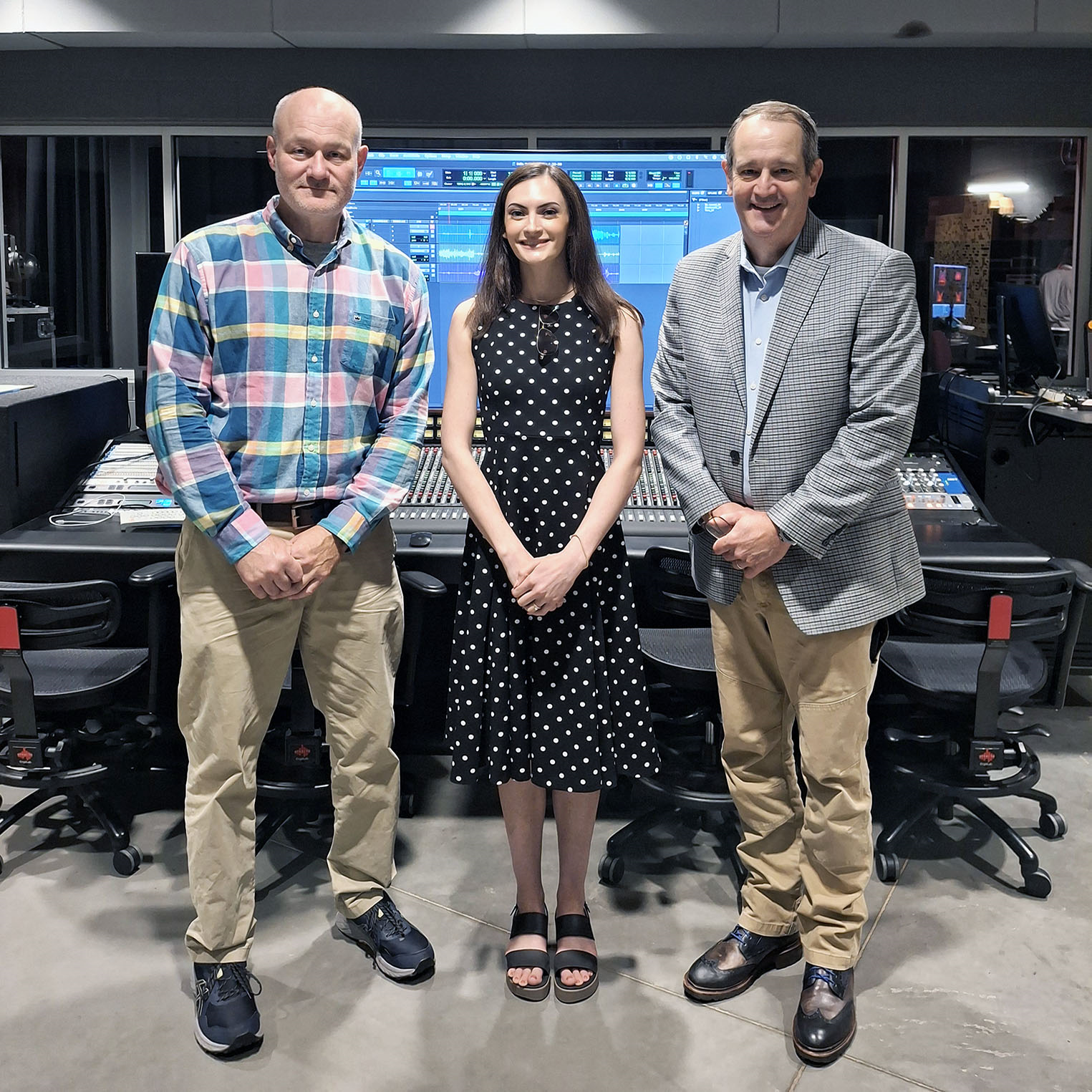
[00:00:08] Speaker B: Welcome to The Sound Bearier Northeast State Community College's official podcast. My name's mackenzie Moore Gent joined today with fellow co host Thomas Wilson.
And today, all this year, really 60, 60 years of Northeast State.
60 years of connecting people to prosperity, possibilities, purpose.
And we've got a special guest with us today, Northeast State community College President Dr. Jeff McCord joining us to talk about where the college has been and where we're going. We have a lot of events going on this year, too, so we'll touch up on that also in this episode. Dr. McCord, thank you so much for joining us today.
[00:00:51] Speaker A: Thank you for having me.
[00:00:53] Speaker B: And so, with 60 years of Northeast State, when you look at Northeast State's history, what stands out most about the college's impact in our community and beyond? And I know that's a really big question.
[00:01:05] Speaker A: Just, it's a lot that that is. But I think the impact is the impact on the lives of the people who live here.
Most of our, if not, well, the vast majority of our students who go to Northeast State, either now or in the past, stay here, stay home.
It's one of the reasons our employers really like to connect with us, because they, they know, they're, they're recruiting people who love the area already.
And so as we build Northeast State, we get to build our neighbors and our friends and the folks we see at the Food City. We're, we're working with, with the folks that we know, with our, with our own, for lack of a better term.
[00:01:47] Speaker B: And as the college president, what does this milestone mean to you personally?
[00:01:53] Speaker A: Well, it's good that the college is still older than me.
That's one thing that's good.
I don't know, it's just an honor to be here when you reach a milestone like this and to say, okay, so think about all the people and all the blood, sweat and tears and all the intellect and all the humility that got us this far. Okay? So we have to be good stewards of where we're going from here on out, because it's, as we talked about earlier, it's a blessing and a responsibility. And so, yeah, we have to. We have to.
It's fun, it's exciting, but there's a weight to it as well that we need to pick up our start or continue or whatever the case may be, the good work that's gone for decades before us.
[00:02:49] Speaker B: And let's kind of touch up on that good work. What, what are some examples of that, of maybe some past milestones that we've reached that have gotten us to where we are today. What does that evolution look like over the years? I mean, we started out as a technical school, and while we still have all of.
We still have all the technical classes that go hand in hand with that. But we've grown since then, too.
[00:03:15] Speaker A: Yes. And it's. It's really fortunate for us, the way the world turns, that we have that technical background, because I remember being in a meeting, I don't know, 10, 12 years ago either. I might have not been at Northeast Dade. I might have been on the employer side at the time, but we were talking about welding classes in. Most community college didn't have welding classes. And we did. And it was kind of looked down on how things change. Right. And so the fact that we had that and. And we knew the importance, even if others didn't, but we also knew the importance of a whole experience, which is what makes us so very unique. And you hear me say it all the time. You can be a poet to a welder, aviation mechanic to a registered nurse. You can be a musician or a maintenance tech at Northeast. And that's not usual. And it's. I'm just going to use the word, Tom. It's beautiful that you have that. We have that background. We would not have that background without.
Without the technical side. And I'm still been around the world long enough to know that we went through a period where, oh, we don't really need that. We're in the information economy. You don't need that kind of stuff.
So we ended up discouraging, disparaging those kind of careers for a generation, which the college has been around long enough to have hung tight and know that this is still important.
And we've come back around. It's not an either or. It's a both and. And Northeast State's a both.
[00:04:50] Speaker B: And I like that. A both and. And then, you know, where the trades were concerned, there's now a demand for those fields.
[00:04:59] Speaker A: Oh, certainly. Yeah. I mean, that's what was, you know, the skills gap. Right. And we have these jobs, but we don't have the people with the skills necessary to take them on.
And then the people who do know how to do that are all retiring. And so we have this demographic cliff. And the country about a decade ago said, oh, we're in big trouble. Of course, two decades ago, Northeast State said, oh, we're going to be in trouble.
And so you have a company like Eastman Chemical who would show up and say, we don't have a workforce problem because we Started thinking about this with Northeast State 10 years ago when we saw how many 50 year old technical people we had and we didn't have anybody behind them. And really that's the genesis of arcam, is that the forward thinking, okay, we're going to think about this and solve this before it becomes an issue. And so it's really kind of interesting now that Eastman numbers really spiked and Covid kind of delayed, you know, this exodus, but now it's getting back to normal in terms of enrollment at ARCAM in those fields. And now we've got a normal state. So we've gotten over that hump with one of our most important employers and certainly one of Northeast State's greatest partners to do that. So a lot of thinking, a lot of capability that we can bring because we do have that whole offerings that we have that other colleges and other institutions just can't.
[00:06:37] Speaker C: The college has always been super responsive to certainly the regional needs, but certainly a lot going on globally.
I think we could say right now, how is the college in the future going to continue to position ourselves to respond to global changes in both our workforce, the type of jobs are here, the type of skill sets that are needed here over the next three to five years.
Because you've talked about the foundations we've had and we've stuck to all these years. How do we continue to kind of evolve in different needs as far as the technology and demand changes.
[00:07:14] Speaker A: So what? So for us there's, it's a two part track. We have a lot of smart people who think about, okay, how are we going to need to adapt? And then we have our employers who are in the process of adapting.
[00:07:28] Speaker C: Yes.
[00:07:29] Speaker A: And so that conversation, that can happen. And really it's interesting the first we talk about AI all the time. We take talk about AI, you know, in English, writing English papers and are they real? Is it really, really for us, the college, the most impact now on AI is machine tool, machine tools entering AI. And so we're right there with our employers because there's, it's not like you say, I'm going to do this and then you just do it. You're figuring it out all the time. And we have the ability and we've shown the ability over the last 60 years to continue to figure it out.
If we say we're going to be here in three to five years, we don't know what we're talking about because we don't know where that is. What we do know is that we can, along with our employer partners, along with our nonprofit partners, whoever our partners are, we can have that conversation that we, we're really good at figuring this out so that we can honor our students with relevant education so they can come and have the education they need to get started on a really good life.
[00:08:35] Speaker B: Yeah, arcam, there's a lot going on. Just we had them in an episode last semester and just talking about the partnerships that are continuing to be formed and the planning that goes into it. These aren't programs that, you know, we just pull out of our pockets, like, ooh, we like this. So we're just going to roll with this. These are a strategic development of these programs to meet these workforce needs in our area and beyond.
So what is our role in creating these accessible, high quality education programs? Career pathways, which in turn create economic mobility and create jobs.
[00:09:15] Speaker A: So we have to build bridges, pathways, whatever the metaphor is, to the opportunity.
And so certainly at rcam, that's been a legacy of that, but we have been doing that on the medical side for a very long time as well. The Rad Tech program is a perfect example of that. And there's more to come there.
We know that the teacher apprenticeship program in Johnson and Carter county, soon to be in Unicoi county, is an example of that.
Giving teachers, teacher giving people who are working in the education field at the county, who love Johnson county, an opportunity to become a teacher that they never, ever would have before. And you think about that person who can become a teacher and teach the children and be certified to teach the children, who, who knows them, who, who is, is going to be the most dedicated person, not only to the classroom, but to their community.
And so there's countless examples across many different fields, not just the manufacturing field. And the reason, for example, that we lean into apprenticeships is not that we love apprenticeships, it's because they work and it provides that accessibility.
And that is an example of we just figured it out and we happened to be the first one in the state to figure it out. And that first one in the state happens a lot, which doesn't really matter.
What matters is that we figured something out to give somebody a chance to do better.
Because when our students come to us, it's such an honor because we got all these people who are really working hard to try to do better and to show up and to be walk alongside them. We owe them the same level of let's try to figure out how to do better on your behalf and on our region's behalf.
[00:11:22] Speaker C: Yeah. National Apprenticeship Week is coming up April 26 to May 2, I believe. And spoiler, spoiler alert. We're gonna have an upcoming episode with our friends Don Carter and Holly Free Allard to talk strictly apprenticeships. But yeah, a pretty revolutionary thing. And then as you said, it can be. It can apply to so many things outside manufacturing as well.
One, there's kind of a saying about the whole being greater than the sum of its parts. And what does that mean?
[00:11:55] Speaker A: Synergy, brother.
[00:11:56] Speaker C: Yes.
What does that mean to you as far as what? The college.
[00:11:59] Speaker A: So here we go. I'm going to nerd out for you. So are you familiar? I bet you you are because you got your NPR voice on and you. You're. That's this kind of guy. Are you familiar with quantum theory?
[00:12:09] Speaker C: Yes.
[00:12:10] Speaker A: Okay, so there's quantum theory, which looks at the whole, right.
Not Newtonian science, which we're all taught. You cut things in pieces to understand.
To understand the whole. You dissect whether it's a pig in the biology class or logic or whatever. You're cutting those half. And it turns out it's very important where you make that cut, because where you make that cut can show you something different. And it's even more important that when you cut that thing, you're cutting the connection.
And so it's all about. At Northeast State and actually in here we go in life and a lot of things that we need to try to see the whole, even if some of it's invisible, like those connections.
Because actually it's those pieces that are most important part. Now if we bring it out to the college as a whole, our connections, our partners, our internal connections, our ability. And this is why I love and I talk about this from time to time. Our college and the offerings, we're whole.
We get to. This is the best part about my job, really. You get to replace Miller welders and then we get to go buy a baby grand piano.
[00:13:29] Speaker C: Yes.
[00:13:30] Speaker A: And that is as good as it gets. And when you have that, you have this hole and this in the connections and the energy and the passion and the showing up on Friday as a faculty member with donuts to teach in the library to do anatomy and physiology tutoring.
That is the greater than the sum of the parts sort of stuff.
That is actually what makes the college so special and so successful.
How did I do?
[00:14:07] Speaker C: Absolutely. Yeah. That explains it.
[00:14:09] Speaker A: Okay. You. You and I are the only ones who.
[00:14:13] Speaker C: Yeah, well, the holistic. What? See, the whole. It's kinda.
[00:14:17] Speaker B: I'm hanging on here.
[00:14:18] Speaker A: So.
So a good book is Margaret Wheatley. Okay. You ready? Margaret Wheatley, leadership and the New Science Recommended, if you want. I'm not much of a leadership book person, but that is. That is as good as it gets.
[00:14:36] Speaker B: Margaret Wheatley noted.
I have to check that one out. And speaking of parts, all these parts, who are some standout community partners, faculty members, staff members, who are some standouts who have really helped shape the college's story over the years. And in present day may be too
[00:14:54] Speaker A: long, though that's okay. So we'll. We'll go a few. But the standouts are gonna. They would, you know, if I.
Because of You we are and are, you know, just who we are as a college, as a. As a people, as people who grow up in northeast Tennessee or who live here, they would be all mad at me for calling anybody out, which I'm gonna do it anyway, so.
So thousands and thousands of people obviously have helped us get to where we are. But you think of a name like Bill Locke, who really shaped our college. And, you know, there's a old legend story that for the first time ever, he went to one of our largest employers and asked him, what do I need to do? Teach my students so they can get a job with you?
Because this employer was not hiring Northeast State students.
And now this employer is one of our biggest custom, you know, biggest clients. And so that kind of humility with. Mixed with intellect is really. So Bill.
I see. Still see Bill from time to time, we go down and eat at Yoder's.
So another one. Good. Yoder's with Margaret Wheatley. You can't beat it.
And then Lana Hamilton, who I got the chance to work with both here at the college, and then when I was at the state, she was at the state for a little while.
You talk about heart and grit and intellect. What a wonderful human being. And it represented who we are.
And I know it's not, you know, breaking news because we have buildings named after these people.
But also I think about Richard Venable, mayor of Sullivan county, who has been a huge supporter of the college and instrumental along with Jeanette Blazer and Keith Wilson, and starting Educate and Grow, which was Tennessee promise 10 years before Tennessee Promise started in Sullivan County.
Um, I think about the whole city of Kingsport, who leaned in with partnerships, and specifically Dennis Phillips, who built us our chip so that we could have a facility for medical.
I mean, Northeast State paid zero for our chip, realized that, and by the way, just to throw in zero for the higher ed as well.
So they bonded and they built it and they asked us to please come and let's build something together in Kingsport. And so Kingsport as a whole, for many years, several mayors have been really instrumental in helping Northeast State grow as well. And finally Carter county, let's figure this out and figure out how to get out of this old building and build one that is going to be something that we can all be proud of.
Mayor Woodbee has been a very fierce advocate of not only her county, but of. Of our school as well and make bringing those opportunities to the folks of Carter County. So those are just a few who have really made an impact to. To our college.
[00:18:22] Speaker B: And it really does. It takes a village. It takes a village. It takes a community without these partnerships. Without the. The heart too.
[00:18:31] Speaker C: I remember educating Grow to the first. The very first class of Educate and Grow. We took their photos on the sidewalk in front of Baser Library. First class. Remember that? Remember that vividly. Yeah.
[00:18:42] Speaker A: We should get that picture if you still have it.
[00:18:45] Speaker C: I still have it in the archives. I can get that photo.
[00:18:47] Speaker A: That would be awesome. Yes.
Yeah.
[00:18:50] Speaker B: I didn't realize it. So that was really the basis of the Tennessee Promise.
[00:18:55] Speaker A: Yeah.
[00:18:55] Speaker B: So that they had the Tennessee Promise.
Wow.
And this is, you know, how do our community partners and donors strengthen the college's mission? Because we've got a lot of donors for like Scholars night too. And getting to hear just a lot of the scholars stories and how these donors and their contribution has change their lives. Really. How do these donors make an impact?
[00:19:20] Speaker A: So they. It's always interesting. People get here and they understand what we're doing and then they're going to invest, they're going to give.
Because it's not hard to see the good that's happening. It's always interesting to me at those scholars receptions too.
And our students talk. And anytime we can get out of the way and let our students talk like we do at graduation, it's just better.
And so when they speak, it's always that almost every one of them or every one of them, I heard say the same thing. The money is great. The money made it easier. The money closed the gap. But the fact that somebody believed in me that I got a scholarship was huge.
And we get back to that invisible part that makes things whole, the non tangible that is so important.
That's. That's it. That's it right there as well. And so that. That leaning in from folks in the community and believing.
And we've got to be very good stewards of that.
That again, we get back to that is incredibly fortunate blessing.
But responsibilities. Well and so we've got to show up and be ready to return some of that belief in us and make it real.
[00:20:56] Speaker B: And you know, in showing that we do believe in our students, we believe the greatest possibilities are possible for them.
What kind of ripple effect does this have on not just the students once they graduate and get out in the workforce, but in our community too?
[00:21:13] Speaker A: Sure. And I think if you're like me, somebody has to believe in you before you believe in yourself. It happens a lot.
And with a little bit of capability, a little bit of belief comes competency and with the competency comes confidence.
And you start to believe, if I did this and I can do almost anything and so can you.
It's hard to believe in others if you don't believe in yourself. And so that self belief perpetuates through family members, through my cousin, through whoever.
And then, and then you start to get, you know, do better and hard work and people notice that. Just modeling and it just ripples. It's just, you know, good.
And the fact that we can be a part of it, even if all we're doing is just setting, you know, rolling that thing so we can, we can get it going and not knowing and being okay with not knowing for the most part how it all turns out, you don't need to know it, you just need to do the good where you are and other good things will happen. So yes, I think we talk about economic, changing economic conditions because 60% of our students are first gen, 6% are Pell and they can go a different direction. But it's a lot more than just that.
There's a lot of great health outcomes that come from a good job.
But there's also just some non tangible things that, that you impart not only to our students, but whoever they touch from there.
[00:23:00] Speaker C: Now we just kind of come off homecoming week, which was a huge blast. A lot of fun, a lot of students having fun. All campuses, kind of all over all of our campuses had several alumni come back for our alumni breakfast. And among other things, what are some other things we're going to be doing here as the 60th as part of our 60 year anniversary? What are some things we have to look forward to continuing this year?
[00:23:26] Speaker A: We're going to throw ourselves a party sometime as the details are still, still going. It's hard to throw yourself a surprise party, but if we could do it, we would. We're going to have a celebration near the end of the year, not get into the holidays, but then whatever we do, like the alumni week Was paired with the student activities day that we had and whatever. We have a really good rhythm of things that we do as a college to engage and so we'll combine our celebration with those events that already exist and make sure that we're.
That we're here and telling everybody we're just getting started. We've been here for six years, but you know, we got a lot left to do and so I think you'll see those come through and check your local listings for an event near you. How am I doing, Tom?
[00:24:23] Speaker C: Excellent.
[00:24:25] Speaker A: I do know we'll have another concert. We were able to do that for the first time and you can expect more of that. To me, that's part of us and I don't want to nerd out too much or get too woo woo. But that's part of us being whole to have plays and concerts in addition to the hard skills that we teach.
Just the both and again and just to center us for us to be the center of a lot of good things that can. That can come from what we do and hopefully who we are.
[00:25:01] Speaker B: Right now we're celebrating 60 years, but in four decades from now, that's going to be our 100th anniversary.
[00:25:08] Speaker A: You have Tom and I wish you the best with that celebration.
You just keep going, sister. Yeah, you keep celebrating. And remember when they ask you who's. Just say our names, you know, just say yeah, okay. When they're interviewing you, of course.
[00:25:23] Speaker B: I mean. But no, you all still have to be trudging along with me. Please don't leave.
[00:25:28] Speaker A: Well, you can. Yeah, well, we're. It's math.
[00:25:33] Speaker B: But what do you hope people during the hundredth anniversary, during that era, what do you hope people will say about the direction of the college now?
[00:25:44] Speaker A: So I am going to nerd out just a little bit more. But the short answer there is that we weren't kidding when we say we're just getting started 60 years and had a great time but not resting on laurels, not patting ourselves. We're not patting ourselves on the back kind of group. So you have to be careful that you have to celebrate and let people say nice things to you, which is y' all squirm when that happens as well.
It's just who we are. It's better to be that way than the other way.
But yeah, that. No, they're. They weren't kidding. When they're just getting started, these things started happening and maybe not finished, but found your footing, got your stride and here you go and. All right, so I'm Going to quiz Tom here. Are you familiar with the concept of the morphic field?
[00:26:39] Speaker C: I am not.
[00:26:39] Speaker A: Okay, so the morphic field is the invisible.
Its proposed field that keeps your biological being the same. So the cells. So that's why a squirrel gives birth to a squirrel. That's why a, you know, donkey gives birth to a donkey, unless, of course, they date a horse. You know, all that stuff. And so, um, so it holds you together. And so there's a phrase breaking the morphic field.
So when, you know, as you become better as an animal changes, it breaks, that feel breaks and becomes something else. And so within our family, so you see this all the time. Here we go, my family, we have the phrase we're going to break the morphic field. So if you see a team that continuously loses to another team and they look like they're going to win, but they. They say, oh, I remember who we are, so we're going lose. It's hard to break the morphic field. So that's a morphic field around that. Less like Georgia Tech playing Georgia, hard for Georgia Tech to break them. Or. Okay, so there's this morphic field. Right.
We're going to be breaking some more fields.
I do think having concerts and having people come in and being celebrating there is where. Break in a morphic field.
[00:28:01] Speaker C: Yes.
[00:28:01] Speaker A: We're going to do some more fundraising than we have done.
We're setting that up right now. So we don't call it fundraising, call it development, but it's the same thing so that we can make progress faster than then we have before, besides waiting on state or saving our own money so we can combine that and do some things we haven't done that before. Right. And so some things that we can do as a college as a whole to do.
I am. Our faculty is going to figure out how to break the morphin field in a classroom. There's no doubt in my mind. And so.
And usually that happens from somebody who's not invested in the way we're currently doing it. And so it'll be somebody young or it'll be somebody who is coming in with a fresh look or somebody who's traveled and come back and say, oh, yeah, okay, so this. I got fresh eyes on this. Anyway, that will happen, but from a higher organizational or overall. Excuse me, Overall organizational college level, we'll be starting to see if we can't.
What is this field that's holding us where we are? And let's go ahead and see if we can't break it.
And you Know one of the big morphic field breakers. You know what it is? Allowing drinks in the performing arts center.
[00:29:24] Speaker C: That's gigantic.
[00:29:25] Speaker A: That is a morphic field breaker.
And I. I saw that sign there, and I was wondering, why do we have that sign there? You know, somebody could have coffee. And you know why? Because Dr. Locke put that sign there, which Bill. I'll ask him when we go to Yoder's humps. I'm sorry we had to break a morphic field and. And take that sign down. But there's things that we run into.
Good things. Things have been along. That's good that we have that field.
But let's see if we're gonna.
We're gonna step out. And so one of my favorite thoughts is we all fall in love with the process and forget the purpose.
And so the process usually has to change to advance because the world changes. And so we'll.
We'll. Where it makes sense, we'll try to push forward on some things that maybe we have not pushed forward on before. That is a crazy, long, nerdy answer, but that's my answer. Yeah.
[00:30:27] Speaker B: So we're pulling in some science here today, too. So, I mean, we are an educational institution. We all have to keep on learning. So that's what we're doing here. It's awesome. And so if someone listening today, they have a connection to Northeast State, how could they celebrate with us? Maybe, you know, they're not here physically at the college still. They're out there just living their lives. But how can they help celebrate 60 years?
[00:30:52] Speaker A: Come and see, I think, is what I would say.
Just come and see. Engage in an event, just participate. Something you're going to be surprised if you haven't been here for a while, maybe even amazed, and of how the college has grown and the energy that. That surrounds what we're doing and. And really the impact that we have, if you can get us to talk about it, because we don't really, like, talk about ourselves.
And I think just come and see. And I think it will be a very rewarding experience for you if you do. I think you'll be proud to be a Northeast State grad if you do more proud than you are now.
And you might. You may feel like, hey, maybe I can get involved, whether it's an adjunct faculty or whether it's on an advisory board or whatever the case may be, to be a part of the good work that we get to do.
[00:31:59] Speaker B: I mean, it's very evident in just the growth on campus from the technical education complex to the continued growth over in Kingsport with RCAM and rcamco, we are just getting started. We're still evolving, still growing. That answered all my questions. Do you have any.
[00:32:14] Speaker A: It's time for Time to sing.
[00:32:16] Speaker B: Okay, cue the music.
[00:32:18] Speaker A: Ready? Go.
Feelings, please.
[00:32:21] Speaker C: Oh, I don't know if I could do that or not on cue. I'd have to. A little bit of a build up for that one.
It's more like. More little. I could read. I could read from Margaret Wheatley's book, like, remember Dick Estelle? Yeah, from reading the books.
[00:32:35] Speaker A: Yeah.
[00:32:36] Speaker C: I loved that.
[00:32:37] Speaker A: I know now they call it audible.
[00:32:39] Speaker C: Oh, yeah. It's all AI. The AI does it all now.
[00:32:43] Speaker A: I cannot bring myself to listen to an AI Narrated audible book. I just can't do it. So now I'm having to go to the old ones.
So anyway, I don't know, maybe one day I'll get tired and just lose all that, you know, whatever I have. Maybe I'll just break that Morphin field, I don't know. But right now, Morphin field is strong on this one.
[00:33:07] Speaker C: It has to be humans. I don't want to hear.
[00:33:09] Speaker A: Have to be humans. Yeah, it has to be humans. I don't want to. I don't. Anyway, that's my own problem.
[00:33:17] Speaker C: I mean, our faculty and staff have always been tremendous. And they, they, they seem to do their absolute best. Well, and they always do their absolute best. But how does leadership let people simply do what they do as far as teaching? And you talk about breaking the morphic field of innovative faculty, innovative staff, about how we do things. And we've got, as if you, as you've talked about, we have a long history of that here in Northeast State.
How does the leadership just let that happen as far as supporting faculty but saying, hey, you're the adult, you know what, you know what this is and what the subject is. Go do your thing. What's the best method you've found to do that?
[00:33:55] Speaker A: Just how you described it.
[00:33:56] Speaker C: Okay.
[00:33:58] Speaker A: You know, there's got to be.
You gotta let good people be good and imposing, whatever you're gonna impose. Because even if you're the smartest person, smarter than anybody, you're not smarter than everybody.
And that collective intelligence, that happens, and there's passion there. I mean, that's what this is, our faculty, that's what they've given their time to, their education to.
They.
And they're great.
And so for me, for example, I love to go in the classroom and talk to students, but I won't go Unless I'm invited.
And when I'm in that classroom, it's the, it's the professor classroom.
And.
Yeah, and so some people like to invite me. Some people that, that's fine. But I do love to go and listen and talk with the students and learn. You know, they want me to do something, I do something. But mostly what I want to do is ask questions about how they got in the seat that they're in and why they got in the seat they're in, how's it going, what the food prices are for them.
But within that room, within their, you know, their peers, that's what they're doing and that's what they're figuring out. Now, my job, our job, if you're in leadership, is to remove barriers.
And are people going to do that also? A little bit of our job is to. Okay, so we've got this piece, but we also have this piece and this piece and this piece and this piece and this piece. So how this going to fit together? I know you really want to do this, but it's really going to mess this up.
So how do we move it together?
But you also owe an explanation for that is, I believe, because, you know, when you ask change is hard. Everybody says change is hard. So if you ask somebody to change, you better explain why.
And even if they don't agree with it, you need to have the explanation. So all that, Tom, is you gotta.
And, you know, the, the, you know, that sounds all, you know, really great, but you also have to hold people accountable.
Because of You have really good people and you have somebody who's not honoring the fact that we've got students showing up, working hard, somebody's not willing to meet that effort, it's not good for anybody else. It's not respectful of everybody else. And so that's one of the hard parts is you have to.
It's always been my experience is you go towards the problem.
Avoidance is, you know, absolutely deadly in, in any kind of organization. And so you go toward it and respect folks and.
But, you know, people have to.
People have got to do what they're supposed to be doing, if not more, because.
So all that combined is just what you just said and, and, and go, go from there.
[00:37:29] Speaker C: I see you on campus quite a bit just talking to students. What do you hear from students about their experience, what they need, what their.
What they're kind of seeking? Because you're out there a lot talking to them.
[00:37:40] Speaker A: They're our students are incredible. And I do like to talk to our Students. But again, they need somebody to believe in them.
Whether you're, you know, 35 coming back and you haven't been to school for a while or you're 17 and you're, you finished high school a little bit early from a home school are.
Whatever the case, we owe it to our community, our students to ensure as best we can their safety.
And we've really made some great improvements on that. And then, you know, you never feel 100% good about that, but I can tell you we have taken that very seriously. But they're happy to be here.
A lot of students do not. They going to go somewhere else. And they, I mean, I heard one student. It's, it's.
We call older people non traditional. Why do we do that? We need to break that field too, don't we?
[00:38:44] Speaker C: Yeah,
[00:38:46] Speaker A: I mean when you have 30 plus percent that are part of your school, it seems like that's fairly traditional. So McKenzie's job is to come up with a word for non traditional.
So they're happy to be here, they're engaged and I think there's an appreciation for, you know, we've got more gathering places now and we need, we still need to provide more connections so they can build community. And so we'll be, continue to work on that.
It seems, you know, just from a purely.
It seems like they value Northeast State and they're, you know, we'll talk about.
Yeah, there's tuition free for a lot of our students, but still it's their time, it's their energy, it's their beliefs, it's their dreams. They're trading something for coming here and the fact that they're getting value or believe and see it, that's a good thing, truly. Plus I can't sit still at my desk, so I got to get up and I got to go somewhere.
I never chase a student down though. Never.
[00:40:03] Speaker C: No, no.
[00:40:03] Speaker A: It ever seems like just making sure. Yeah. Easy engagement. Come back here.
I'm not fast enough anyway. I'm sorry.
[00:40:11] Speaker B: Fast enough.
[00:40:12] Speaker A: They're too fast. Yeah.
[00:40:14] Speaker B: What are some of the barriers that right now in present day are keeping people from, you know, deciding against college? Perhaps? And I know that, you know, the generational, just the belief in yourself and growing up with that, that's very.
It's instrumental in helping you develop and form your own goals and form your own, I guess, trajectory for life. But what are some other barriers that might prevent people from coming to college and how do we break those down?
[00:40:44] Speaker A: So the, there's two that I can think of Rough top. And the biggest one has always been opportunity. Awareness is don'.
[00:40:51] Speaker B: Know.
[00:40:52] Speaker A: The opportunity that exists and that's part of the organization that you guys are in, is to make, to say, okay, here's this. It's a real opportunity. And it's hard to break through all the noise because everybody's telling them, you know, if you do this, you're gonna, you know, but, but the true real opportunity, it's hard. And it's, you know, certainly it's hard because a 16, 17 year old has got a lot on their mind.
And so it's not just them, it's whoever influences them.
The teachers, the parents, the grandparents, the uncle, whatever to say, okay here. And so then there can be a conversation that happens. So I think opportunity, awareness.
And then, and this one is one that I think about a lot.
So 40,000 people in the region without a high school diploma, they got no shot of coming here.
Whether they want to or not, they've got to figure out. And I, you know, we started when I was here, before I went to the state. We started the adult ed program. We got it from the counties.
It was all in the individual counties. We got it. And I learned a lot about it.
And one of the mistakes that I think people might make is they just weren't able academically to make it through high school. And it's almost never the case.
It's almost life.
And so now you have 40,000 people perfectly capable of coming here who got knocked off track, most likely not of their own decision, but even if it was their own decision, gosh, that's really hard to come back from.
And so we are, we are working very hard and we are making great strides in giving them. They're locked out on the other side of prosperity. Let's get you here. And in that process, let's give you confidence. And in that process, and we're doing all the time, which we used to not do, let's give you a job skill because we really would like you to come here. But what we want you to do is have a good place, a good decision so that then you can make other good decisions.
And so we've got apprentice pre apprenticeships now in the adult ed space. We have great partnerships with workforce and companies so that you can become a pharmacy tech while you're getting your, while you're getting your hisat. While you're getting a high school equivalency.
So those are folks who, no matter what they, even if they're aware of the opportunity they need to, we need to again, provide that link, that bridge to bring them. To bring them to what we know is a really good place. And we know that we will work with them, work hard to help them make another good decision so that they can. They can get on the track that they are. So big opportunity, awareness. We have people in public assistance, same sort of thing.
People who are in the.
In our jails. We do adult ed in there and some workforce training and it's all this. And they're still, you know, they're literally locked away from that. And the state penitentiary, the.
We're teaching there as well for the same reasons and have graduations there for the same reasons to make sure that we connect to those folks.
And it just. A lot of times, Tom, things just fall out of my mouth. Right. And so we.
I said, I think in convocation or something. I can't remember that we're here to get you there, but we'll go there to get you here.
And we'll go there to get you here wherever there is.
And I'm proud of us for that.
We may be the only ones that can do that. And if you can, you should. If it's a good thing. And our. And so I don't know, maybe it's because we're willing, maybe because we want to. I don't know. But we certainly. I don't know. There's a lot of other educational institutions, they go. That go. Go where?
The person.
They can't be our student.
And so we try to get that. We make them our student through our adult ed process. And then if they want to go to work, great. They don't have to come to us, but they. So that's what we're supposed to do as a college.
And I'm proud of us for being willing to embrace. It's not easy. It's hard work.
It's really hard work.
But it's good work.
[00:46:00] Speaker B: Absolutely.
[00:46:01] Speaker A: If you do the longest answer contest, I think I might have the longest answer of any. Any podcast interviewees you've had. What do you think?
[00:46:10] Speaker C: Oh, I don't know. We may have to. I don't know.
[00:46:14] Speaker A: There's some verbosity going on here. Verbose.
[00:46:18] Speaker C: It's.
[00:46:19] Speaker A: Yeah. Okay.
[00:46:20] Speaker C: A good fleshed out answer is always much preferred.
[00:46:24] Speaker B: Always opens. It just opens doors to new discussions.
[00:46:27] Speaker C: Yeah. To more questions.
More questions off that.
[00:46:30] Speaker A: Oh, that's my stomach.
Can you hear that? I heard yours too.
[00:46:34] Speaker B: I empathize. Yeah. Over here.
[00:46:36] Speaker A: Yeah, I heard mine.
[00:46:37] Speaker B: They're talking.
[00:46:38] Speaker A: I think. I think it may be like Hiccups or something.
You know how it's somehow contagious
[00:46:46] Speaker B: and yawns.
[00:46:47] Speaker A: Yawns?
[00:46:47] Speaker B: Yeah.
[00:46:48] Speaker C: I heard a story about a man who had hiccups for 35 years. Have you read this? Have you heard of this?
[00:46:52] Speaker A: Oh, that's awful.
[00:46:53] Speaker C: 35 years go insane.
[00:46:56] Speaker B: But I've noticed whenever I do get hiccups, I'll usually get them like the next day. It's like, usually a two day like ordeal. And then, and then I do get scared about the man who got hiccups. Like, oh my gracious, I'm gonna be the woman.
[00:47:08] Speaker C: Yeah. What happened? Five years paranoia sets in.
[00:47:14] Speaker B: That never happens.
So not yet someone gets someone for me to knock on because I don't want that to happen.
[00:47:21] Speaker A: Well, how do you finally get rid of his hiccups? He finally got some peanut butter or what?
[00:47:25] Speaker C: I think they had to do surgery because there was some type of thing in. There was like a perforation in the.
And it just kept.
Yeah, I think that I, I check me on that audience, but I think there, there was some. They had actually had.
[00:47:39] Speaker A: Are you just throwing baseless things out, Tom? Yeah.
Are you making up stories, propaganda, putting some stories out?
[00:47:51] Speaker C: Higher education is, it's kind of the term higher education. Higher education education in its whole nature is, is changing rapidly and there's many factors how people think. Oh, it's doing that because of this and that and the other. Why is higher education more than simply a credential? Yes. Credentials are nice and they're, they're a good thing to have. They prove a lot of things. An apprenticeship certificate. Very, very important when it become, when it signifies what you've learned. But again back to the holistic nature kind of of learning what is learning skills and actually learning how to perform in a workplace. And how does Northeast State kind of hope to do that? Yes. You have a credential that hopefully in the two years or your one year you've been here, if you're in the certificate program, how have you learned to function within a company or a group of people or start your own company? Because there's a, certainly an art and of course a science to working within an organization of people that goes beyond a credential.
[00:48:47] Speaker A: Yeah.
[00:48:47] Speaker C: What do we hope to do?
[00:48:49] Speaker A: So I'm a nerd out again one time. So social cognitive learning and that's going to be happening in the classroom and a lot of it. So let's start with education changing thing. I mean education change.
Well, we're going to teach you something and you're going to demonstrate your skill. And that's something that's never going to change.
What we're teaching you are this. Are, you know, that sort of thing that might change. But the whole. The ground floor of. I need you to learn this. If you're going to be able to do this, is going to be this. It's the same.
And so how we. And there's different methods to do that, there's different ways to do that. And that's.
[00:49:32] Speaker B: That's.
[00:49:33] Speaker A: That's fine. But in back to your point of your question, I think in the classroom, it's. There's expectations, timeliness, expectations.
There's decorum expectations with your classmates.
There's decorum expectations with your boss, who is the.
The professor.
All that happens in the classroom.
And then you walk out and, you know, hopefully you. You. You don't push people out when you go out the door. You know, all that stuff. If you do, you're corrected. And you learn. So you learn something that you're gonna have to focus on. And really, I worry less about that for our students because at the end of the day, you learn how to work by working.
And I don't know what the number is, but wouldn't you guess high. 90% of our students work. Some do something. They're working somewhere.
And that interaction, that nuance that you have.
So I think our. And we do a really good job of this because we are smart enough to be humble.
And if we.
All we did was just, okay, you sit there, mackenzie. I'm going to teach you how to be in a work environment.
Here, read this book. Let me show you. But the social norms within the workplace are in the workplace, right? And we can simulate them in a classroom. And a lot of it really, it's not simulation. You have to. You have similar social norms in a classroom that you do in workplace. And so I think those, a lot of those, that kind of social stuff. Now, in terms of being whole, the connectivity, I mean, you're going to learn a technical skill, but this quote from Shakespeare is going to provide, oh, my gosh, there's where the insight is. And so you get that insight from disparate things. I mean, it comes at you like that. That's how it works.
So the more we can expose to a broader array of issues, of ideas, of ways of doing things that may be outside of your specific field, the better. And I think that that is.
So I get to talk to employers. They love our students, love them.
And I can tell you they love. And there's a lot of nurse providers, right? They love our nurse providers. I mean, our nurses.
And so. And I do think there's something to all. Most of our students working and the folks who show up to be our students, it's different too. So I do think there's education that goes outside the field of education.
And if we can overlap with that, and the apprenticeship's a great example of that. But if we overlap that with what we're doing and you want to do things at the same time, or you want to start something before you finish the other thing, you want to know that sort of stuff. And we do. I think we do that as a matter of course at Northeast State.
[00:52:45] Speaker B: And so in the future, I know that we have so many projects right now that are in the works. So many rooms for growth. We're develop. We're out there developing and we're doing it alongside our community, thanks to our community.
What are some things right now to look forward to just in terms of college growth? Like, I know that we've got the culinary arts. That's about to be done. That building that's off of Bobby Hicks Highway.
[00:53:07] Speaker A: Look at you. Good job.
[00:53:09] Speaker B: I had to think of the road name that's about to be done. I know that our camco that there's still things in the works over in our neighborhood, in our Kingsport neighborhood. What are some other things to look forward to here?
[00:53:21] Speaker A: We are leaning into more medical programs. And so we have, for example, and that will be coming. And it's not a secret, but it's just we can't advertise and that sort of stuff. And it's not fully formed yet, but leaning into some more medical programs that we have. We have signed an agreement with Kingsport to actually acquire the buildings that we're currently in.
All of them, every single one will be Northeast State buildings, which allows us to expand them.
And you can't build onto something you're renting. And so that should be helpful.
We have the. Our 40, 37 acres. 40 acres across this road.
And the kind of the slowness there is we got to put some infrastructure in before we start doing anything. So infrastructure means power and water and stuff like that and get a good feel for that before we start developing. But you can see athletic fields over there or maybe another academic building over there.
Our master plan has a new student center that would be kind of like close to the humanities area.
And then opening up where our current student center is. So you can connect the two courtyards, the Ladybug and The quad sounds like the lady and the Tramp.
And so there's a lot. And the problem, Mackenzie, is you can get too much.
Try to do everything. You won't do anything.
And so we're going to get. We're going to have a plan with all these partners.
It's. And it goes back to a question you asked earlier about leadership.
[00:55:13] Speaker C: Bob.
[00:55:14] Speaker A: I'm sorry I called you Bob. Bob and Tom. Tom. There's a radio show that was Bob and Tom wasn't there.
[00:55:19] Speaker C: Oh, yeah, yeah.
[00:55:20] Speaker A: That's really good. Y' all should do that.
Was that y'?
[00:55:23] Speaker B: All.
[00:55:23] Speaker C: That was not okay. Yeah, we were also. We were often referred to by that. Yeah.
[00:55:29] Speaker A: So with all the partners who are going to help us. So there's the phrase many hands make light work. Many hands make light work or a mess, you know. And so part of leading and making sure these things go together is making sure we don't make that mess when we have those meetings. Because it's really good, that many hands. And so there's a lot and it's good, but none of it will get done if we try to do it all at the same time. And so we'll focus on a few things going into next year. Finish culinary. We're going to have our first Rad Tech painting ceremony coming up soon and they'll be graduating for the first class.
And then we need to like, to your point, finish up our cam and company and get that and get that done and then decide medical is probably our next lean in and see if we can expand on some of the same technologies, Rad Tech basically.
And see if we can't make. Make that happen and lean into that with some of our employers really needing.
And so with Rad Tech, you've got to go. I think if you're going to go to a two year degree, the closest one is if before we opened ours was in Chattanooga. It might have been at Roane State, but it. So it was there. There's, you know, you have to go. And the closest culinary was Walter State. So if I'm in Johnson county and I have a passion.
Yeah. So those sorts of things that we'll look at and see if we can't provide opportunities like that for. For this, our students. And we'll continue to do that and then we'll figure it out.
[00:57:09] Speaker B: Yeah. I mean we are just getting started
[00:57:10] Speaker A: after all, you know, we're just getting started.
Yeah.
It seems like we're almost done at least with this portion of the journey.
You got one more hit Me?
[00:57:24] Speaker C: I think. I think I'm good.
[00:57:26] Speaker A: Okay.
[00:57:26] Speaker C: I think you got the last. Yeah. On that last one.
[00:57:31] Speaker A: So I'm gonna ask you some questions.
[00:57:33] Speaker C: Okay.
[00:57:34] Speaker A: So, Tom, how long have you been with Northeast Day?
[00:57:37] Speaker C: It will be 21 years in May.
[00:57:41] Speaker A: 21 years in May. What did you do before?
[00:57:43] Speaker C: I was a newspaper reporter.
[00:57:45] Speaker A: Okay.
[00:57:45] Speaker C: In this area.
[00:57:46] Speaker A: What paper?
[00:57:48] Speaker C: Elizabeth and Star with the Bristol Herald Courier and the Tri Cities Business Journal.
[00:57:53] Speaker A: Okay.
Yeah, that's. That's quite. Can't keep a job, huh?
[00:57:58] Speaker C: No being thrown around there.
[00:58:02] Speaker A: All right, so in your opinion, what. From a messaging standpoint, what is the key message that Northeast State needs to give the community and potential students? That could be the same message. But think about those two audiences to potential students.
[00:58:22] Speaker C: What you're looking for, we have. If there's something you're looking for or something you feel you need, we can fulfill that need beyond just the classroom, which is what I kind of. I was asking about that earlier, but a lot of the students I've talked to over the years, yeah, they want to have a job and degree, but they need some sense of belonging and some sense of connection here in Northeast State can provide that, because our faculty and staff really provide that so very well, and they have for so long to the community in general, hey, we're your community's college.
We're right here. You don't have to look too far to see something right in your backyard that is of a great value and a great sense of pride for yourself. Get to know Northeast State. Get to know what it does, and get to know that the students we turn out and graduate here sustain our region's civilization. Because I'm big on.
I'm a strong believer in community colleges, really turn out the students that sustain what we call civilization. And it may sound basic, like keeping the lights on, keeping your water and your power, and so many technical skills that go into the small things we see every day. But take those. Take those things away and see how.
How civilized your world becomes. And our students are the ones that really supply that to the community.
[00:59:43] Speaker A: Very good. I've got one more for both of you, but I'm going to pivot to McKenzie.
[00:59:48] Speaker B: Okay.
[00:59:50] Speaker A: What is the key message that needs to be imparted? I don't want to say delivered. That sounds too cold. Shared with our current students, with our current students.
[01:00:03] Speaker B: We're always here when they leave, when they transition, whatever that may be. Be it university, the workforce.
We're always here. We pride ourselves in maybe the foundation that they started, and we provide A foundation for so many different paths. Every path looks different. And no matter what their path is, we're here and this community is still here. And we're always excited to see them again too and see where they've gone, see where, where they've taken their degrees, certificates, credentials. Just fostering that, that network that we've already built. I know that alumni is currently working more toward that and building that, all those connections. But just a reminder that we're still here and we're not going anywhere.
[01:00:54] Speaker A: Very good. That's I think for all of us, the stability, the unshakability.
It's not a lot like that. And so it's always good to have a place to touch base.
Okay, so here is. And this got to be. This is my last question, by the way.
This is a hard one and so it can. So both of y' all think about it. We do so many good things and you know, part and part of my job is just to talk, talk, talk, talk, talk. So. And I'm very introverted, believe it or not. And I'm shy. I was always a shy kid. So. But you know, we got the job. You got, so you got to do it.
So I could get up and say look at us, look at us. This, we're so much better than that. Where look at us, look at us. And, and the, the kind of phrase we get a lot is you're the best kept secret and you don't want to be the best kept secret. Right? You just, you just so.
But you don't want to be the guy who's out or the gal who's out there, look at me, look at me. Because it's not me either. But even look at me college wise and you know, putting comparing to make yourself look better. And if we compare, we will look better on a lot of different things that don't get that wrong. We will look much better.
Any kind of data you want to do, we will.
Okay, that's not us to go out there and beat our own drum.
However, however, it certainly will bring in more scholarship money.
It certainly help us build more buildings. It certainly highlight the great work that's going on in the classroom and outside the classroom and in our student services.
So. Alright, so tell me communication professionals, how do you thread that needle of it's not a brag if it's true, but it's kind of a brag. And really we need to tell our story.
And this is on me. This is, you know, don't tell Chancellor when she evaluates me but if I was given my telling the story of Northeast State is something that if it's not, if we're the best kept secrets, mostly my fault and some of yalls do, but mostly mine. Fair enough. It's Bob's. It's Bob's fault and mine.
But yeah, we don't want to be the best. So how do you share that story in a way that really reflects who we are?
[01:03:33] Speaker B: I think there are so many people who share with me too, just how much. Oh, you work at Northeast State Community College. I went here. Whether I'm in like a doctor's office and it's an RN or just someone making that connection, we can have other people tell our story too.
[01:03:51] Speaker A: That's a great idea.
[01:03:52] Speaker B: Testimony, alumni testimony, current student testimony. What have their experiences look like here? And every experience is.
While every experience may be different and what it looks like and what direction they're going in, one thing's been pretty consistent in what I've seen in these responses. And it's finding that sense of purpose. And it's all the good things really is what's been really consistent. Have other people talk agreed about us, about the college, about their experience, Rely on their stories and their experiences here to help share that story of. It also proves that we are who we say we are. We provide what we say we do. We're not just saying it to say it. It's very real, it's tangible. And the students, the alumni, their stories make it tangible.
[01:04:45] Speaker A: That might be the best answer in podcast history.
[01:04:48] Speaker B: No,
[01:04:50] Speaker A: that is wisdom. Way to go, mackenzie.
[01:04:53] Speaker B: Oh, wow.
[01:04:53] Speaker C: Thank you.
[01:04:53] Speaker A: Yeah, that is. You're exactly right. And that's why it works at graduation with how we do graduation and that's why how it works at our reception for donors.
[01:05:03] Speaker B: Exactly.
[01:05:05] Speaker A: And that's exactly right. And I, I do think we have some advertising coming up with employers saying they hire Northeast Day, which is. Yes, that's exactly how to do it. You're exactly right. Look at that. Problem solved. How long have you been working here?
[01:05:22] Speaker B: Three years.
[01:05:22] Speaker A: So golly, look in three years she solved the problem.
[01:05:25] Speaker C: That's it bears to business. That is a great example of that because he does it like. That's a tremendous piece of like student forward.
Hey, they're right there working, getting it done right now.
[01:05:39] Speaker B: And when the alumni would. I had a couple of alumni we met up on campus and it had been since before the technical education complex was built. So I had a couple who were just like, whoa. Like that was not there. And I just graduated. You know, six or seven, eight. Eight years ago. So not too long ago. And just to see that amount of growth, I mean, we're in here. We're in the technical education complex right now in the recording studio. This wasn't here eight years ago. I mean, it's.
[01:06:08] Speaker A: No, when I went for the state, it wasn't here.
So I didn't. So when I came back, it was.
But so, no, it's really cool. Well, thank you all for being on The Sound Bearier Thank you for having us.
[01:06:23] Speaker B: Dr. McCord,
[01:06:26] Speaker A: special guest host of this episode special, inserting his I love that switcheroo.
[01:06:32] Speaker C: This is fun.
[01:06:33] Speaker A: Yeah, you don't get to ask all the questions.
[01:06:36] Speaker B: Okay. You got to take away the outro. Dr. McCourt,
[01:06:41] Speaker A: I can't do the NPR voice like Tom does. Hit that. That. Welcome to the sound.
[01:06:46] Speaker B: He's a natural.
[01:06:46] Speaker A: Welcome to The Sound Bearier Yeah.
[01:06:49] Speaker C: Northeast State, we are truly just getting started.
Unfortunately, we're just coming to the end of this episode. But Dr. McCord, thank you so much for being here with us. Great privilege. And I know, marching forward here, the 60th anniversary, we got nothing but good things ahead.
[01:07:03] Speaker A: Hey, thank you all for having me.
[01:07:05] Speaker C: Well, that wraps another episode of The Sound Bearier folks. If you want to hear this episode, go to any of your favorite streaming services. The Sound Bearier is on. All of them. Spotify, Amazon Music, Pandora, Google Podcasts, Apple Podcasts. We're out there. Just click and listen. Subscribe. Give us a, like, five stars, please.
Or you can also go to NortheastState. Edu. That's NortheastState. Edu. Go up there to the old search bar and type in anything you want to look for. There's a great chance Northeast State is going to have it.
Thanks as always to our entertainment technology crew. Doing a fantastic job, Jordy, and the whole team, as always, making us sound terrific.
That wraps this episode of The Sound Bearier but tune in, turn on, and listen. Thank you.